Choosing the right cactus soil is one of the most important decisions a plant owner can make, yet it's often the most overlooked. Walk down any garden center aisle, and the options look similar: bags labeled for cacti and succulents, similar pricing, similar promises. What's rarely printed on the front, however, is whether the mix contains peat moss.
Peat has been a standard ingredient in commercial potting mixes for decades. It's inexpensive and widely available. But for cacti, it creates conditions that actively work against the plant's biology. At the same time, peat harvesting carries a high environmental cost that the horticulture industry is only beginning to address seriously.
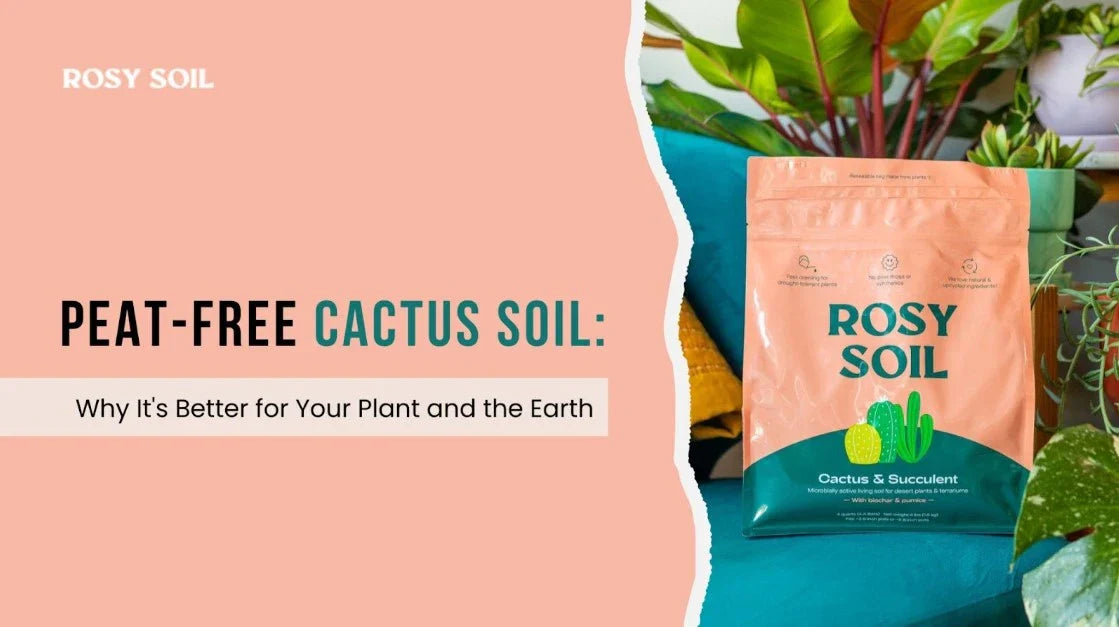
This guide explains what makes a peat-free cactus succulent soil potting mix the stronger choice, for the plant, for root health, and for the planet, and what to look for when selecting one.
What Is Peat-Free Cactus Soil?
Peat-free cactus soil is a potting mix formulated without peat moss, using alternative ingredients such as biochar, coarse sand, bark fines, compost, and worm castings to replicate the fast-draining, low-moisture conditions that cacti and succulents require.
Unlike general-purpose indoor mixes, a well-formulated cactus soil potting mix prioritizes drainage and aeration. Cacti are adapted to environments where water is scarce and moves through the ground quickly. Their root systems are built for dry conditions, not prolonged moisture. The soil mix must reflect that.
The removal of peat is significant on two levels. Agronomically, peat retains moisture at levels incompatible with cactus root health. Environmentally, peat bogs are ancient carbon stores, disturbing them releases large quantities of CO₂ and destroys ecosystems that took thousands of years to develop. A peat-free formulation addresses both issues simultaneously.
Why Peat Moss Is Unsuitable for Cacti and Succulents
Understanding why peat is problematic for cacti starts with understanding how these plants absorb water and nutrients. In simple words, cactus roots require a complete dry-out cycle between waterings. When soil stays moist for extended periods, the roots begin to deteriorate, a condition commonly known as root rot, which is among the leading causes of cactus death in cultivation.
Peat moss creates several conditions that accelerate this problem:
-
Excessive moisture retention: Peat can hold many times its weight in water, keeping the root zone damp long after watering. This denies cactus roots the dry period they need to function correctly.
-
Progressive compaction: As peat decomposes, it becomes denser. Compacted soil reduces air circulation around the roots, limiting the oxygen exchange necessary for root health.
-
Hydrophobic behavior when dry: Once peat dries out completely, it repels water rather than absorbing it. In practical terms, watering a dry peat-based mix often results in water running off the surface or down the pot edges, bypassing the root zone entirely.
-
Acidic pH: Peat is naturally acidic, typically falling between pH 3.5 and 5.0. Most cacti and succulents prefer a near-neutral pH of 6.0 to 7.0. An acidic environment can inhibit the uptake of key nutrients, including calcium, magnesium, and phosphorus.
Root rot caused by oversaturated soil is responsible for the majority of cactus fatalities in home growing environments, and peat-based mixes are a primary contributing factor.
Key Ingredients in a High-Quality Cactus Succulent Soil Potting Mix

A well-engineered cactus succulent soil potting mix replaces peat with ingredients that serve the plant's actual biological needs. Each component plays a specific role in drainage, aeration, nutrition, or soil structure.
1. Coarse Sand, Pumice or Perlite
These large-particle materials create air pockets in the mix, allowing water to drain fast and roots to breathe. This is the single most important factor in cactus soil: drainage first, nutrients second.
2. Biochar
Biochar is a form of horticultural charcoal made by heating organic matter without oxygen. It's porous at a microscopic level, which means it holds nutrients and beneficial microbes while also improving drainage. It's a key ingredient in Rosy Soil's cactus & succulent mix and one of the reasons it stands out from the typical fine potting soil options on the market.
3. Worm Castings
Often called 'worm poop,' worm castings are packed with slow-release nutrients in a form that plants can absorb easily. Unlike synthetic fertilizers, they won't burn roots, a common risk with cacti, which are sensitive to overfeeding.
4. Compost
Good compost adds organic matter and beneficial microbial life to the mix. It supports long-term soil health without adding excess moisture retention.
5. Bark Fines
Bark fines improve soil structure and aeration. They are a byproduct of the mulch industry, which makes them a smart, low-waste ingredient.
Explore Rosy Soil Cactus & Succulent Mix here!
How to Assess Whether Your Current Cactus Soil Is Performing
The performance of a cactus soil potting mix can be evaluated through a few simple, practical tests, without the need for specialist equipment:
-
Drainage rate: Water applied to the soil surface should filter through and exit the drainage hole within seconds. Extended pooling on the surface or slow percolation through the mix indicates excessive moisture retention.
-
Structural cohesion: A handful of damp mix, compressed in the fist and then released, should crumble apart immediately. A mix that retains its shape is holding too much moisture and is likely to cause compaction around the root zone.
-
Odor: Healthy soil has a clean, earthy scent. A sour, ammonia-like, or stagnant smell indicates compromised microbial balance or persistent moisture, both unfavorable for cactus roots.
If a mix fails any of these tests, we recommend switching to a good-quality peat-free mix as soon as possible before any negative effects on the plant become apparent. Root damage always occurs before above-ground symptoms and can take weeks to manifest.
Also Read: What Is The Best Soil for Indoor Plants? How Do You Choose It?
Rosy Soil: A Peat-Free Formulation Built Around Biochar
We at Rosy Soil were built to do what most potting soil brands haven't bothered to do: remove peat entirely without cutting corners on plant performance. Every mix in the range uses biochar as its base, which means each bag actually pulls carbon out of the atmosphere rather than adding to it. That's not a marketing claim, it's the direct result of how biochar is made and how it behaves in soil.
The cactus and succulent mix is put together with desert plants specifically in mind. No synthetic additives, no peat, just biochar, worm castings, compost, bark fines, and pumice. These ingredients were chosen because of what cacti and succulents actually need from their growing medium, not because they're cheap to source.
If the soil alone isn't enough and your plants need a nutritional boost, Rosy Soil plant food is designed to work with the mix, not against it. It delivers nutrients gradually and organically, so there's no risk of salt buildup or root burn, which cacti are particularly vulnerable to. The full reasoning behind every ingredient choice is laid out on our science page, for anyone who wants to go deeper than the label.
Not Sure Which Soil Your Plants Need? Different plants need different soil structures. Take the Rosy Soil plant quiz to get a personalized recommendation for the best indoor potting mix for your plants.
Common Mistakes in Cactus Soil Selection
Several recurring mistakes affect the outcomes of even well-intentioned plant care when it comes to soil selection:
-
Using general-purpose potting mix: Standard indoor mixes are designed to retain moisture for tropical and temperate plants. Applied to cacti, they maintain saturation levels that lead directly to root deterioration.
-
Failing to read the ingredients list: Many products marketed as cactus soil still contain peat as a primary ingredient. A reliable peat-free cactus succulent soil potting mix lists coarse sand, perlite, bark, or biochar as leading components.
-
Using containers without drainage: Soil quality cannot compensate for inadequate drainage infrastructure. All containers used for cacti and succulents must include functioning drainage holes.
-
Over-fertilizing: Cacti are slow-growing and require minimal feeding. Organic options such as Rosy Soil plant food are appropriate; synthetic fertilizers with high salt indices carry a risk of root burn in sensitive species.
-
Repotting outside the growing season: Repotting during fall or winter, when cacti are in a dormancy phase, adds unnecessary stress. Spring through early summer provides the plant with optimal conditions to establish in new soil.
Conclusion
The selection of peat-free cactus soil is not merely a trend or marketing requirement; it is the agronomically correct option for this type of plant. Cacti and succulents demand potting mediums that drain quickly, dry out completely between waterings, and have good aeration. Peat fails all three criteria while also carrying measurable environmental costs.
A good potting mix for cactus succulent soils, comprising biochar, coarse sand, bark fines, worm castings, and compost, offers the same conditions that these plants have adapted to over millions of years. It supports root health, sustains beneficial microbial life, and, with the right ingredients, contributes positively to the soil's carbon balance rather than depleting it.
The rosy soil indoor potting mix range offers a rigorously formulated, peat-free solution for cacti, succulents, and indoor plants broadly. For guidance on selecting the most appropriate mix for a specific plant or collection, the Rosy Soil plant quiz provides a structured, personalized recommendation.
Give Your Cactus the Soil It Was Designed to Grow In
Healthy cactus roots start with the right soil. Our peat-free cactus soil potting mix is designed to deliver superior drainage, natural nutrients, and a sustainable growing medium powered by biochar. Buy it now!