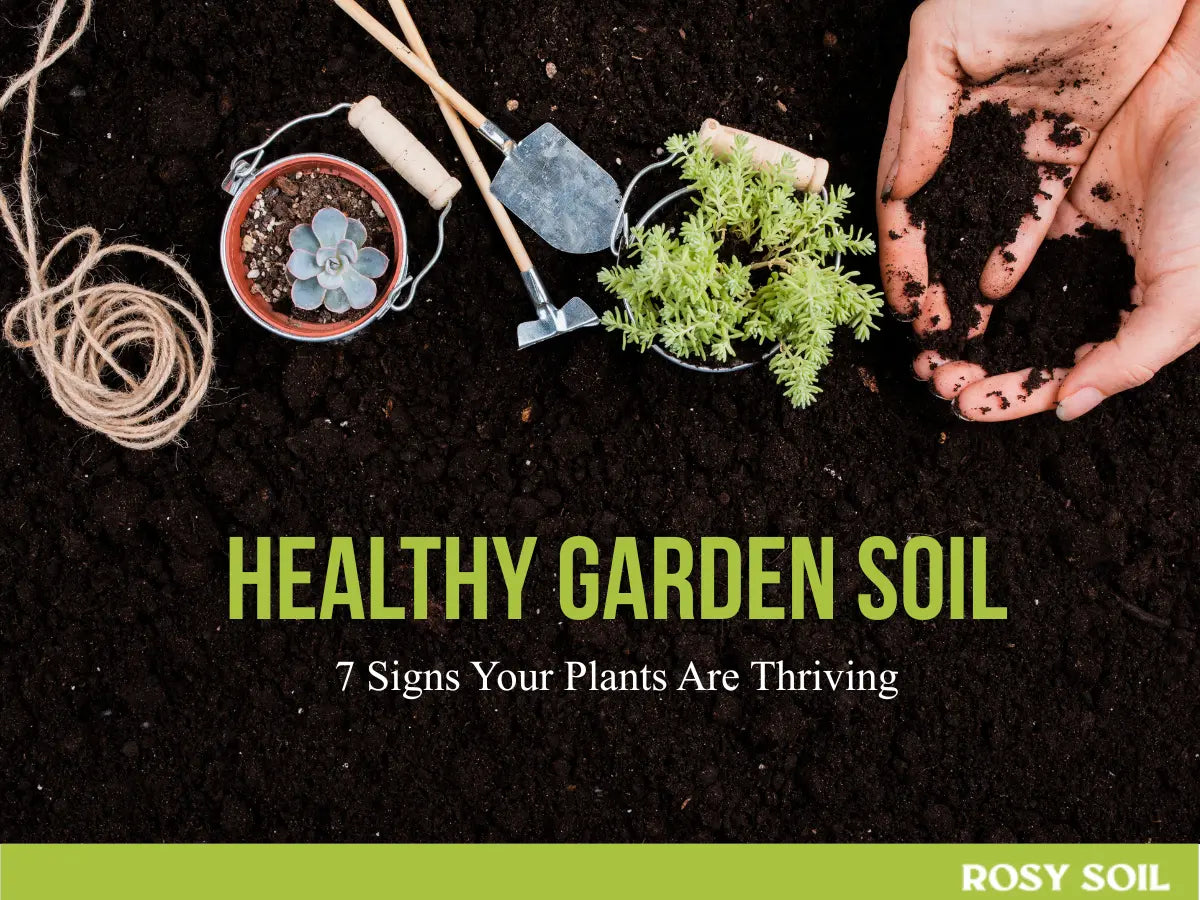
Your plants are only as strong as the ground they grow in. Yet most gardeners spend their time worrying about sunlight, watering schedules, and pest control while overlooking the one factor that influences all three: the quality of their garden soil.
Healthy garden soil isn't just "dirt." It's a living ecosystem of minerals, organic matter, microbes, and air pockets working together to feed your plants and support strong root growth. The good news is that you don't need a lab to figure out if your soil is up to the job. Your garden is already giving you clues.
Here are seven signs of healthy garden soil, what they mean, and how to fix things if your soil isn't quite there yet.
Seven Signs Of Healthy Garden Soil
1. It Has a Rich, Dark Color
Healthy garden soil tends to be dark brown to black, a sign of high organic matter content. That dark color comes from decomposed plant material, compost, and biological activity, all of which contribute nutrients your plants can actually use.
If your soil looks pale, gray, or sandy-colored, it likely lacks organic matter and may struggle to retain moisture or nutrients. This is one of the easiest ways to answer the common question, "How do I know if my garden soil is healthy?" just by looking at it.
Rosy Soil Garden Mix is rich, dark, and nutrient-dense right out of the bag thanks to a blend of compost, worm castings, and biochar, so you're not waiting seasons to build that color and depth into your beds.
2. It Smells Earthy, Not Sour or Rotten
Good soil has a clean, earthy smell, largely due to a compound called geosmin, produced by beneficial soil bacteria. This smell is one of the most overlooked signs of healthy garden soil because most people never think to check.
If your soil smells sour, like rotten eggs, or overly musty, that can indicate poor drainage, compaction, or anaerobic conditions where beneficial microbes can't survive.
Because our Garden Mix is engineered for airflow and drainage with biochar and pine bark fines, it stays aerobic and smells the way healthy soil should, never sour, never stagnant.
3. It Crumbles Easily in Your Hand
Grab a handful of moist soil and squeeze it. Healthy garden soil should hold its shape briefly, then crumble apart easily when poked, a texture often called "good tilth."
If it forms a hard, dense clump that won't break apart, your soil likely has too much clay or is compacted. If it falls apart immediately and won't hold its shape, it may be too sandy and unable to retain moisture or nutrients.
This is where most bagged garden soil and raw topsoil fall short; they're either too dense or too loose. Rosy's Garden Mix solves this with pine bark fines and recycled paper for structure, plus biochar and compost for body, giving you that ideal crumbly texture every time you dig in.
4. It Drains Well But Still Retains Moisture
This balance is one of the clearest indicators of what makes garden soil good for plant growth. Water should soak in within a few minutes without pooling on the surface, but the soil should still stay damp below the surface for a while afterward.
Poor drainage suffocates roots and invites root rot, while soil that drains too fast leaves plants thirsty and stressed.
This balance is exactly what biochar does best, and it's the core ingredient in our Garden soil mix. Biochar acts like a sponge, holding onto moisture and nutrients while still letting excess water drain through, so roots get consistent hydration without sitting in soggy soil. If you have ever wondered whether biochar improves garden soil, this is the trait gardeners notice first.
5. It’s Rich in Beneficial Microbial Life
Healthy soil is full of beneficial fungi, bacteria, and other microbes that help create an active, living environment for plants. These microorganisms break down organic matter, improve soil structure, and help make nutrients more available for healthy growth.
If your soil feels lifeless or lacks signs of biological activity, it may need extra support. Many synthetic or heavily processed bagged soils don’t offer the same level of biological richness that helps plants establish and thrive.
Our Garden Mix is biologically active right from the bag, formulated with mycorrhizae and organic ingredients that help support a thriving microbial ecosystem around your plants’ roots immediately after planting — not months later.
6. It Has a Balanced pH
Most vegetables and garden plants thrive in slightly acidic to neutral soil, generally between 6.0 and 7.0 pH. When pH drifts too far in either direction, plants struggle to absorb nutrients even if those nutrients are present in the soil.
A simple at-home soil test kit can tell you where your soil stands in minutes, and if you're starting fresh in a raised bed or container, using a pre-balanced mix like Rosy's Garden Mix takes the guesswork out entirely.
7. Plants Show Strong, Consistent Growth
Ultimately, the best indicator of healthy garden soil is your plants themselves. Healthy soil produces plants with strong root systems, vibrant leaf color, steady growth, and good resistance to pests and disease.
If you are seeing yellowing leaves, stunted growth, or plants that seem to struggle no matter how much you water or fertilize, your soil is likely the root cause, literally. This is the outcome every other sign feeds into, and it's why Rosy built its Garden Mix around root health from the start. Gardeners growing tomatoes, peppers, leafy greens, and root vegetables in our soil mix consistently see stronger establishment and better harvests, because the soil is doing the work a healthy ecosystem should.
Garden Soil vs. Other Soil Types: A Quick Clarification
Since these terms get mixed up often, here's a fast breakdown:
- Topsoil vs garden soil: Topsoil is the raw, uppermost layer of earth, often used for filling in or leveling areas. Garden soil is topsoil enriched with organic matter and nutrients specifically for planting.
- Potting soil vs garden soil: Potting soil is a soilless mix designed for containers, built for drainage and lightweight structure. Garden soil is meant for in-ground and raised beds, with more body and nutrients to support sustained outdoor growth.
- Garden soil and potting mix: These aren't interchangeable. Using a container-only potting mix in a raised bed leaves plants underfed long-term, while using dense garden soil in small pots leads to compaction.
Why Gardeners Are Switching to Rosy's Garden Mix
Most bagged garden soil is just filler, cheap topsoil with little nutrition behind it. Rosy's Garden Mix is different. It's a ready-to-use, peat-free blend of biochar, compost, worm castings, mycorrhizae, and pine bark fines, with no extra amendments or guesswork required.
It's formulated for vegetables, herbs, flowers, and raised beds alike, supporting everything from tomatoes and peppers to leafy greens, root vegetables, and legumes. And because it's carbon-negative and made in the USA, every bag is doing more for your garden and the planet than a standard bag of dirt ever could.
Ready to Upgrade Your Soil?
If your soil isn't checking these seven boxes, you don't need to spend a season amending it piece by piece. Shop Rosy's Garden Mix and give your vegetables, herbs, and flowers a head start with soil that's already alive, balanced, and ready to grow.
Not sure which mix is right for your setup? Take the Rosy Soil Quiz for a personalized recommendation, or browse the full collection of our biochar-powered soil mixes.
FAQs
Q1: How do I know if my garden soil is healthy?
A: Look for dark color, an earthy smell, loose crumbly texture, good drainage with moisture retention, visible earthworms, balanced pH, and strong plant growth. Rosy's Garden Mix is formulated to deliver all seven from the moment you plant.
Q2: What are the signs of healthy garden soil?
A: Rich dark color, earthy smell, crumbly texture, balanced drainage, earthworm activity, neutral pH, and consistent plant growth are the seven core signs to watch for.
Q3: What makes garden soil good for plant growth?
A: A combination of organic matter, beneficial microbes, proper drainage, balanced pH, and good soil structure that allows roots to access water, air, and nutrients easily, which is exactly what Rosy's Garden Mix is built around.
Q4: Does biochar improve garden soil?
A: Yes. Biochar's porous structure helps retain moisture and nutrients while supporting beneficial microbial life, and it's the core ingredient behind Rosy's Garden Mix.
Q5: How many plants will a bag of Rosy Garden Mix cover?
A: An 8-quart bag covers about 4-6 plants, while the 16-quart bag covers roughly 10-12 plants, making it easy to size for raised beds, containers, or in-ground rows.