
What Is Peat Moss and Why Is It a Problem?
Peat moss is a common ingredient in potting soil, used for its lightweight texture and ability to hold water. But it comes with a serious environmental cost.
Peat is harvested from peatlands which are ancient ecosystems that act as powerful carbon sinks. In their natural state, these wetlands store more carbon than all the world’s forests combined.
A carbon sink is anything that absorbs more carbon from the atmosphere than it releases – for example, plants, the ocean and soil. (clientearth.org)
But when peat is extracted, that carbon is released back into the atmosphere, contributing to climate change.
The Carbon Impact of Peat-Based Potting Soil
According to our 2025 Life Cycle Assessment
-
Peat-based soil emits 6.6 kg CO₂e per 8-quart bag
-
Rosy Soil removes 2.7 kg CO₂e per 8-quart bag
That’s a 9.3 kg carbon difference per bag, just by choosing a peat-free, carbon-negative soil.
🌱 Read the full assessment here →
What We Use Instead of Peat Moss
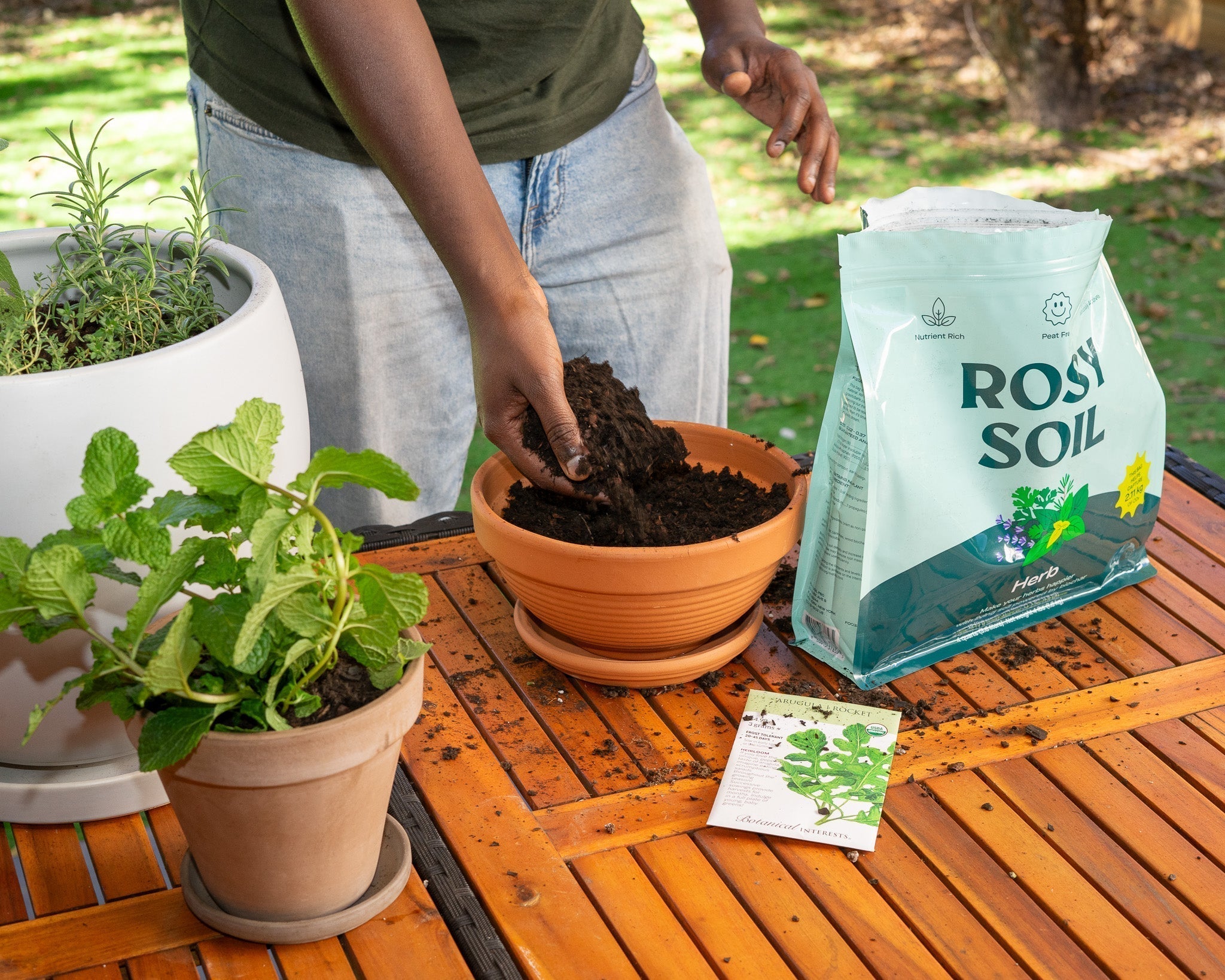
At Rosy, we designed our soil from the ground up using ingredients that are good for plants and for the planet.
Here’s what you’ll find in every bag of Rosy Soil:
- Biochar – carbon-rich, improves soil structure, and supports beneficial microbes
- Upcycled compost – full of nutrients, odor-neutral, and great for moisture retention
- Mycorrhizal fungi – microbes that improve root function and plant resilience
And here’s what you won’t find:
- Peat
- Coco coir (which is resource-intensive to produce)
- Perlite (which requires high-energy processing)
What Is Biochar? (And Why Do We Use It?)
Biochar is a charcoal-like material made by heating organic matter at high temperatures without oxygen in a process called pyrolysis.
It’s been used for centuries by Indigenous farmers, and today it’s gaining traction as both a soil supercharger and a carbon storage solution.
Biochar Benefits for Soil:
-
Boosts aeration and water retention
-
Creates habitats for beneficial microbes
-
Reduces nutrient loss and root rot
-
Helps plants grow stronger, faster, and more resilient
Biochar’s Benefits for the Planet:
-
Locks carbon into the ground for hundreds to thousands of years
-
Reduces emissions of methane and nitrous oxide
-
Turns organic waste into a useful, regenerative material
In other words, biochar doesn’t just help your plants grow, it helps your soil work smarter.
Why Peat-Free Potting Soil Is the Future
Using peat-free soil isn’t a trend, it’s a necessary shift toward more climate-friendly gardening.
When you choose Rosy Soil, you’re choosing:
-
A mix designed to grow better herbs, houseplants, and veggies
-
A formula built for soil biology, not just fluff and filler
-
A solution that actually sequesters carbon, instead of releasing it
We believe in giving your plants the best without taking from the Earth. And we’re proud to back that up with real data.
Ready to Grow Better?
Whether you're starting herbs indoors, refreshing houseplants, or planning your garden, Rosy Soil is here to help your plants (and the planet) thrive.