
Reviewed by Jennifer
Review posted
3 Stars
Using awhile and doesn’t seem to make a difference. Iam going to close this account, which they don’t try to assist me and seem to making this difficult!
Loading...
Was this helpful?
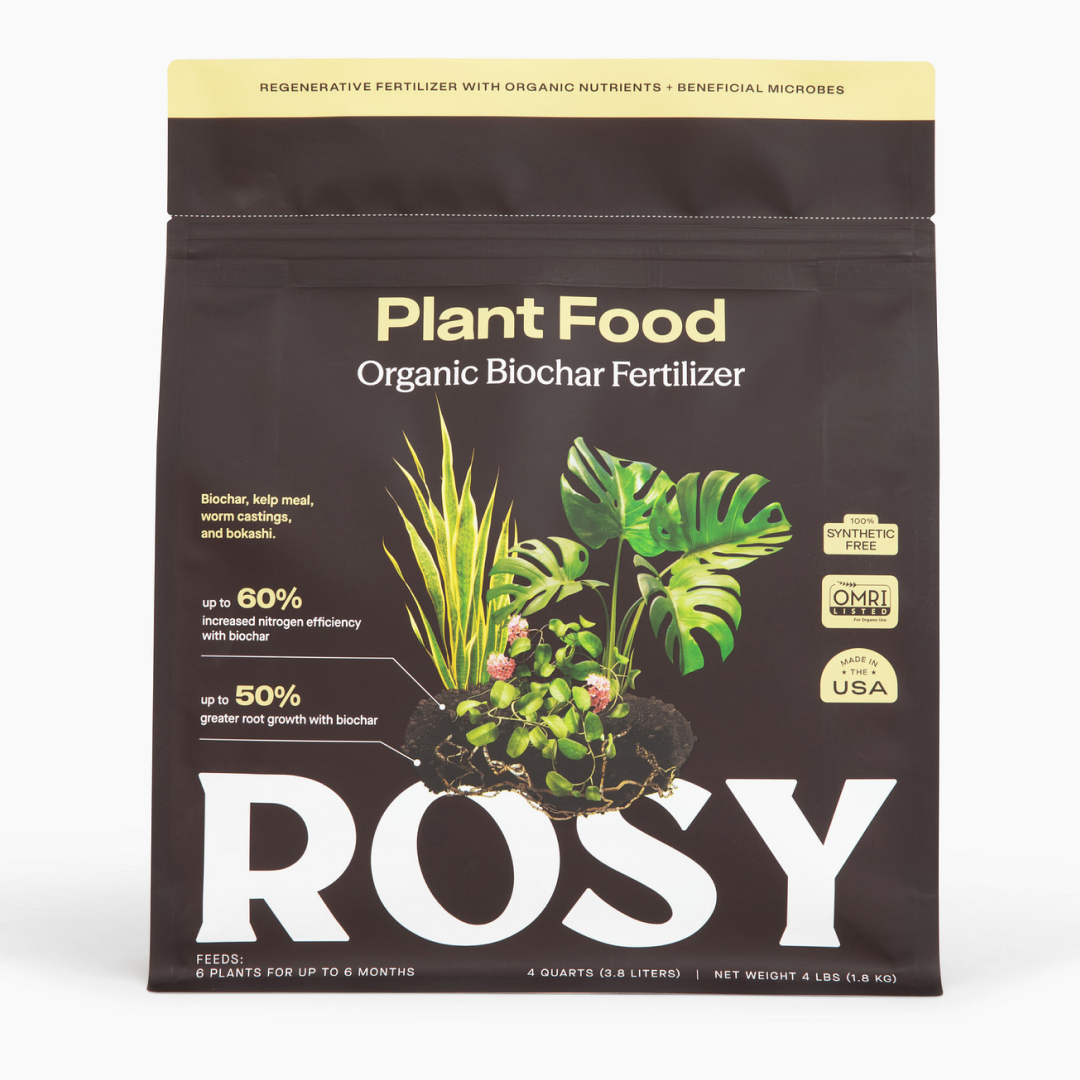
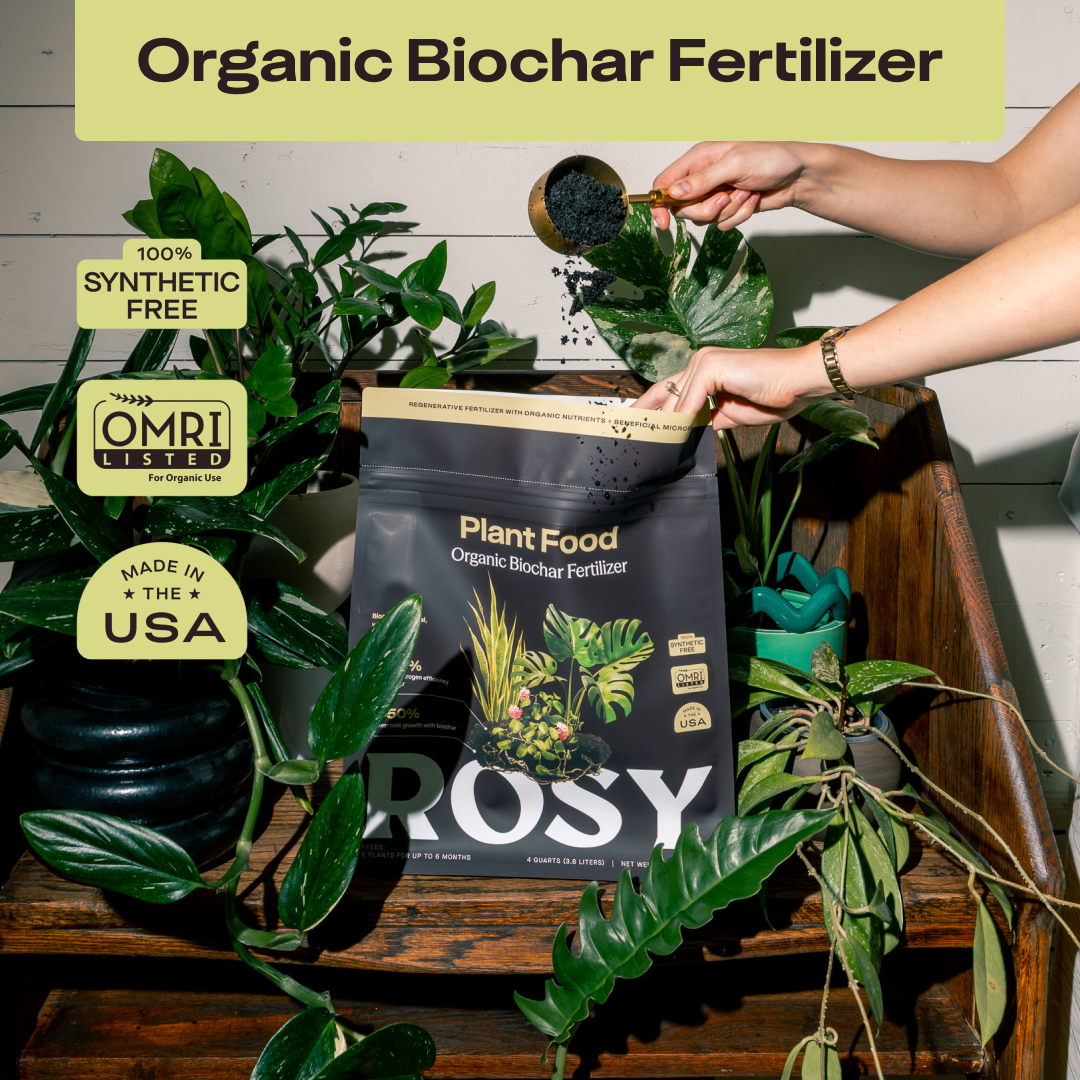
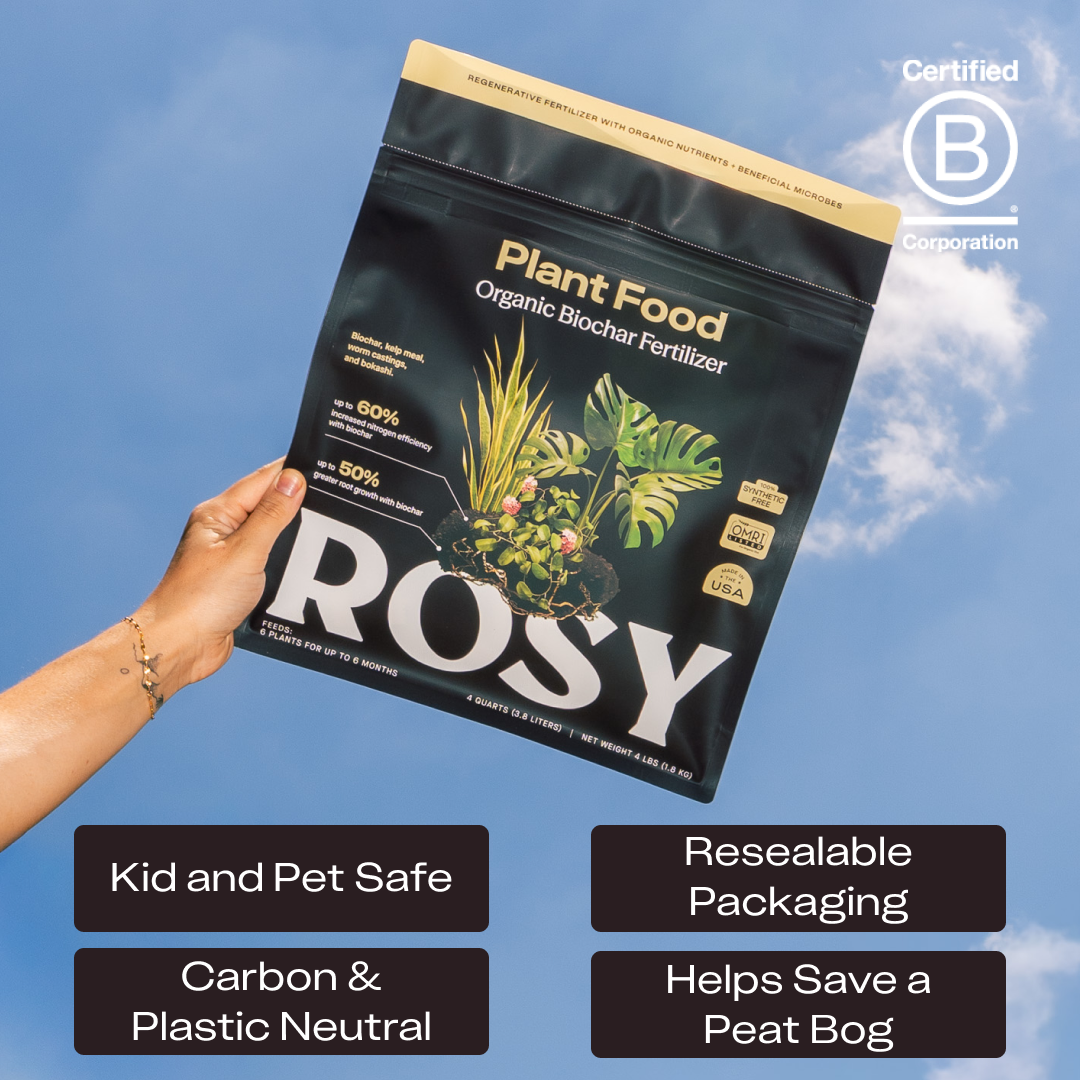
The biochar-boosted formula that gives your plants a feed they'll actually feel.
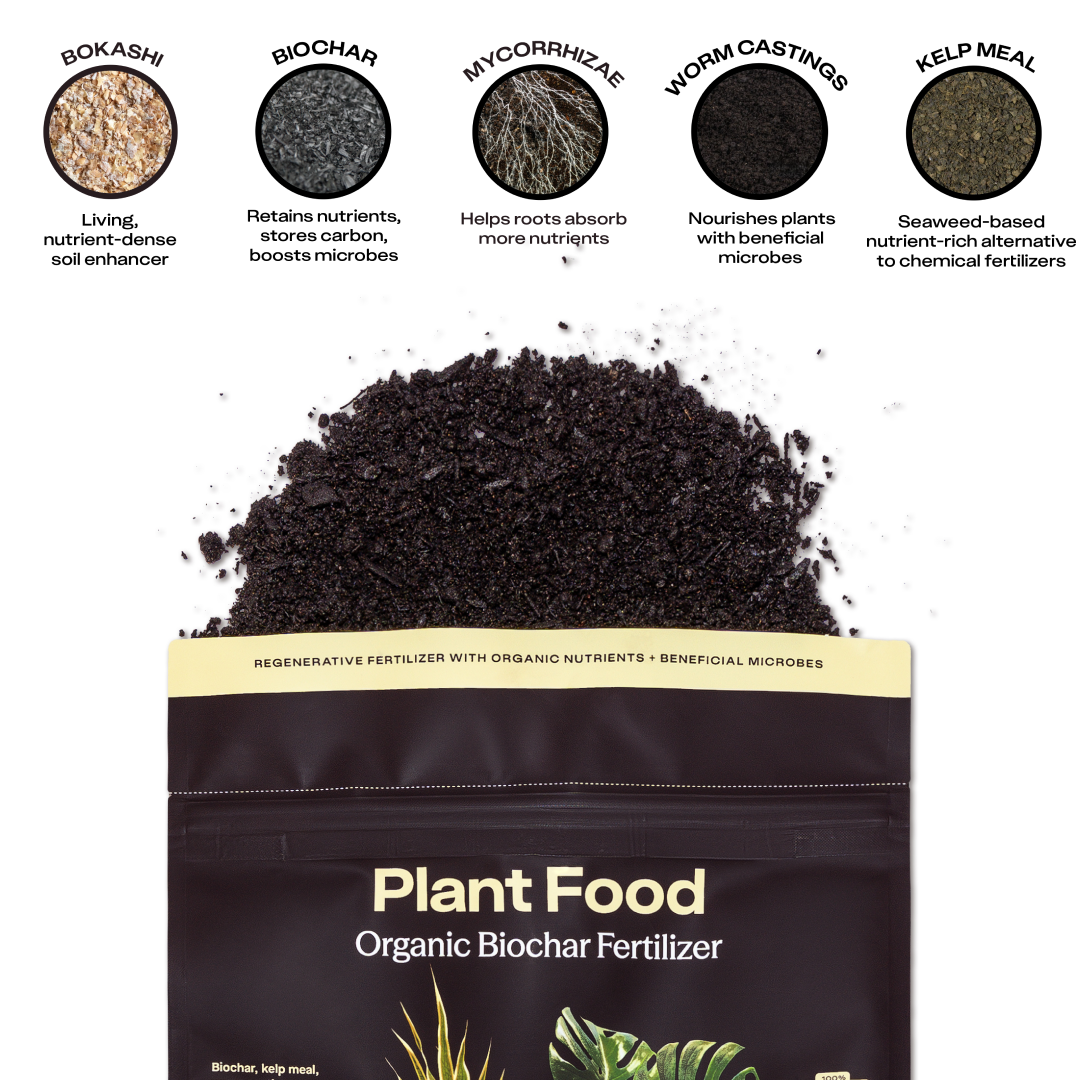
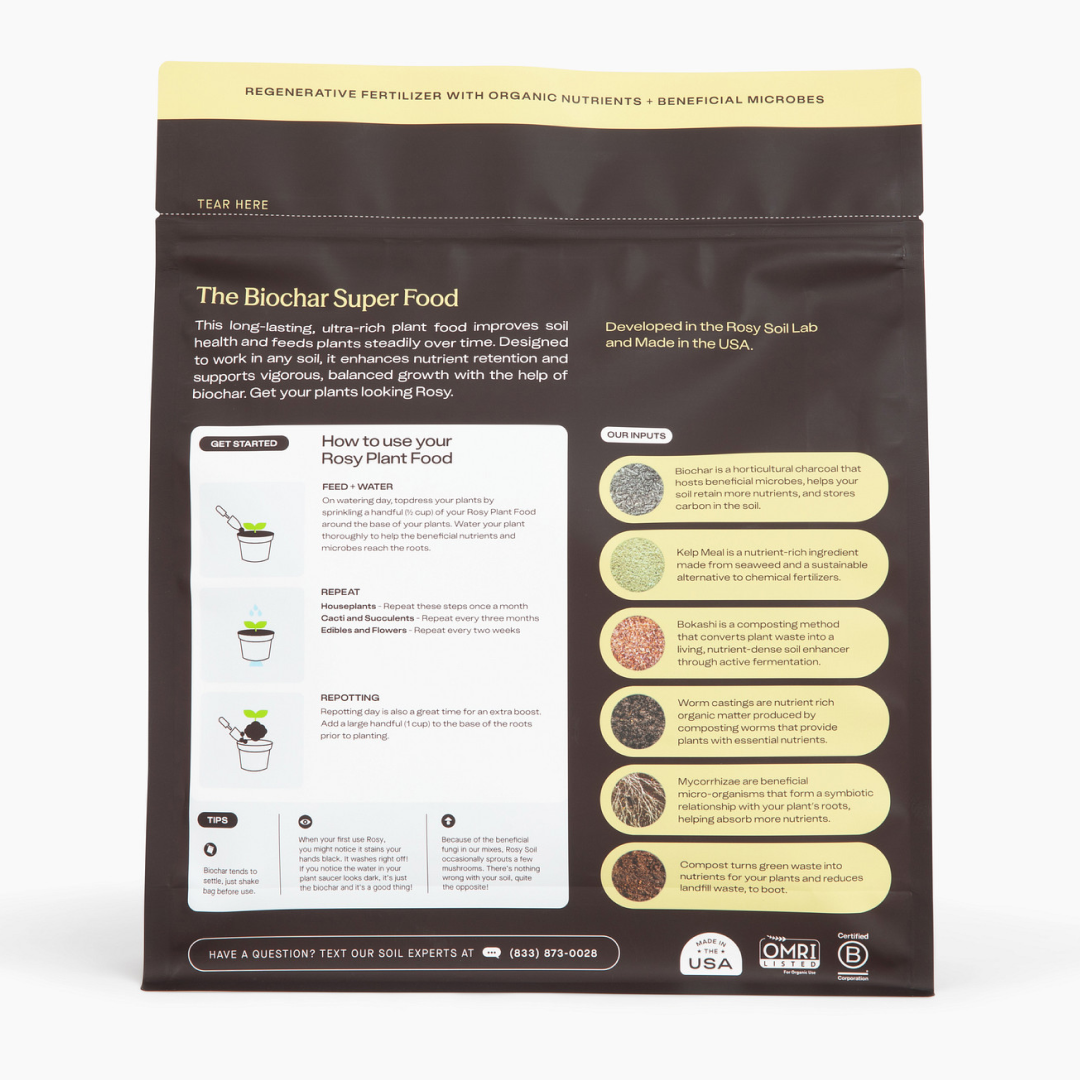
Biochar
A horticultural charcoal that increases nutrient retention, hosts beneficial microbes, and stores carbon in the soil.
Kelp Meal
A nutrient-rich ingredient made from seaweed and a sustainable alternative to chemical fertilizers.
Bokashi
A composting method that converts plant waste into a living, nutrient-dense soil enhancer through active fermentation.
Mycorrhizae
Beneficial microorganisms that form a symbiotic relationship with plant roots, allowing the plants to absorb more nutrients.
Worm Castings
Nutrient-rich organic matter produced by worms that provide plants with essential nutrients.
Compost
Helps reduce waste in landfills by turning green waste and wood waste into a useful source of nutrients for plants.
1000+ plant parents can't be wrong.
John S.
"My office manager and I each have large fiddle-leaf figs in our conference room. They’re in the same window and get watered at the same time. I repotted mine with Rosy a couple months ago and it’s grown 4 new leaves. His has had no new growth. I feel kinda guilty"
Renata B.
"It’s worth the money my plants are thriving ! no gnats [tiny flying bugs] I usually find.
It’s simply the BEST"
AmyB.
"Rosy Soil has completely transformed my houseplant game! Since switching, my plants have shown incredible growth and vitality I've never achieved with other potting soils. Even my struggling plants have bounced back to life. My plants establish quickly and show immediate signs of thriving rather than transplant shock."
Nadine B.
"I gotta say I was skeptical at first. After a week I decided to check the roots — because there were NONE on this plant when I put it in. I WAS SHOCKED. It had grown gorgeous white, fuzzy roots in a week. I will not put my monsteras and scindapsus in any other substrate from now on."
Tina
"For a while I was dealing with root rot. I switched to something more well-draining, but that ended up getting too dry too quickly — crispy leaves. Rosy Soil has been a lifesaver. I haven't experienced any root rot since switching, and my plant roots are thriving. I'm even seeing more corms and babies in my plants."
Sheila
"I transplanted a Peace Lily and a Philodendron with Rosy Soil — tutorials said Peace Lilies can droop for days or weeks after transplanting. That didn't happen at all. My Peace Lily was perky and upright just hours after transplanting. I'm so pleased with Rosy Soil!"
Ingredients


Up to 50% greater root growth with biochar
Better for your plant, better for the planet's bogs.
Lower footprint, fresher ingredients, faster to your door.
Every bag sequesters carbon. Growing plants, shrinking footprint.
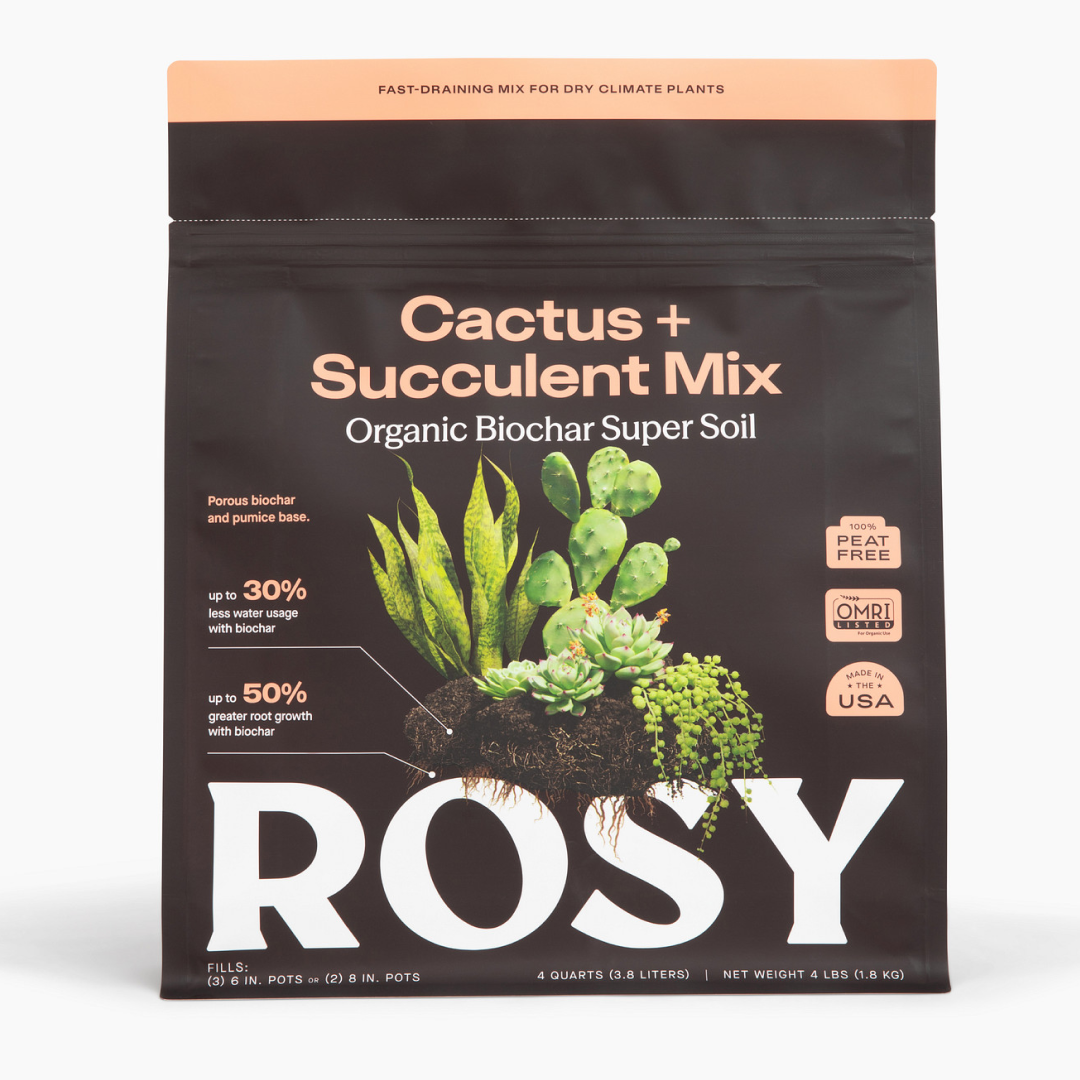
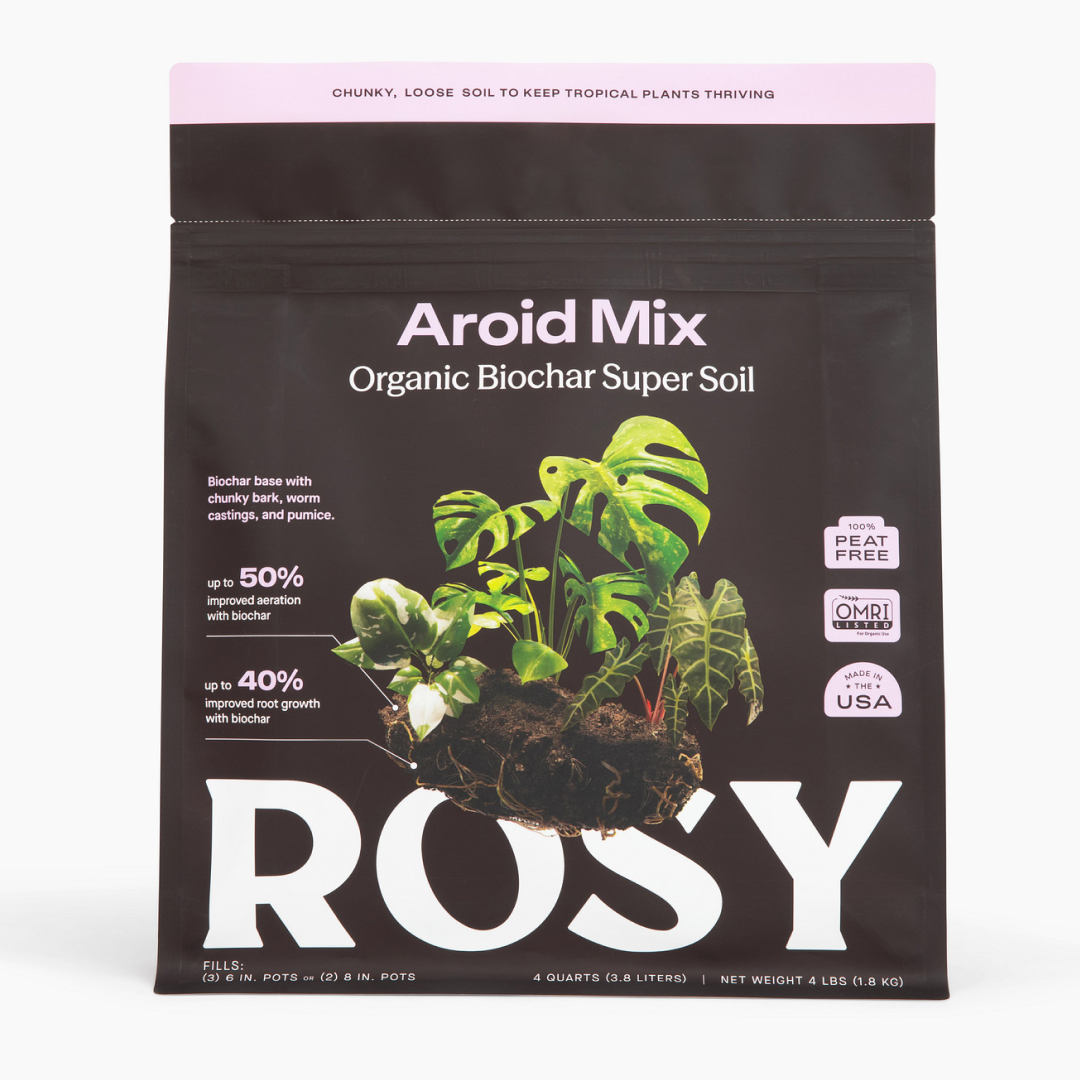
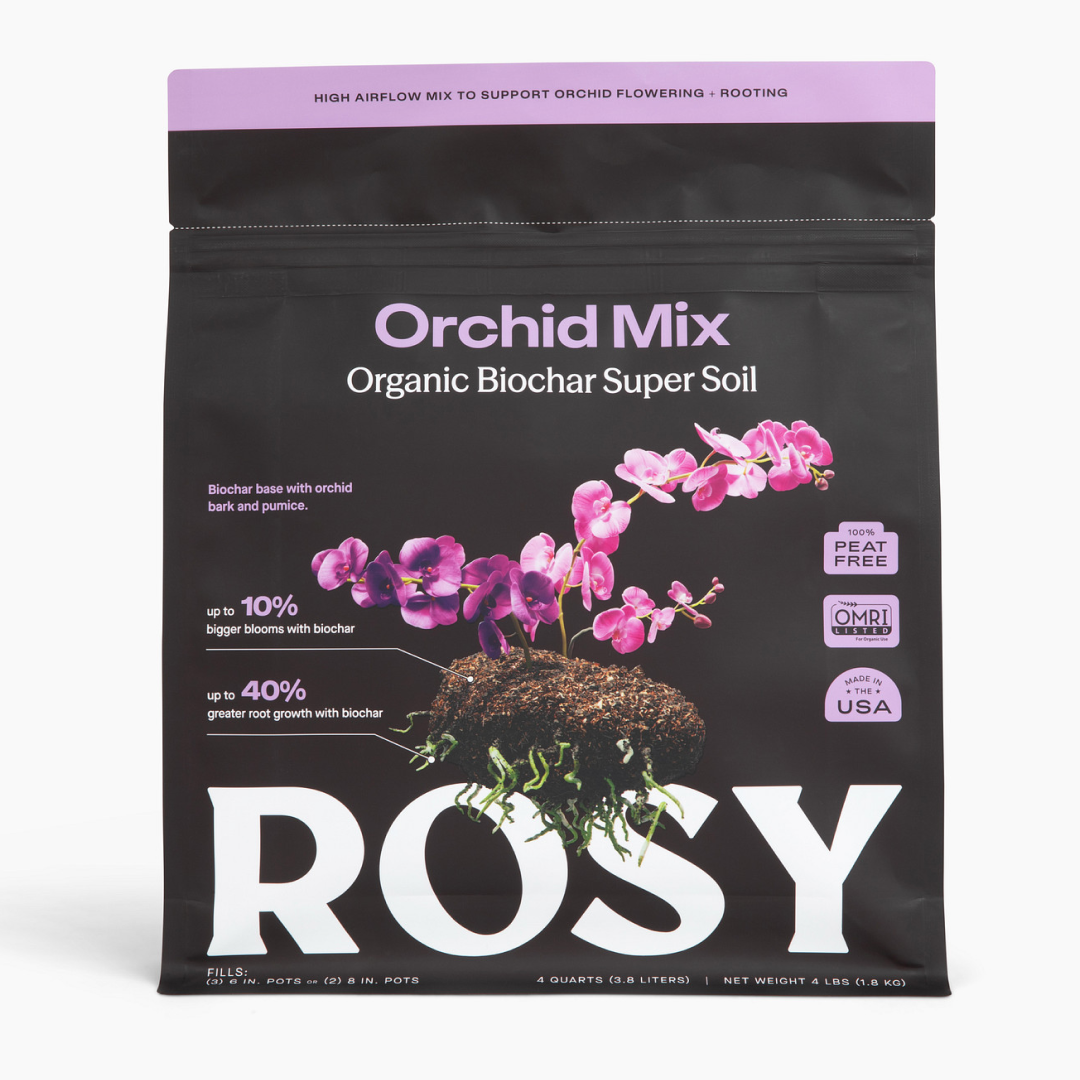
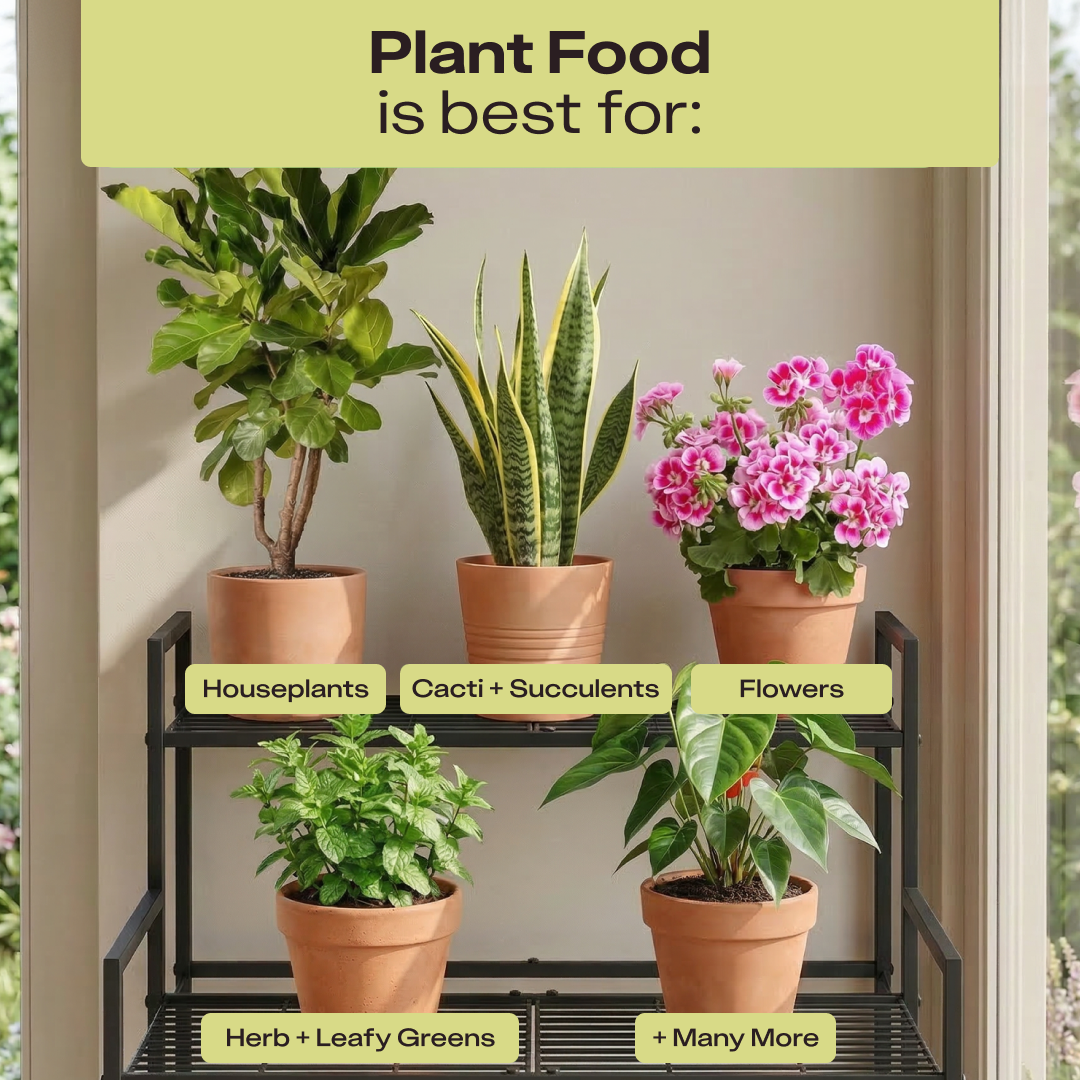
Rosy Plant Food is a gentle, all-purpose powerhouse that works for just about everything you grow
It’s perfect for houseplants, garden beds, and container veggies.
Indoor favorites like Monstera, Pothos, Snake Plant, ZZ Plant, Hoya, Fiddle Leaf Fig, Philodendron, and Peace Lily love the steady, natural boost.
Garden plants like Tomatoes, Basil, Lettuce, Kale, and Peppers respond beautifully to its slow-release nutrients and bioactive goodness.
It’s also great to mix in during repotting to help protect against transplant shock — thanks to mycorrhizae that support stronger root growth and better nutrient uptake.
Whether it lives on your windowsill or in your backyard, this blend helps your plants thrive naturally.
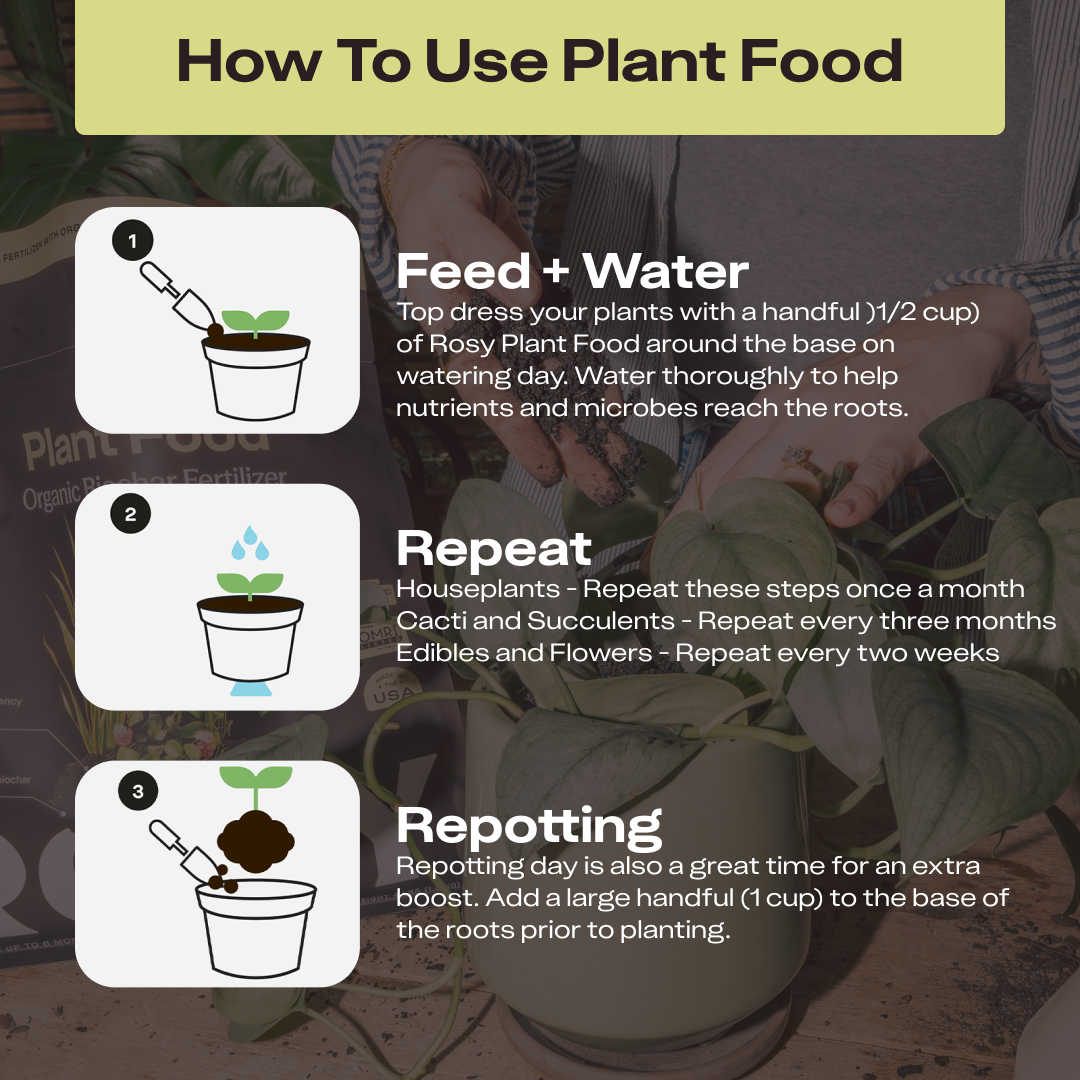
FEED + WATER
On watering day, topdress your plants by sprinkling a handful (½ cup) of your Rosy Plant Food around the base of your plants. Water your plant thoroughly to help the beneficial nutrients and microbes reach the roots.
REPEAT
Houseplants — Repeat these steps once a month
Cacti and Succulents — Repeat every three months
Edibles and Flowers — Repeat every two weeks
REPOTTING
Repotting day is also a great time for an extra boost. Add a large handful (1 cup) to the base of the roots prior to planting.
TIPS:
• Biochar tends to settle, just shake bag before use.
• When your first use Rosy, you might notice it stains your hands black. It washes right off! If you notice the water in your plant saucer looks dark, it's just the biochar and it's a good thing!
• Because of the beneficial fungi in our mixes, Rosy Soil occasionally sprouts a few mushrooms. There's nothing wrong with your soil, quite the opposite!
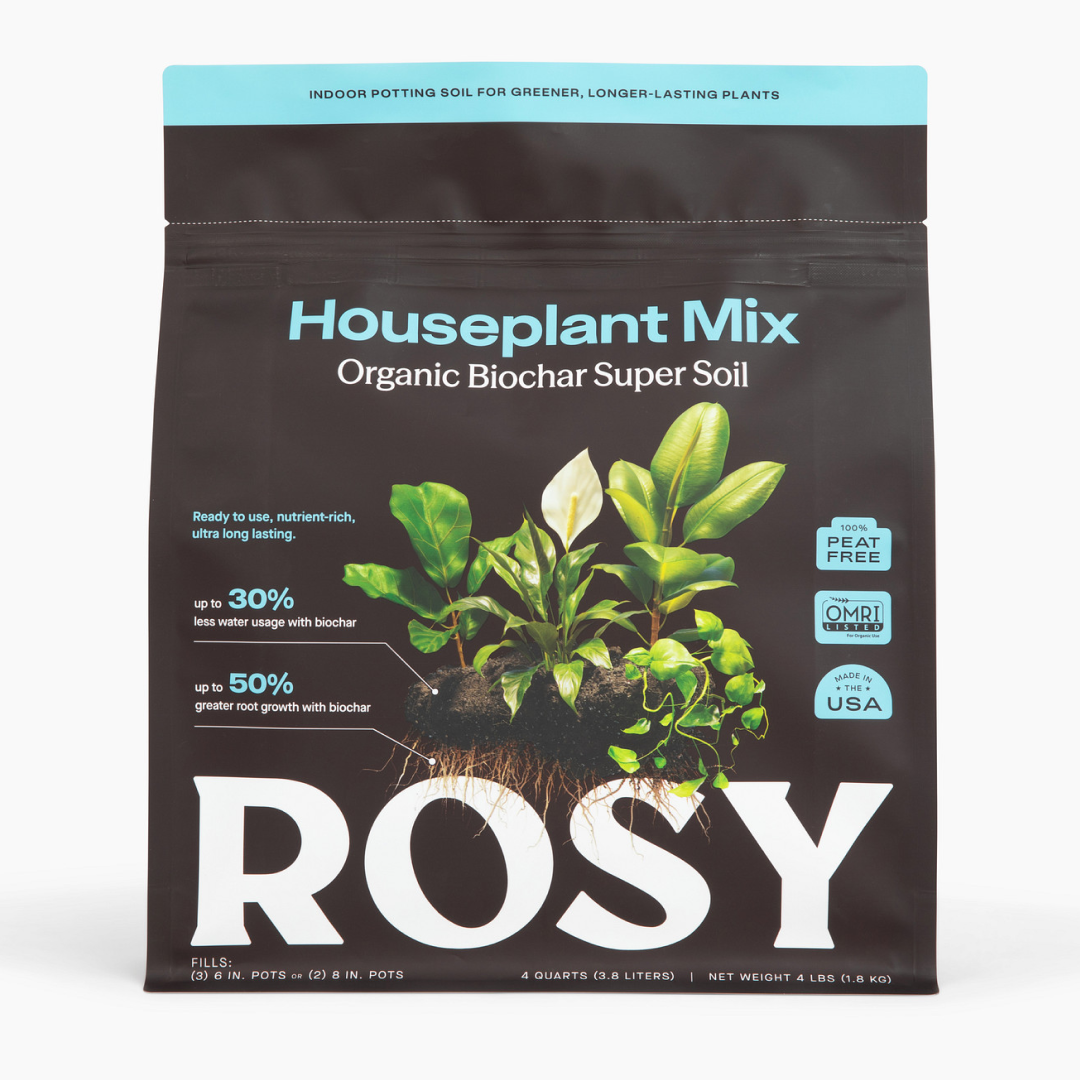
Peat moss has been a common ingredient in commercial potting mixes since the 1960s. However, it's obtained by extracting peat bogs, which are vital ecosystems that store carbon. At Rosy, we believe there's a better way. So, we've developed our blends with alternatives that are effective and sustainable.
How is Rosy different from other soils?
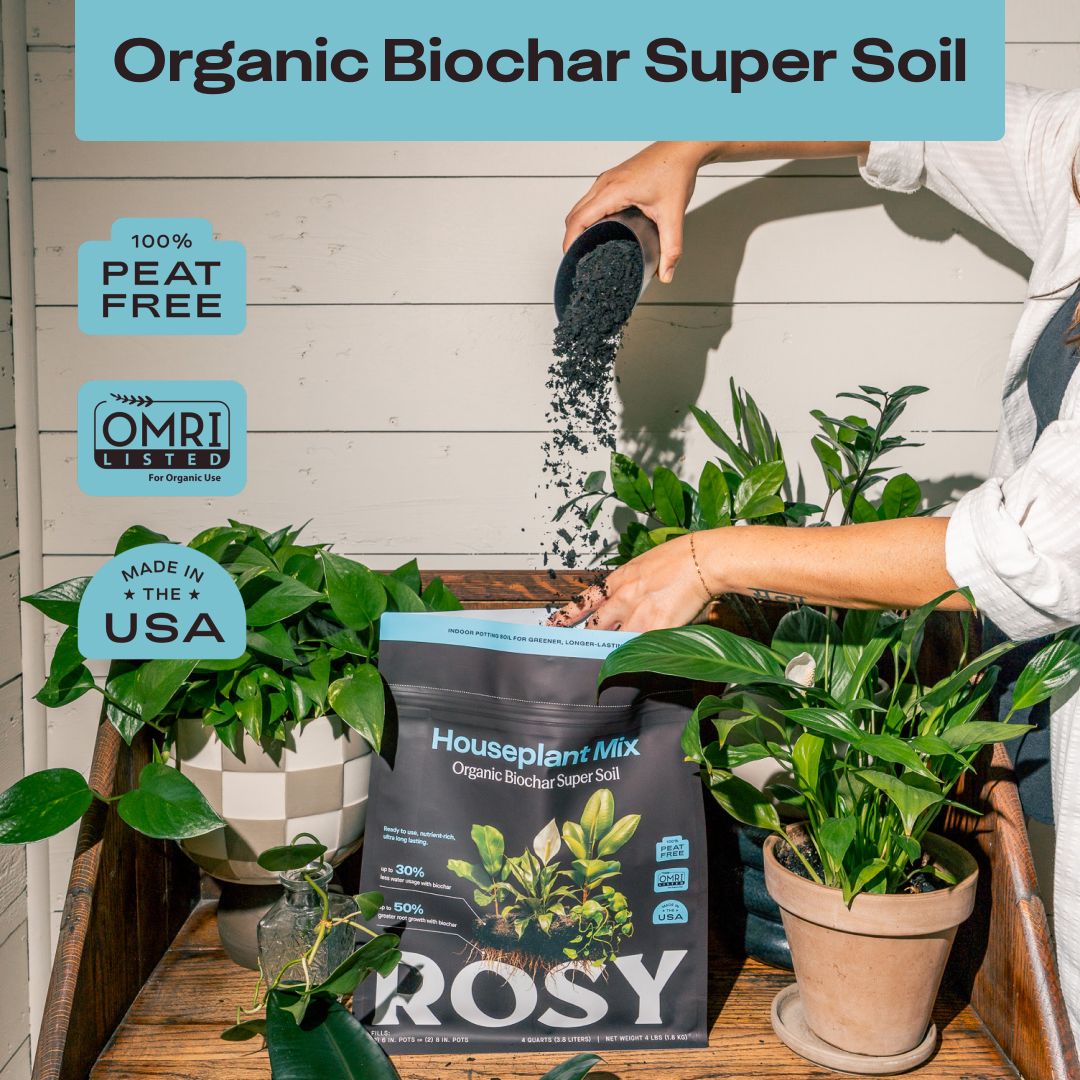
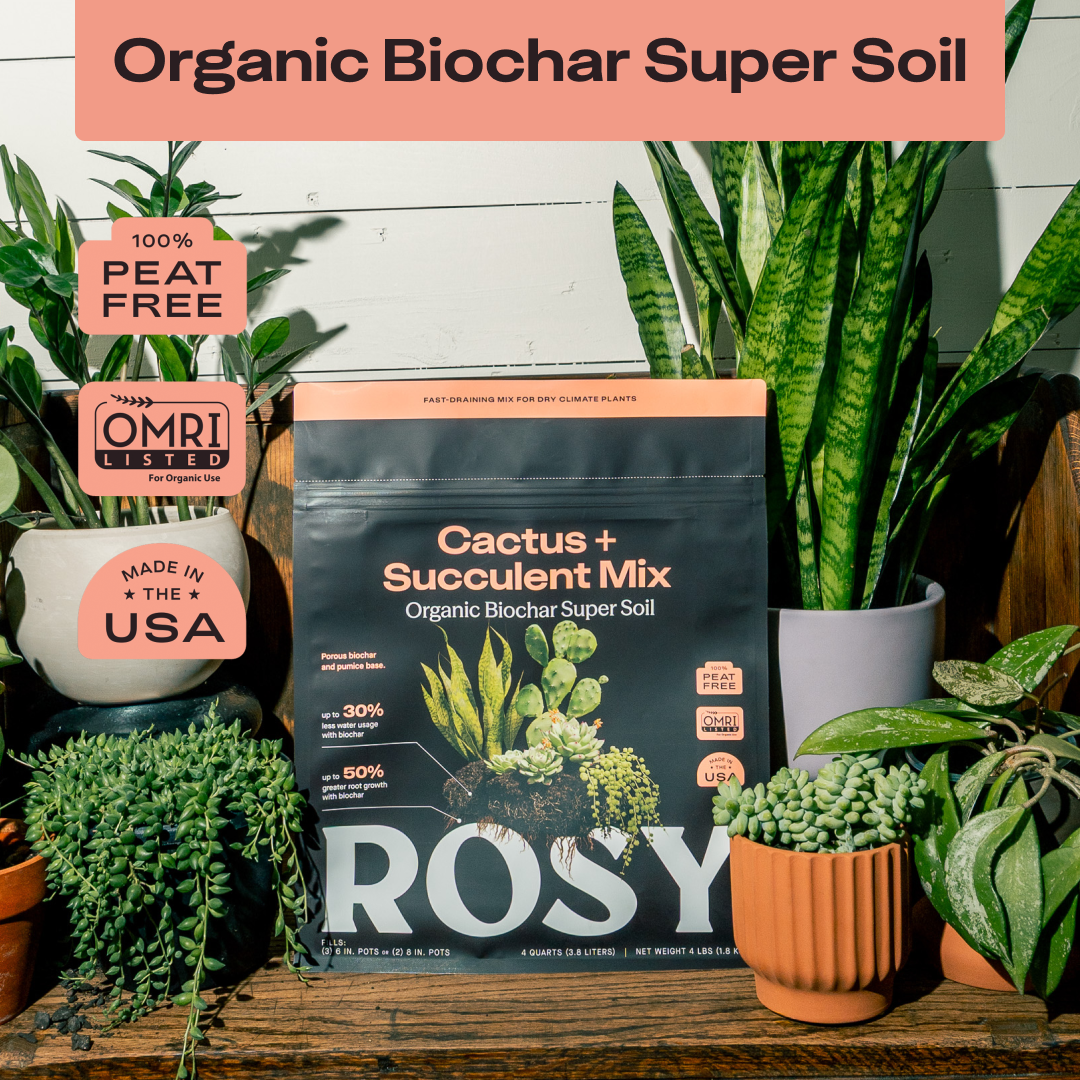
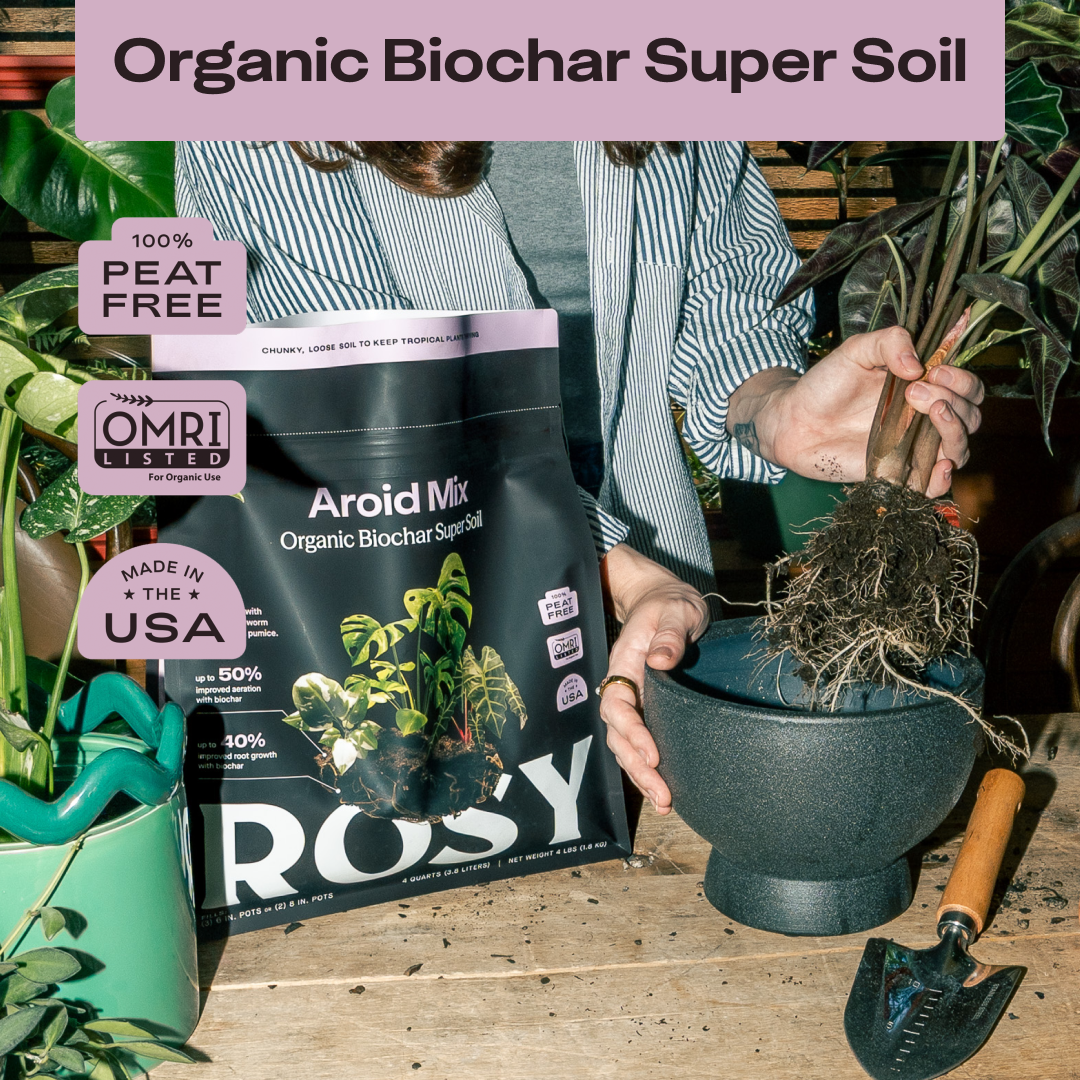
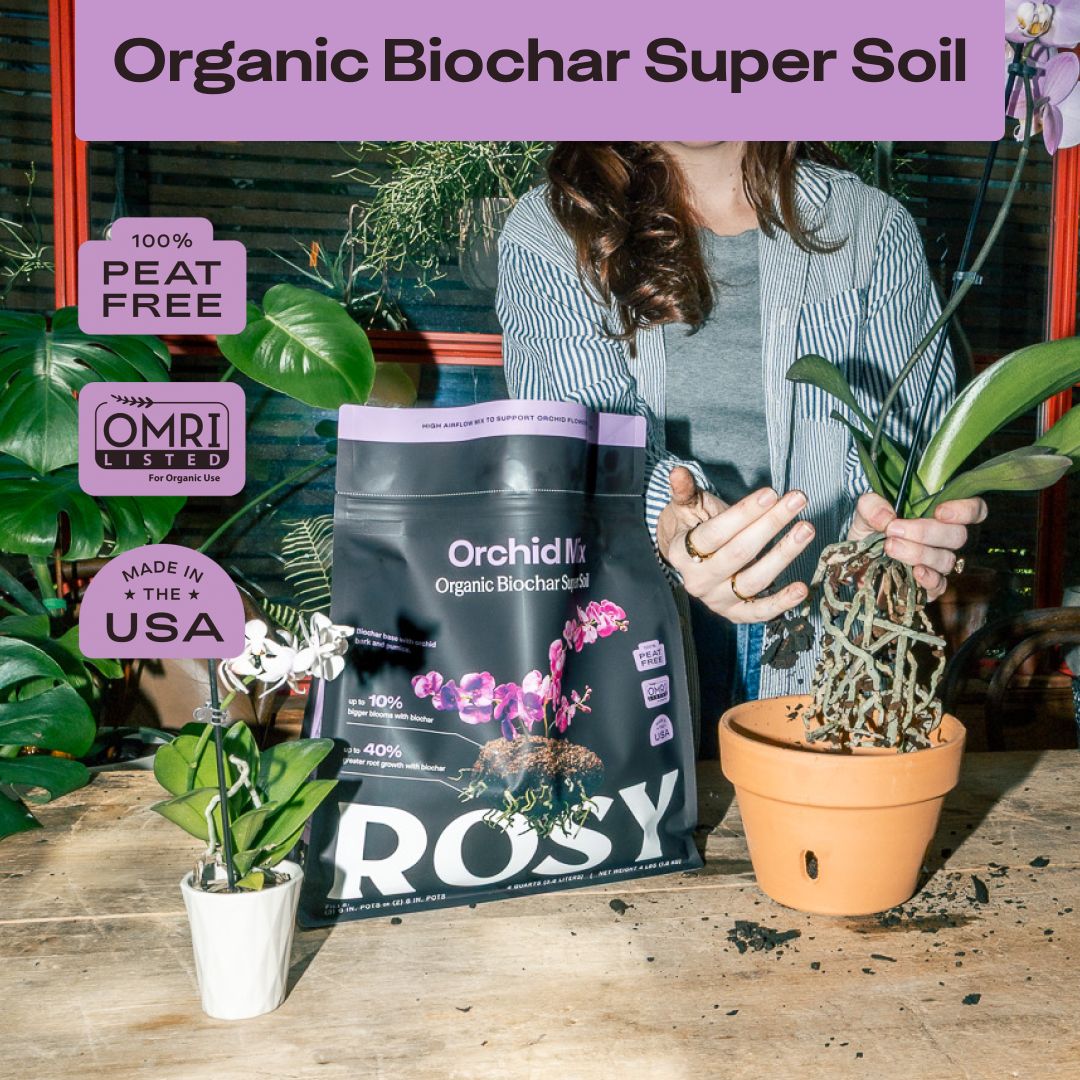
Rosy’s indoor potting soil is all-natural, peat free, and made from biochar.
We’ve consciously sourced our ingredients not only because they’re great for your plants but also because they’re good for our planet (https://rosysoil.com/blogs/news/biochar-benefits).
Unlike traditional potting soil ingredients that are environmentally taxing, our biochar potting mix only contains natural and carbon-negative amendments.
Read additional information about Our Mission (https://rosysoil.com/pages/our-mission).
We use carbon-negative, organic ingredients to create the best indoor plant potting mix.
Typically, these organic materials are sent to a landfill, where they release methane and CO2 — two potent greenhouse gases. But by redirecting these organic materials from landfills and stabilizing their carbon structure, we prevent the release of those greenhouse gases.
Essentially, we turn our house plant soil into a carbon sink, which means it helps to remove CO2 from the atmosphere.
Discover more about what we mean by Earth Positive on Our Mission (https://rosysoil.com/pages/our-mission) page.
Biochar is nature’s soil supercharger — a form of carbon that’s created by heating organic material (like wood or plant matter) in a low-oxygen environment.
Think of it as a sponge-like charcoal made for plants. It improves soil structure, helps retain water and nutrients, and creates a thriving home for beneficial microbes. It’s also incredibly stable, meaning it stays in the soil for hundreds (even thousands!) of years — all while capturing and storing carbon that would otherwise enter the atmosphere.
Unlike peat moss, which is strip-mined from delicate wetlands, biochar is regenerative and climate-positive. It’s science-backed, time-tested, and foundational to everything we do.
Yes! You can add Rosy to your current houseplant potting soil — whether it’s an inorganic or organic potting soil mix, cactus or orchid mix, or otherwise.
Doing so will help you refresh your old soil (https://rosysoil.com/blogs/news/does-potting-soil-go-bad) and revive its benefits for plant care.
Alternatively, you could directly replace your current houseplant soil mix with Rosy.
Feeds 6 plants for up to 6 months