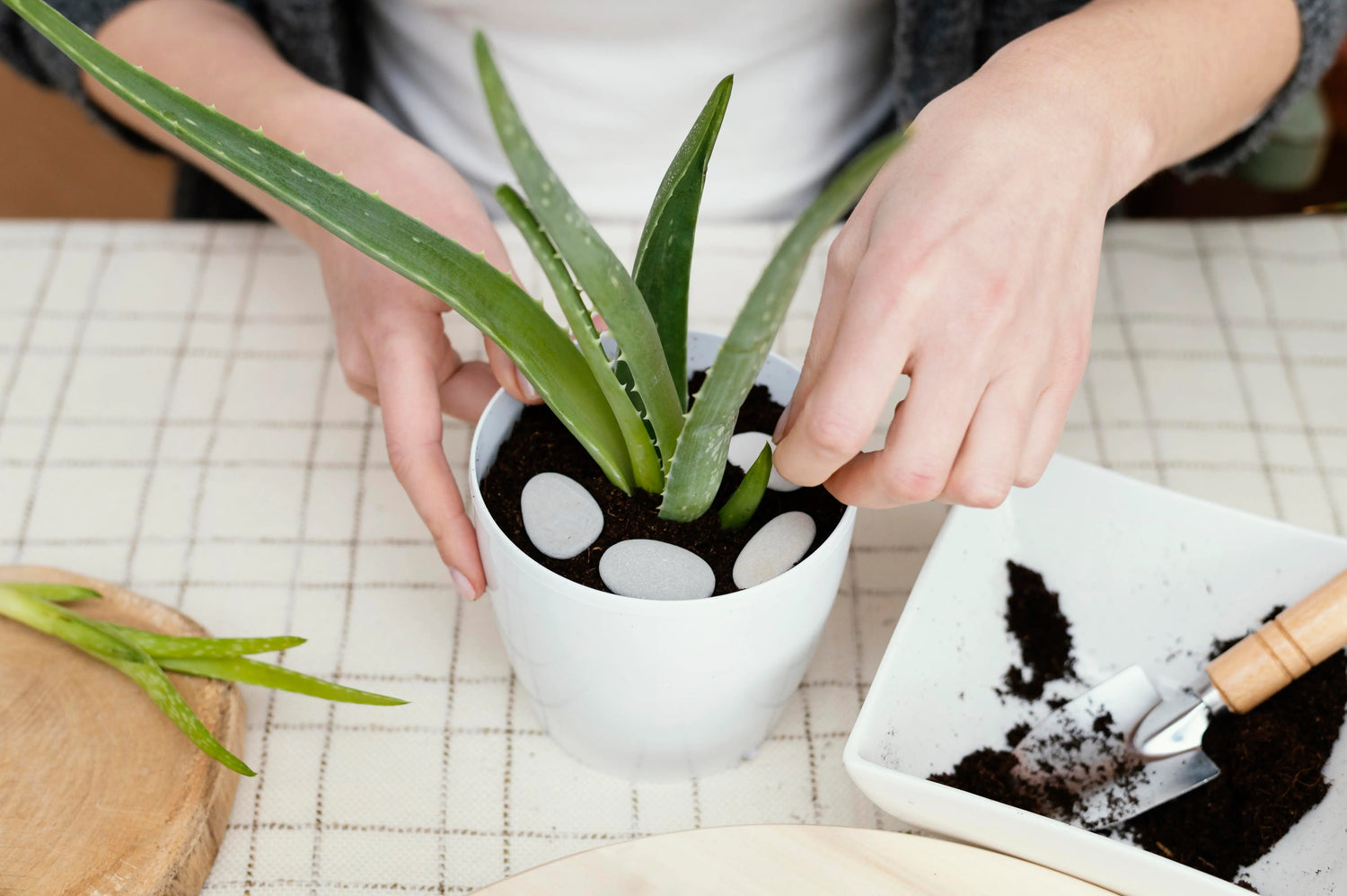
Aloe vera is one of the most loved indoor plants for a reason. It is beautiful, low-maintenance, sculptural, and forgiving enough for new plant parents. But even a hardy aloe plant needs the right foundation to grow well. That foundation starts with the right Aloe Soil.
Many plant problems do not begin with the leaves. They begin below the surface, inside the pot. If your aloe vera is sitting in heavy, soggy, or compacted soil, its roots may struggle to breathe. Over time, this can lead to yellow leaves, soft stems, weak growth, or even root rot.
The good news is simple: aloe vera care becomes much easier when you choose the right aloe vera potting soil. A healthy aloe needs a light, airy, fast-draining mix that supports the roots without holding too much moisture. This is why a high-quality succulent potting mix or cactus soil is one of the best choices for aloe vera plants.
Whether you are caring for your first aloe plant or refreshing a full indoor plant collection, this guide will help you understand exactly what your aloe needs, why soil matters, and how Rosy Soil can help you grow healthier plants with less guesswork.
Why Soil Is Always the First Suspect
Aloe vera is a desert plant. In the wild, it grows in sandy, dry conditions where water drains away almost instantly. That means its roots are designed to breathe, not sit in moisture. When you put that plant into heavy, water-retaining indoor potting soil, you're basically asking a desert dweller to live in a swamp.
The wrong soil for aloe plant doesn't just slow growth; it actively damages the root system over time. And the scary part? You won't see the damage until it's already bad.
Here's a simple truth every plant parent needs to hear: your aloe vera is only as healthy as the soil it's growing in.
Related Reading: How To Propagate Aloe: A Complete Guide (Steps + FAQs)
5 Signs Your Aloe Soil Is the Problem
1. Leaves Are Turning Yellow or Brown
Yellow or brown leaves on aloe vera are one of the most common distress signals. Most people assume it's a watering issue, and they're partially right. But the real root cause is almost always potting soil that holds too much moisture.
When soil doesn't drain properly, roots stay wet for too long. This cuts off oxygen to the roots and triggers yellowing from the base upward. If your leaves are soft and mushy near the base, that's root rot, and it starts with the wrong soil.
What to do: Check if your current succulent potting mix has proper drainage. If it clumps together when wet and takes weeks to dry out, it's time for a change.
2. The Soil Stays Wet for Days After Watering
Healthy aloe plant soil should dry out relatively quickly, within a day or two of watering. If you're pressing your finger two inches into the soil 5+days after watering and it's still damp, your mix is too dense.
This is one of the clearest signs that you need a well draining potting soil with a grittier texture. Aloe roots need air pockets around them to stay healthy. Compact, moisture-retaining mixes suffocate the roots slowly.
Pro tip:
Lift your pot right after watering, then again 48 hours later. If there's no noticeable difference in weight, drainage is a problem.
3. Roots Are Brown, Mushy, or Smelly
If you've ever repotted an aloe and noticed dark brown, mushy roots with a faint smell, that's root rot, and it's a direct result of sitting in the wrong aloe vera potting soil for too long.
Healthy aloe roots should be white or light tan and firm to the touch. Anything dark or soft means the roots have been waterlogged. At this stage, you'll need to trim the damaged roots, let them dry out, and repot into a proper cactus soil or succulent mix immediately.
4. Your Aloe Hasn't Grown in Months
Aloe vera isn't a fast grower, but it shouldn't be completely stagnant either. If your plant hasn't produced a single new leaf in several months, the aloe soil may not be giving it what it needs.
Dense, nutrient-depleted, or compacted soil limits root expansion. When roots can't spread, the plant can't grow. A quality succulent soil potting mix with the right balance of aeration, drainage, and nutrients gives roots the room they need to establish themselves and support new growth.
5. You're Using Regular Potting Soil or Garden Soil
This one is simple. Regular indoor potting soil is formulated to retain moisture, which is great for tropical houseplants, but terrible for aloe vera. Garden soil is even worse. It's too heavy, compacts easily in pots, and drains very poorly.
If you grabbed a generic bag of potting soil for indoor plants from the store and used it for your aloe, this is almost certainly your problem. Aloe vera needs something specifically designed for drought-tolerant plants, a cactus and succulent potting soil that prioritizes drainage and aeration over moisture retention.
Ready to fix your aloe's soil problem for good? Shop Rosy Soil's Cactus & Succulent Mix, fast-draining, peat-free, and designed by soil scientists specifically for plants like yours.
What the Best Aloe Soil Actually Looks Like
Now that you know what's going wrong, let's talk about what right looks like.
The ideal aloe soil has a few non-negotiable qualities:
- Fast drainage: Water should flow through within seconds, not pool on top or drain slowly. This is why a gritty, chunky cactus soil potting mix works so much better than standard houseplant blends.
- Lightweight and airy texture: Pick up a handful, and it should feel almost sandy. Roots need oxygen as much as nutrients, and dense soil blocks both.
- Slightly nutrient-rich but not overloaded: Aloe vera doesn't need a lot of fertilizer, but it does benefit from organic matter that supports slow, steady growth without overwhelming a drought-tolerant plant.
- Peat-free formula: Here's something most plant parents don't know: Peat moss, one of the most common ingredients in standard potting mixes, is a significant environmental problem. Peatlands store more carbon than all the world's forests combined, and mining them for potting soil releases massive amounts of CO2.
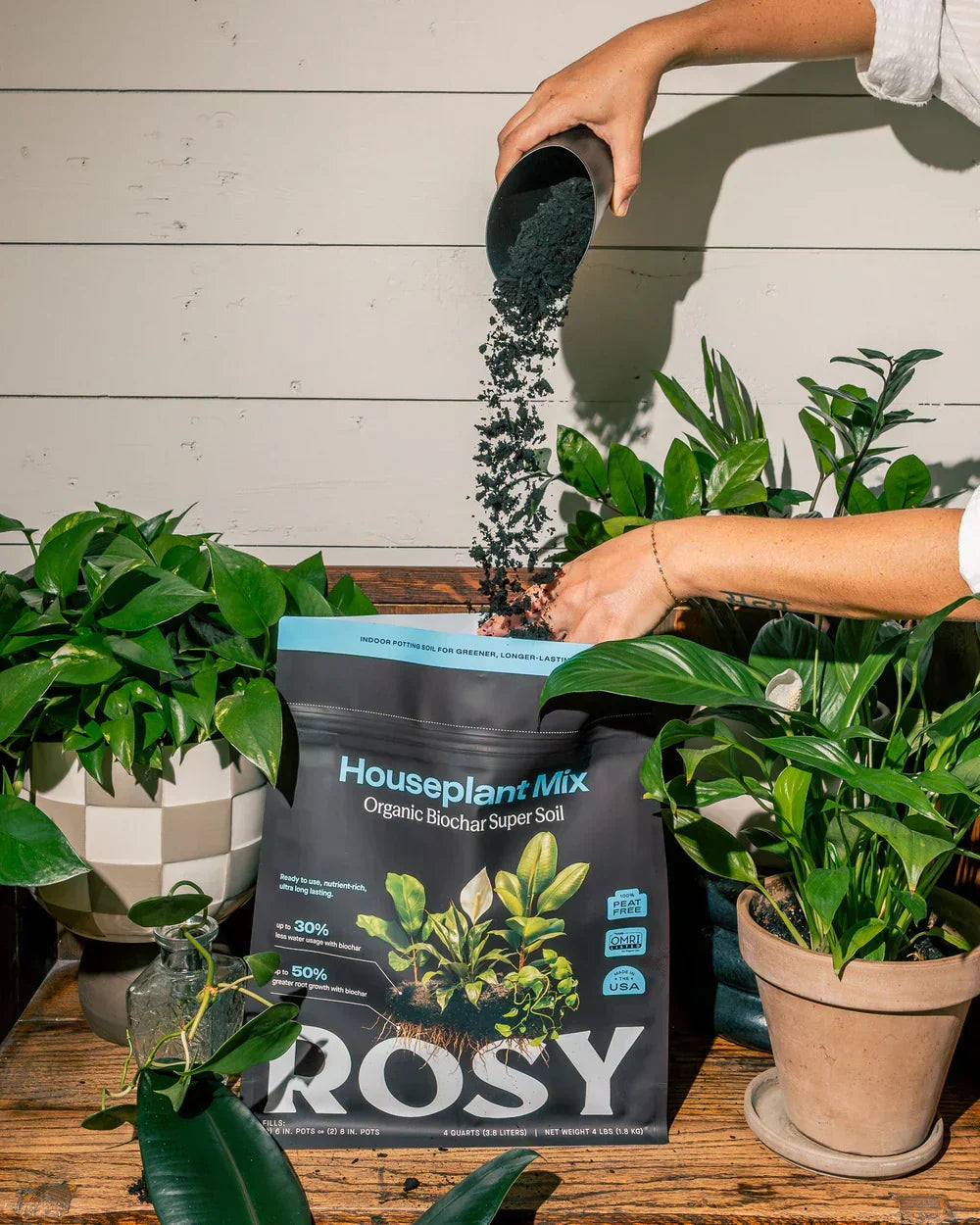
At Rosy Soil, we've replaced peat entirely with better alternatives that are just as effective - and far better for the planet. Learn more about our peat-free mission here.
Why Rosy Soil's Cactus & Succulent Mix Works So Well for Aloe
Our cactus and succulent potting soil was formulated by a team of plant and soil scientists, including PhDs in horticulture and soil chemistry, specifically for drought-tolerant plants like aloe vera, cacti, and succulents.
Here's what's inside every bag:
- Biochar: A carbon-negative, horticultural charcoal that improves drainage, holds onto nutrients, and stores beneficial microbes. For every ton of biochar produced, 3 tons of CO2 are removed from the atmosphere. Read the science behind it here.
- Pumice: A volcanic rock that keeps the mix lightweight, porous, and fast-draining
- Compost: Provides gentle, organic nutrients without chemical fertilizers
- Mycorrhizae: Beneficial fungi that expand root reach and improve nutrient uptake
- Pine bark fines and sand: Add grit, structure, and drainage
Every ingredient is peat-free, synthetic-free, and chosen because it's good for your plants and good for the planet. Rosy Soil's entire supply chain, from production to your door, is carbon neutral. That's not a marketing claim; it's backed by a Life Cycle Assessment. See our mission here.
Not sure which Rosy Soil mix is right for your plant collection? Take the free Soil Quiz and get a personalized recommendation in under 2 minutes.
Conclusion
If your aloe vera isn't thriving, don't automatically reach for the watering can or move it to a new window. Start with the soil. The right aloe soil, fast-draining, lightweight, peat-free, and nutrient-balanced, is the single most impactful change you can make for your plant's health.
Everything else: the light, the water, the pot- it all performs better when the foundation is right.
Give your aloe vera the soil it was born for. Shop Rosy Soil Cactus & Succulent Mix →
Frequently Asked Questions
Q: What is the best soil for aloe vera?
A: The best soil for aloe vera is a fast-draining, airy Aloe Soil made for succulents and cacti. A good aloe vera potting soil should not stay soggy. It should allow excess water to drain quickly while giving the roots enough airflow and support.
Q: Can I use regular potting soil for aloe vera?
A: Regular potting soil is usually not the best choice for aloe vera because it can hold too much moisture. Aloe does better in cactus soil or a succulent potting mix because these blends are designed for plants that prefer drier roots.
Q: How often should I water aloe vera in indoor soil?
A: Water your aloe vera only when the soil has dried out. In most homes, this means watering less often than tropical houseplants. A well-draining potting soil helps the plant dry properly between waterings.
Q: Is cactus soil good for aloe plants?
A: Yes, cactus soil is usually a great choice for aloe plants because it drains faster than standard potting soil. Aloe vera is a succulent, so it needs soil that supports dry-loving roots.
Q: What are the signs that my aloe needs new soil?
A: Your aloe may need fresh aloe plant soil if the leaves are yellow, soft, droopy, or mushy, or if the soil stays wet for several days. Compacted soil, poor drainage, or a bad smell from the pot can also mean it is time to repot.