Spring is here, and if your aroids have been looking a little sad lately - yellowing leaves, droopy stems, or just plain stuck with zero new growth, your soil might be the problem. Not your plant. Not your watering routine. The soil sitting in that pot is quietly working against you.
Here is the truth most beginner plant parents find out the hard way: regular potting soil for indoor plants was never really designed for aroids. And once you understand why, switching to a proper aroid soil becomes one of the easiest decisions you will ever make as a plant parent.
Let us break it all down - simply, clearly, and without the confusing plant-nerd jargon.
What Even Is an Aroid?
Before we talk about soil, let us quickly talk about plants. Aroids are a family of plants that includes some of the most popular houseplants out there: Monstera, Philodendrons, Pothos, Alocasia, and more. They are loved for their big, dramatic leaves and their ability to thrive indoors.
But here is what makes them different from your average houseplant: in the wild, aroids grow on the forest floor or climb up trees in tropical rainforests. Their roots are used to environments that are loose, airy, and fast-draining. They love moisture, but they absolutely hate sitting in soggy, dense soil.
That right there is the whole problem with regular potting mix.
Why Regular Potting Mix Does Not Work for Aroids
Standard houseplant soil, the kind you grab off a grocery store shelf, is usually made with a lot of peat moss or coco coir packed tightly together. It holds water well, which sounds like a good thing, but for aroids, it is actually a recipe for root rot.
When indoor plants soil stays wet for too long, the roots cannot breathe. Aroids need oxygen reaching their roots just as much as they need water. Dense, compact soil cuts off that airflow. Over time, roots start to suffocate and rot, and your plant slowly declines, no matter how carefully you water it.
This is exactly why so many plant parents feel like they are doing everything right, but their aroids still struggle. The soil is the missing piece.
What Is in a Good Aroid Mix?
Not all aroid potting mix options are created equal. A high-quality indoor plant soil typically contains a combination of the following ingredients:
-
Biochar is a highly porous, charcoal-like material that improves drainage, holds nutrients, and supports beneficial microbes. It also makes the soil more sustainable by storing carbon long-term.
-
Pine bark fines are another key ingredient. These chunky pieces of bark do two things really well: they improve drainage, and they add structure. Unlike peat, they do not break down and compact over time, which means your soil stays airy for much longer.
-
Pumice is a lightweight volcanic rock with tiny pores all over it. It keeps the mix from becoming too dense and ensures that water drains through quickly instead of pooling around the roots.
-
Worm castings are essentially worm manure, and they are incredible for plants. They are loaded with natural nutrients, and they release those nutrients slowly and steadily over time instead of all at once. This is far gentler on roots than synthetic fertilizers.
-
Mycorrhizae are beneficial fungi that form a relationship with plant roots. They help roots absorb more water and nutrients than they could on their own, leading to stronger, faster growth.
Together, these ingredients create the kind of rich, chunky, fast-draining soil that aroids absolutely love.
Why Regular Potting Soil for Indoor Plants Often Falls Short
Walk into any garden center and look at the ingredient list on a standard bag of houseplant soil. Chances are, the very first ingredient you see is peat moss.
Peat moss has been used in commercial potting mixes since the 1960s. It is cheap and widely available. But it comes with real problems that plant parents discover the hard way.\
First, peat compacts over time. What starts as a fluffy, light mix slowly becomes dense and hard. This cuts off airflow to your plant's roots, making it harder for them to grow.
Second, when peat dries out completely, it becomes hydrophobic, meaning it actually repels water rather than absorbing it. So you water your plant, and the water just runs straight down the sides of the pot without soaking in at all. Your plant stays thirsty no matter how much you water it.
Third, peat is not great for the planet. It is harvested from peat bogs, which are delicate ecosystems that have stored carbon for thousands of years. Digging them up releases all of that carbon into the atmosphere.
A proper aroid soil made with biochar for plants, pumice, and pine bark fines does none of these things. It is not compact. It does not repel water. And if it is made with sustainable ingredients, it can actually be carbon-negative, meaning it pulls carbon out of the atmosphere rather than adding to it.
New to Rosy Soil? Sign up for their newsletter and get 10% off your first order, plus plant care tips, and early product access. Because every great plant parent deserves a head start. Claim Your 10% Off Today!
Aroid Soil vs. Orchid Soil vs. Succulent Mix - What Is the Difference?
This is a question that comes up a lot, so let us clear it up once and for all.
Orchid soil (or orchid mix) is designed for plants that grow almost entirely in the air, with their roots clinging to bark and barely touching the ground. It is very coarse and drains almost instantly. While aroids like airflow, they still need a little more moisture retention than orchid mix provides.
Succulent potting mix and aloe soil are designed to dry out extremely fast. Succulents and cacti store water in their leaves and stems, so they need soil that basically never stays damp. Aroids, on the other hand, want moisture, just not waterlogged conditions.
Aroid soil needs to sit somewhere in the middle. It should stay lightly moist without becoming soggy, drain well, and allow enough airflow around the roots. Aroids like Alocasia, Monstera, Philodendron, Pothos, Anthurium, and Syngonium do best in a chunky aroid potting mix that holds some moisture but does not stay wet for too long.
Soil Type |
Drainage |
Moisture Retention |
Best For |
|
Aroid Soil |
High |
Medium |
Monstera, Philodendron, Pothos |
|
Orchid Soil |
Very High |
Low |
Orchids |
|
Succulent Mix |
Extreme |
Very Low |
Cactus, Aloe |
If you are growing tropical plants like Monstera or Calathea, a chunky aroid potting mix is the best choice.
When Should You Repot with Aroid Soil?
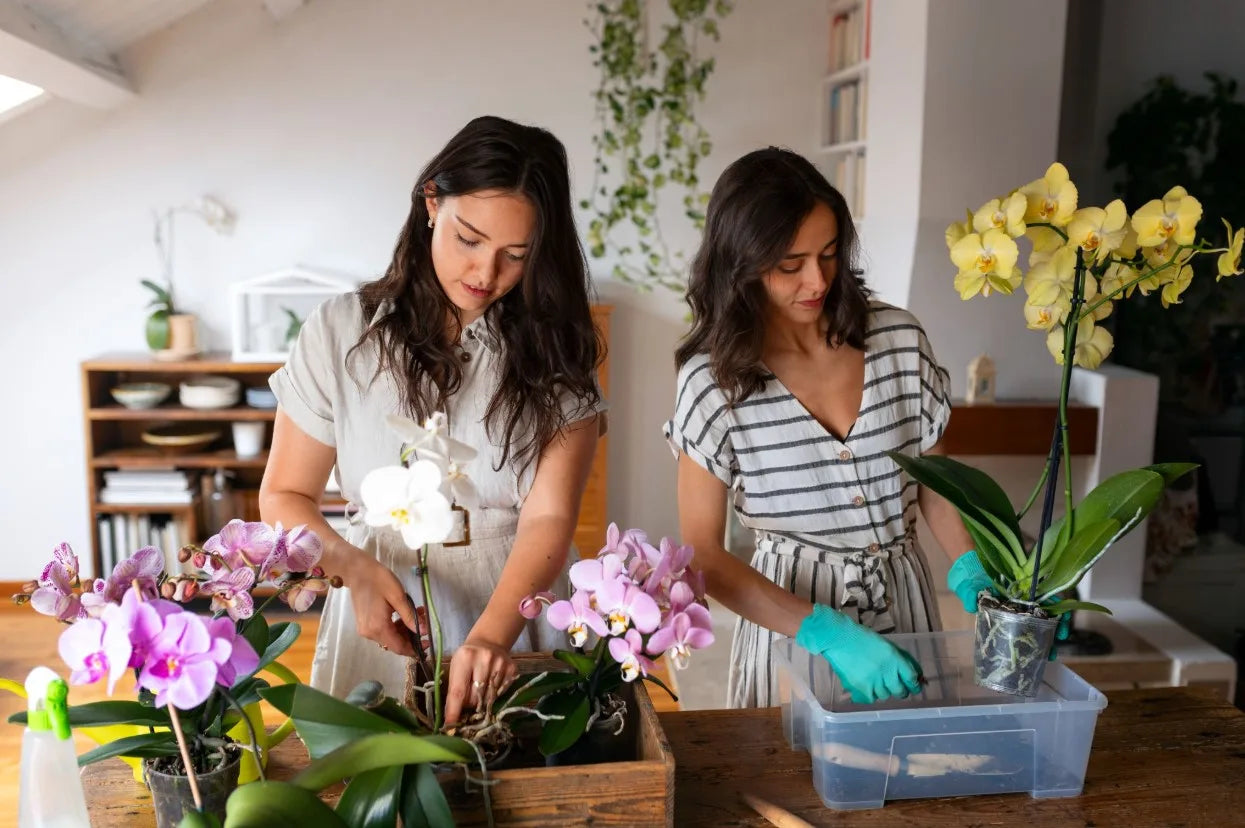
Spring is hands down the best time to repot your aroids. As the days get longer and temperatures rise, your plants naturally emerge from their slow winter phase and start pushing new growth. Repotting now gives their roots fresh, nutrient-rich soil to dig into right when they are ready to grow.
Signs your aroid needs fresh repotting soil this spring:
-
Roots are circling the bottom of the pot or poking out of the drainage holes.
-
Water runs straight through the pot without being absorbed
-
Your plant has not put out a single new leaf in months
-
The soil looks compacted, crusty, or is pulling away from the pot edges
-
You noticed yellowing or mushy stems near the base
If you see any of these, do not wait. Grab a pot one size up, fresh aroid soil, and give your plant a proper spring refresh.
Also Read: Your Aroids Need More Than Basic Soil - Here's the Science
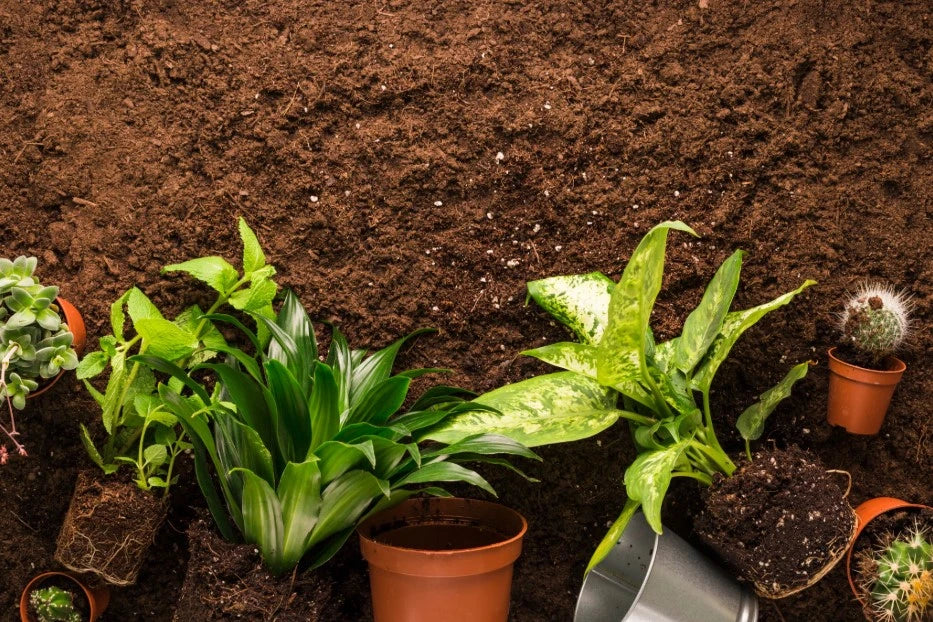
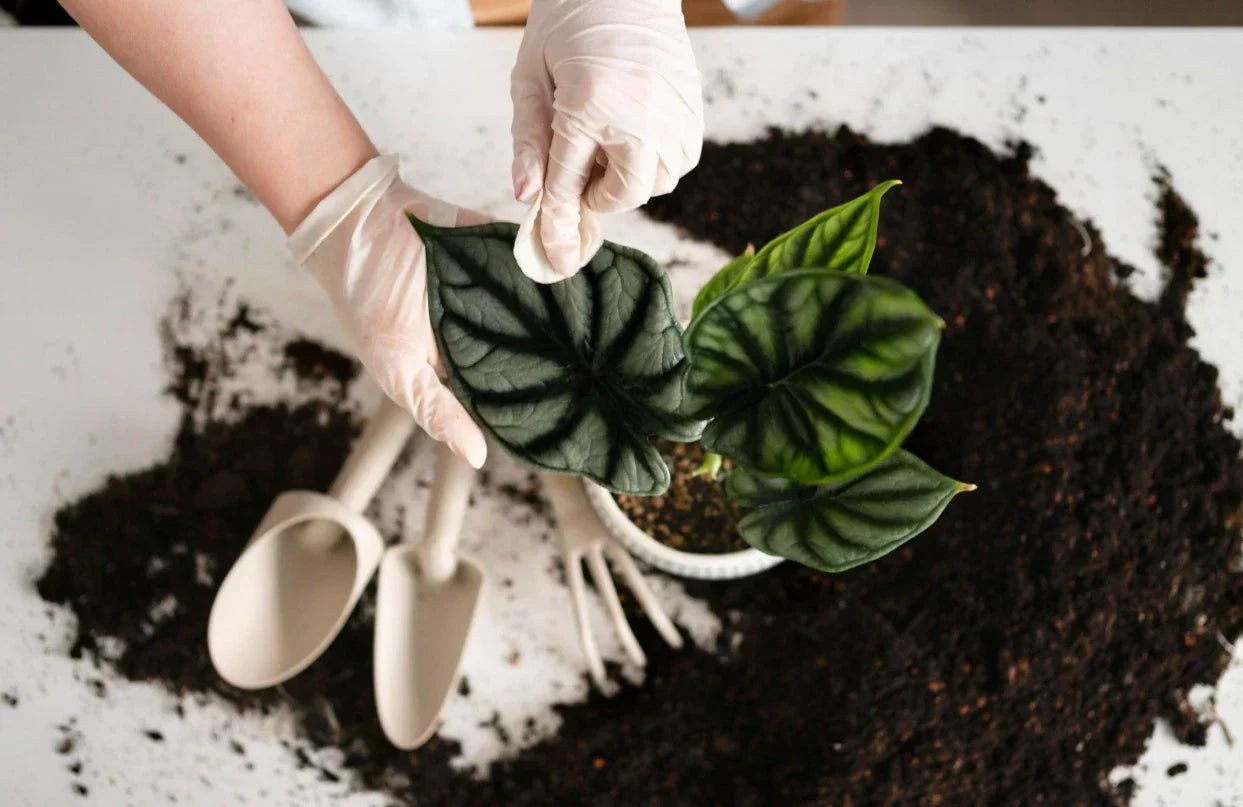
How to Repot with Aroid Soil - Step by Step
It is easier than it sounds, we promise.
Step 1: Water your plant lightly a day before repotting. This makes it easier to slide out of the pot without damaging roots.
Step 2: Gently remove the plant and shake off as much of the old soil as you can. Check the roots, trim any that look brown, mushy, or rotten.
Step 3: Add a layer of fresh aroid potting mix to the bottom of the new pot. Make sure the pot has drainage holes.
Step 4: Place your plant in the center and fill in around it with more aroid soil, pressing lightly to remove air pockets without compacting.
Step 5: Water thoroughly until it drains from the bottom, then place your plant back in its bright, indirect light spot.
That is it. No complicated steps, no special tools needed.
Upgrade your aroids this spring with Rosy Soil’s Aroid Mix -clean, effective, and built for healthy growth.
Conclusion
If you have been using regular potting soil for indoor plants on your aroids and wondering why they never seem to take off, now you know why. Aroids need light, chunky, fast-draining soil with real airflow, and standard potting mix simply cannot give them that.
Switching to a proper aroid soil this spring is one of the simplest, most impactful things you can do for your plant collection. Your roots will breathe better, your plants will grow faster, and you will spend a lot less time worrying about overwatering and root rot.
Spring is the perfect reset. Your aroids are ready to grow. Give them the soil that lets them do exactly that.