Orchids are stunning, elegant, and a little particular about their growing conditions. If you've ever wondered why your orchid's roots look brown and mushy, or why it hasn't bloomed in over a year, the answer often starts with one thing: the wrong orchid soil potting mix. Unlike most houseplants, orchids are epiphytes in nature, meaning they grow anchored to trees with their roots exposed to air and moisture, not buried in dense, water-retaining soil.
That means the orchid potting soil you choose needs to be specifically designed for how orchids actually grow. A standard potting mix just won't cut it. The right orchid mix should drain quickly, allow airflow to the roots, and deliver the nutrients an orchid needs to put out gorgeous blooms.
Whether you're repotting for the first time or upgrading to a better blend, knowing what's inside your orchid potting mix is the first step to becoming a more confident orchid parent.
In this article, we break down the 5 key ingredients that separate a great orchid soil from one that just doesn't work, so you can make a more informed choice the next time you shop.
Why Orchid Soil Is Different From Regular Potting Mix
Most houseplant potting soil is designed to retain moisture and support plants that grow in the ground. That's great for tropical foliage plants, but it's problematic for orchids. Orchid roots need to dry out slightly between waterings, and they need oxygen around them at all times.
When you plant an orchid in a dense, peat-heavy mix, the roots stay too wet for too long, leading to root rot. That's why orchid soil tends to be chunkier and more airy, more of a structured growing medium than a traditional soil. The best houseplant soil for orchids is one that mimics their natural growing environment: open, fast-draining, and full of life.
Not sure which soil is right for your plants? Take the Rosy Soil Quiz to find your perfect match in under 2 minutes!
5 Key Ingredients in Rosy Soil's Orchid Soil Potting Mix
Ingredient #1: Biochar - The Secret Weapon
If you are not already familiar with biochar for plants, you're about to be impressed. Biochar is a carbon-negative, porous material made by heating organic waste at high temperatures without oxygen - a process called pyrolysis. The result is a highly porous, charcoal-like substance that acts like a sponge inside your orchid potting soil.
Biochar for plants offers several key benefits:
- Nutrient retention: Its porous structure holds onto nutrients and slowly releases them back to plant roots.
- Moisture regulation: It absorbs excess water and releases it gradually, preventing both drought stress and waterlogging.
- Microbial habitat: Biochar creates a thriving home for beneficial soil microbes and fungi that support root health.
- Carbon sequestration: For every ton of biochar produced, approximately 3 tons of CO2 are removed from the atmosphere, making it a truly earth-positive ingredient.
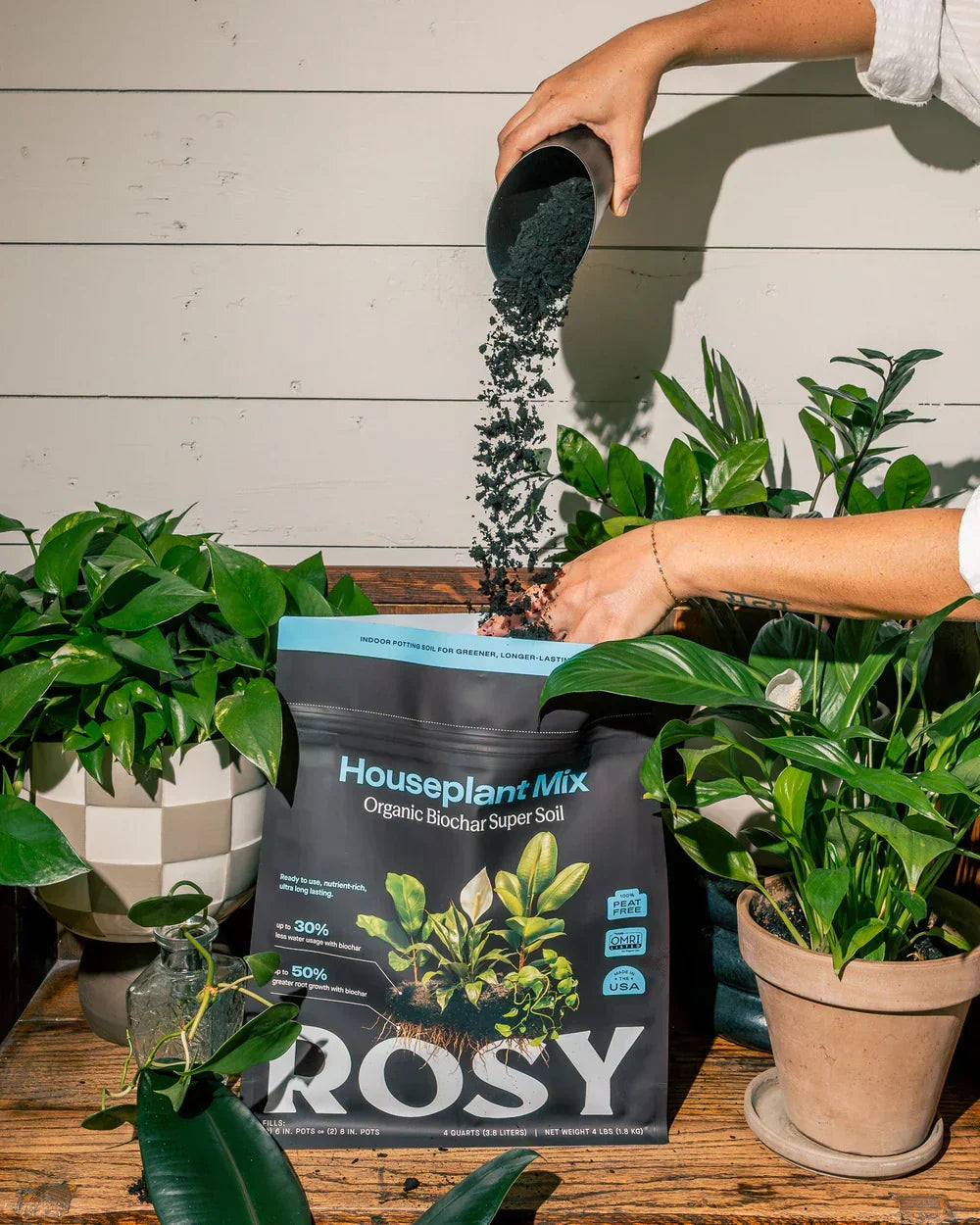
We at Rosy Soil use biochar as a core ingredient across its indoor potting blends. It's one of the reasons Rosy Soil is certified carbon negative, and one of the things that makes it one of the best potting soil for houseplants on the market today.
Ingredient #2: Orchid Bark
The structural backbone of any quality orchid soil potting mix is orchid bark. Rosy Soil uses orchid bark, a byproduct of the mulch industry, that is chunky, porous, and slow to break down. This means it maintains excellent structure in the pot for months at a time.
Bark creates critical air pockets around the roots, prevents compaction, and allows water to drain freely after each watering. Without it, even a well-intentioned watering routine can lead to soggy, suffocated roots. It's the ingredient that keeps your orchid mix feeling light and airy, the way orchids love.
Ingredient #3: Pumice
Pumice is a naturally occurring volcanic rock that is lightweight and porous, and it's a standout ingredient in a premium orchid potting mix. Unlike perlite, pumice is denser and more durable, meaning it holds its structure over time without breaking down or floating to the surface.
In your orchid potting soil, pumice works alongside orchid bark to dramatically improve drainage and aeration. It creates a gritty, open texture that mimics the rocky, well-draining environments where many orchids grow naturally in the wild.
Want living soil powered by science? Check out Rosy Soil's orchid potting mix- peat-free, carbon-negative, and loved by thousands of plant parents across the country!
Ingredient #4: Mycorrhizae - Root-Boosting Fungi
Mycorrhizae (pronounced my-kuh-RY-zee) are naturally occurring fungi that form a symbiotic relationship with plant roots. When present in an orchid soil potting mix, they extend the root system's reach, allowing the plant to access far more water and nutrients than it could on its own.
These microscopic fungi also release a substance called glomalin, which helps bind soil particles together, improving structure and moisture retention at the same time. For orchids, which have delicate and sensitive root systems, mycorrhizae can make the difference between a plant that barely survives and one that actively blooms season after season.
Ingredient #5: Worm Castings
Worm castings are organic matter produced by earthworms as they process decomposed material, and in the world of organic garden soil and premium plant care, they're considered one of the most nutrient-dense, slow-release fertilizers available.
For orchids, worm castings provide a gentle, steady supply of nutrients like nitrogen, phosphorus, and potassium, without the risk of chemical burn that synthetic fertilizers can cause. They also improve the soil's microbial diversity, creating a more biologically active and healthy growing environment. When you see worm castings on an ingredient list, it's a sign the brand is serious about natural, effective plant nutrition.
Also Read: Biggest Orchid Myth Plant Parents Still Believe (And It's About Soil)
What to Avoid in an Orchid Potting Mix

Knowing what to look for is important, but so is knowing what to avoid. Keep an eye out for these red flags when shopping for orchid potting soil:
- Peat moss: While effective for moisture retention, peat is harvested from ancient peatlands that store massive amounts of carbon. Mining releases significant greenhouse gases. Look for peat-free alternatives.
- Synthetic fertilizers or chemicals: These can burn sensitive orchid roots and disrupt the natural microbial life that supports long-term plant health.
- Heavy, dense mixes: If the bag feels heavy and looks like garden soil, it's not right for orchids. You want something light, chunky, and airy.
- Generic "indoor plant" mixes: Many general-purpose soils are formulated for the broadest possible range of plants, not the specific needs of orchids.
How to Use Orchid Soil Potting Mix the Right Way
Even the best orchid mix won't work if it's used incorrectly. Here are a few quick tips:
- Choose the right pot: Clear plastic or terracotta pots with drainage holes are best. Orchid roots photosynthesize, so clear pots let in light.
- Don't over-pack: Fill the pot loosely. The mix should be snug but not compacted around the roots.
- Water deeply, then wait: Water thoroughly until it drains out the bottom, then allow the top inch of mix to dry or the roots to turn silvery before watering again.
- Repot every 1–2 years: Over time, bark breaks down, and the mix becomes denser. Fresh orchid potting soil every couple of years keeps things optimal.
Conclusion
Choosing the right orchid soil is one of the most impactful things you can do for your plant's health and blooming success. Rosy Soil's orchid soil potting mix combines all six of these powerful, natural ingredients- biochar, orchid bark, pumice, mycorrhizae, worm castings, and sand- into one thoughtfully crafted blend that gives orchids exactly what they need to thrive.
If you're ready to stop guessing and start growing, explore Rosy Soil's full product lineup and find the perfect orchid potting mix for your plants.