If you have a peace lily at home, chances are you already love it. Those glossy dark green leaves, the elegant white blooms, the way it perks up a shady corner of your living room, peace lilies are genuinely one of the most rewarding houseplants a beginner can grow. But they're also one of the most misunderstood when things start going wrong.
Yellowing leaves. Drooping stems that don't bounce back after watering. Brown tips. Stunted growth. No flowers. Sound familiar?
The internet's standard answer to all of these problems is "you're overwatering." And while watering habits do matter, there's a much more common, and much less talked about, culprit hiding right underneath your plant: the soil.
The truth is, most peace lilies are sitting in the wrong peace lily soil entirely. And no matter how carefully you water, how much light you provide, or how faithfully you fertilize, the wrong soil will quietly undermine everything.
This guide is going to change the way you think about what goes inside your pot, and give you the knowledge to set your peace lily up for real, lasting success.
What a Peace Lily Actually Needs
To understand what the best peace lily potting soil looks like, you first need to understand where peace lilies come from.
Spathiphyllum, the genus that includes all peace lilies, is native to the tropical rainforests of Central and South America, as well as parts of Southeast Asia. In the wild, these plants grow on the shaded forest floor, where the soil is a rich, loose mixture of decomposed leaves, bark, and organic matter. Water falls frequently but drains away quickly. The ground is never waterlogged. Roots have plenty of oxygen, a steady supply of nutrients from decaying organic material, and a slightly acidic pH that makes those nutrients easy to absorb.
When you bring a peace lily indoors, your job is to recreate that environment as closely as possible. That means your indoor soil setup needs to be loose, well-draining, rich in organic matter, and slightly acidic, somewhere between pH 5.8 and 6.5.
Why Most Potting Soil Fails Peace Lilies
Walk into any garden center, and you will find shelves full of indoor potting soil options with promises like "feeds plants for 6 months" or "moisture control formula." These sound appealing, but for peace lilies specifically, they can cause real problems.
The compaction problem. Most standard potting mixes are heavily peat-based. Peat starts reasonably fluffy but compacts significantly over time as it breaks down. After just a few months of regular watering, a peat-heavy mix can become so dense that water sits on the surface for minutes before slowly soaking in, or runs straight down the sides of the pot without ever reaching the roots. Either way, the roots are not getting what they need.
The drainage problem. Peace lily roots are sensitive. They need moisture, yes, but they also need air. In poorly-draining houseplant soil, water accumulates around the root zone, displacing the oxygen roots depend on to function. The roots essentially drown, slowly at first, then irreversibly if nothing changes. This is the real cause of most "overwatering" symptoms. It's not that you watered too much; it's that the water had nowhere to go.
The nutrient problem. Cheap potting mixes often contain synthetic slow-release fertilizer pellets that seem helpful but can actually burn sensitive roots and leave behind salt buildup over time. Once those pellets are exhausted, usually within a few months, the soil has very little nutritional value left, and your peace lily starts showing signs of deficiency even if you're feeding it regularly.
The structure problem. Even when a mix starts with decent structure, it degrades. Peat compresses, and what was once a light, airy medium becomes a dense, lifeless block. Peace lilies that haven't been repotted in a year or two are almost certainly sitting in soil that has fundamentally changed since they were first potted.
The good news? All of these problems are completely fixable. It starts with understanding what a great organic potting soil for indoor plants is actually made of.
Ready to Give Your Peace Lily a Fresh Start? Find Rosy Soil at a store near you, available at local garden centers and retailers across the country. No waiting for shipping, no minimum order. Just great soil, ready when you are.
Reading Your Peace Lily: What Soil Problems Look Like on the Plant

One of the most valuable skills a gardener can develop is learning to read their plant, to look at what's happening above the soil and diagnose what's going wrong below it. Peace lilies are actually quite communicative once you know what to look for. Here's a practical guide to the most common symptoms and their soil-related causes.
Yellowing leaves across the whole plant. When yellowing is widespread and not limited to the oldest lower leaves, it's almost always a sign of either nutrient deficiency or root dysfunction. Old, depleted soil that can no longer supply consistent nutrition is a primary culprit. If the soil also feels dense and slow to drain, compaction and poor oxygen flow are likely worsening conditions at the root level. Refreshing the mix with a quality repotting soil for indoor plants that includes organic matter like worm castings and compost can reverse widespread yellowing surprisingly quickly.
Wilting that doesn't recover after watering. This is one of the most alarming things a plant parent can experience. You water your peace lily, and instead of perking up within an hour or two, it stays limp. When watering doesn't fix wilting, it usually means the roots have been damaged and can no longer take up water effectively. The most common cause is root rot from chronically waterlogged soil. At this point, simply watering less won't help; you need to repot into fresh, free-draining peace lily potting soil and remove any damaged roots in the process.
Brown leaf tips. Brown tips on peace lily leaves often get blamed on low humidity or fluoride in tap water, and those can be contributing factors. But chronically dry soil, especially the kind of dry that happens when compacted soil becomes hydrophobic, and water can't properly penetrate, is just as common a cause. When soil dries out unevenly, the surface looks moist after watering, but deeper layers stay dry for days. Roots in those dry zones experience stress, and the plant communicates that stress through browning at the tips of its longest leaves first.
No flowers for a year or more. Peace lilies bloom when they're comfortable. A plant that hasn't flowered in a long time is telling you something in its environment isn't right, and more often than not, soil quality is a major part of that equation. Nutrient-depleted soil, compacted growing conditions, and poor root health all suppress blooming. A plant that is genuinely thriving in well-structured, nutritious houseplant soil will bloom reliably, typically in spring and sometimes again in autumn.
Slow or stopped growth. A peace lily that isn't producing new leaves during the growing season is soil-limited in most cases. It either needs more space or fresher, more nutritious growing medium, or both. Growth should be steady and visible from spring through summer. If you haven't seen a new leaf in eight weeks or more during those active months, the soil is worth investigating first before you start adjusting light or water.
Not Sure Which Soil Your Plants Need? Every plant has different needs, and finding the right match makes all the difference. Take the Rosy Soil Quiz to get a personalized soil recommendation for your peace lily and every other plant in your home.
Building Your Own Peace Lily Soil Mix
If you enjoy a hands-on approach to gardening, blending your own peace lily soil gives you complete control over every ingredient. Here's a reliable starting formula for a beginner-friendly mix that your peace lily will genuinely thrive in:
- 40% quality organic potting mix as your base (look for one that already contains compost and bark)
- 25% pumice or coarse sand for drainage and aeration
- 20% orchid bark or bark fines for texture and airflow
- 15% worm castings for gentle, slow-release nutrition
Mix these thoroughly before potting. The finished blend should feel light, loose, and slightly chunky; you should be able to push your hand through it easily. If it feels heavy or compacts when you squeeze it, add more perlite or bark until the texture is right.
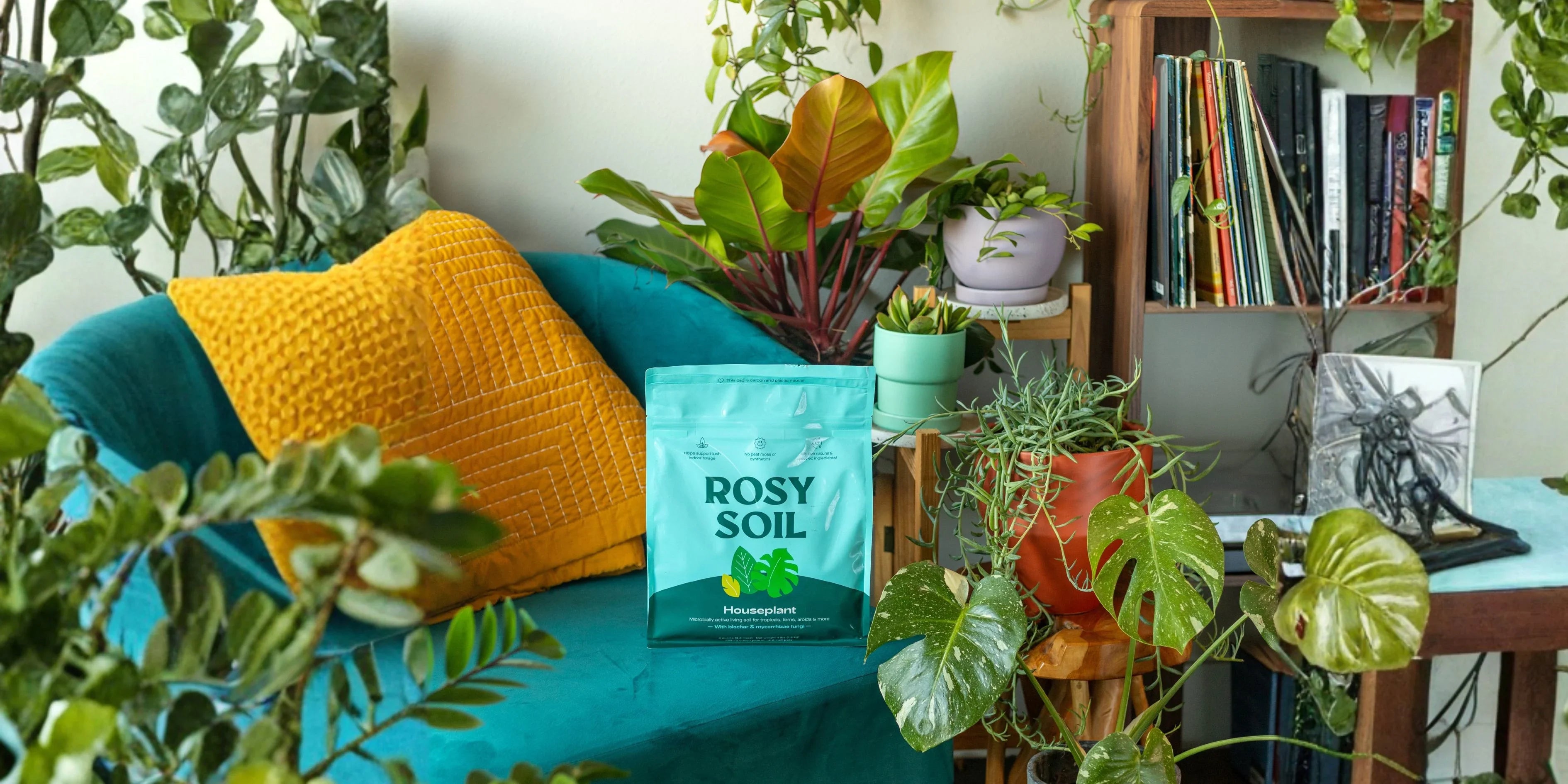
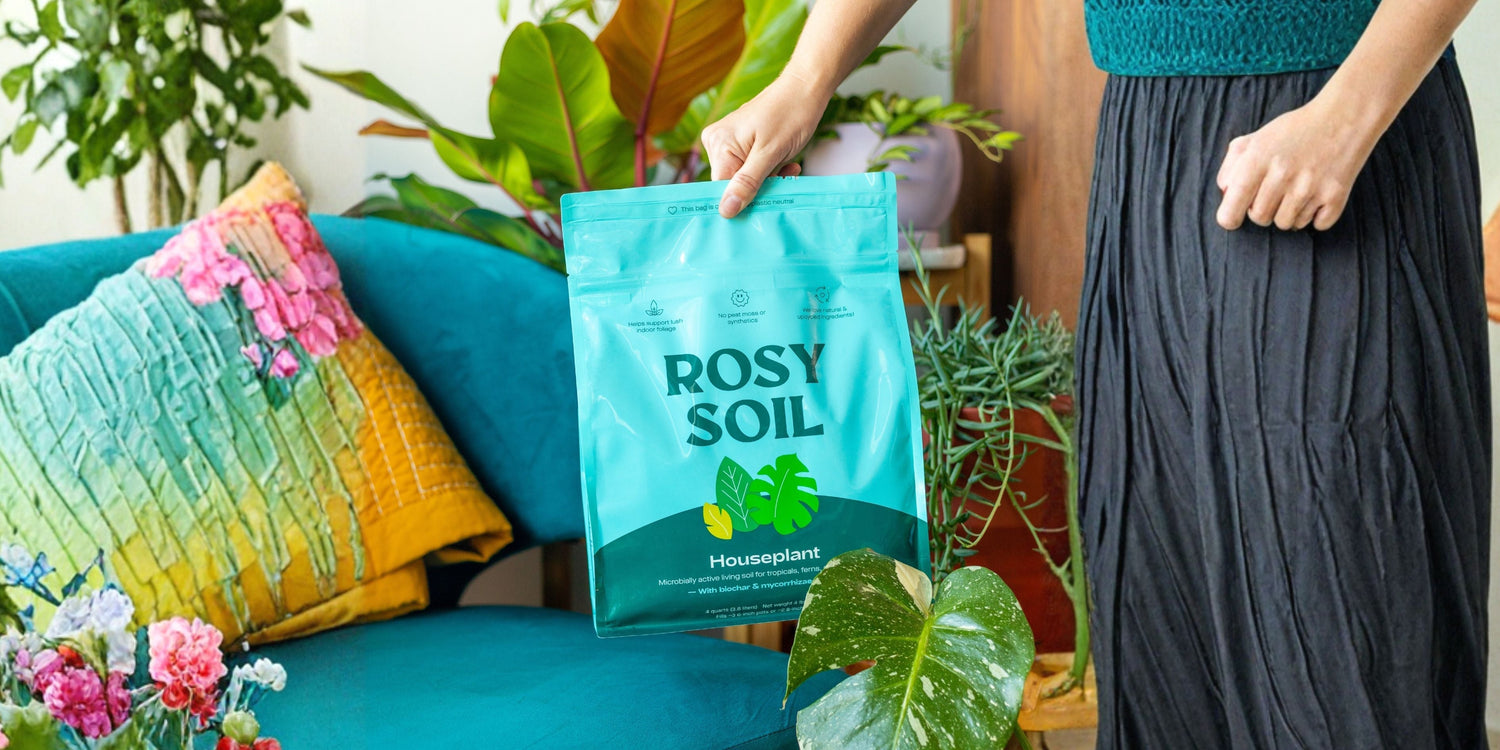
If you'd rather skip the blending altogether, Rosy Soil's organic houseplant potting mix is specifically formulated with biochar, mycorrhizae, worm castings, compost, and bark fines, all the ingredients that make a genuinely great organic potting soil for indoor plants, with no peat and no synthetic additives. It's a particularly good fit for peace lilies because of how well its texture and nutrition profile match what tropical understory plants need.
Conclusion
Your peace lily wants to thrive. It's not a difficult plant by nature; it's just a plant whose success is deeply rooted (quite literally) in what's happening below the soil line. Give it the right peace lily soil, loose, organic, rich in biology, free-draining, and slightly acidic, and you'll be rewarded with lush growth, glossy leaves, and those beautiful white blooms that make this plant such a beloved staple of indoor gardens everywhere.
Whether you blend your own mix or choose a quality ready-made option, the investment in good soil is the single most impactful thing you can do for your peace lily. Everything else, watering, light, fertilizing, performs better when the foundation underneath it is right.
Start with the soil. Your peace lily will do the rest.
Your Plants Deserve Better Soil, And So Does the Planet
Our organic houseplant potting mix is made with biochar, worm castings, mycorrhizae, and zero synthetic additives, scientifically crafted to grow healthier plants while capturing carbon from the atmosphere. Every bag you buy helps undo climate change. Shop now and give your peace lily the fresh start it deserves.