You bought your orchid in full bloom, followed every tip you found online, and still watched it slowly decline. Sound familiar? You are not alone, and there’s a very good chance the problem started before you even watered it for the first time. It started with the orchid soil. Choosing the right orchid soil is one of the most important steps for keeping orchid roots healthy, airy, and free from rot.
Most plant parents unknowingly repeat one of the most common orchid myths in the houseplant world: that orchids grow the same way as other houseplants, in regular indoor potting soil, packed tightly into a closed pot. This simple misunderstanding is one of the biggest reasons orchids struggle, even when plant parents use the right light, watering schedule, and care routine.
And the good news? Once you understand the truth, fixing it is surprisingly simple. Let’s bust this myth wide open and show you exactly what orchid soil should actually look like.
The Myth: Orchids Need Regular Potting Soil
Walk into any big-box garden center, and you will see shelves full of all-purpose plant soil and generic flower potting soil. These products are designed to retain moisture, which sounds like a good thing, but for orchids, it is actually one of the fastest ways to damage their roots.
The belief that orchids can thrive in regular houseplant soil or dense all-purpose potting mix is one of the most common reasons orchids fail indoors.
But here is reality - most orchids are epiphytes (plants that grow on the surface of other plants). In the wild, most orchid species, like Phalaenopsis (moth orchids), Cattleya , Dendrobium, and Oncidium, don't grow in soil at all. They grow attached to trees and rocks, where their roots are exposed to open air, fast-draining rainwater, and dappled sunlight. Their root systems are designed to dry out quickly between waterings and breathe freely at all times.
When you put that kind of plant into dense, moisture-retaining regular potting soil or a standard soil mix, you are essentially suffocating it. The roots can't breathe, the medium stays soggy, and root rot sets in fast, usually before you even notice anything is wrong.
What Orchid Roots Actually Need
Understanding orchid roots is key to choosing the right orchid soil mix. Unlike most houseplants, orchids have roots covered in velamen, a spongy layer that quickly absorbs water and then dries out fast.
Because orchids naturally grow on trees, their roots need airflow, quick drainage, and a light growing medium. That means your orchid soil potting mix should be:
-
Chunky and coarse: Large particles like pine bark, pumice, or charcoal allow air to circulate freely around the roots and prevent compaction over time.
-
Fast-draining: Water should pass through quickly, not pool at the bottom of the pot or stay trapped in the medium for days.
-
Lightweight and airy: Dense, heavy plant soil will compact around orchid roots and cut off the airflow they depend on.
This is why a generic bag of indoor potting soil, no matter how high-quality it is for your monstera or pothos, is simply the wrong tool for the job when it comes to orchids.
Regular Potting Soil vs Orchid Soil Mix - Difference
Here is a simple breakdown of how regular potting soil compares with a proper orchid soil mix, and why the right texture matters so much for orchid root health.
Regular Potting Soil |
Orchid Soil Mix |
|
Dense and moisture-retaining |
Chunky and fast-draining |
|
Can suffocate orchid roots |
Allows airflow around roots |
|
Better for common houseplants |
Better for orchids |
|
Increases root rot risk |
Supports healthier roots |
|
Holds water for longer |
Helps roots dry between waterings |
What a Great Orchid Soil Mix Actually Looks Like
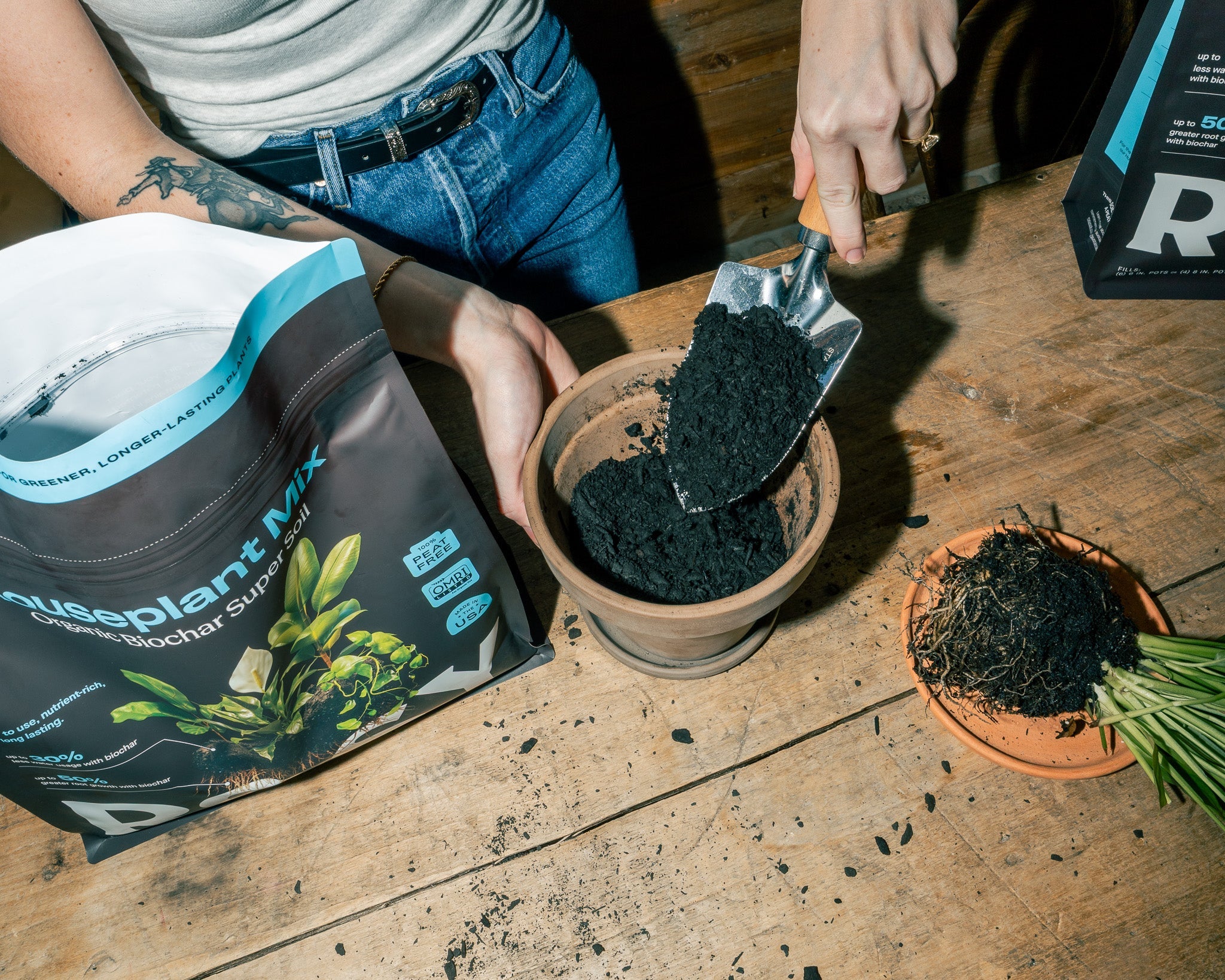
A well-designed orchid soil mix looks more like a handful of chunky bark and mineral material than the dark, fine-textured dirt most people picture when they think of potting soil. Here's what the best mixes typically include:
-
Pine bark is the foundation of most quality orchid mixes. It is coarse, slow to break down, and keeps air pockets open around the roots, closely mimicking the tree bark that orchids naturally grow.
-
Pumice is a volcanic mineral that improves drainage and aeration. It helps the orchid mix stay light and prevents it from becoming too dense after repeated watering.
-
Biochar is a porous, sustainable ingredient that helps hold nutrients, improve drainage, and support beneficial microbes. It also captures carbon, making it a plant-friendly and planet-friendly alternative to peat.
-
Mycorrhizae are beneficial fungi that support stronger orchid roots. They help roots absorb more water and nutrients, improving overall root health and plant growth.
Ready to give your orchids the growing medium they actually deserve? Rosy Soil's Orchid Mix is crafted with pine bark, pumice, biochar,, and mycorrhizae, no peat, no synthetics, just a clean, chunky, biologically alive mix designed to mimic your orchid's natural habitat. Shop today!
How Often Should You Repot Orchids - and What Soil to Use?
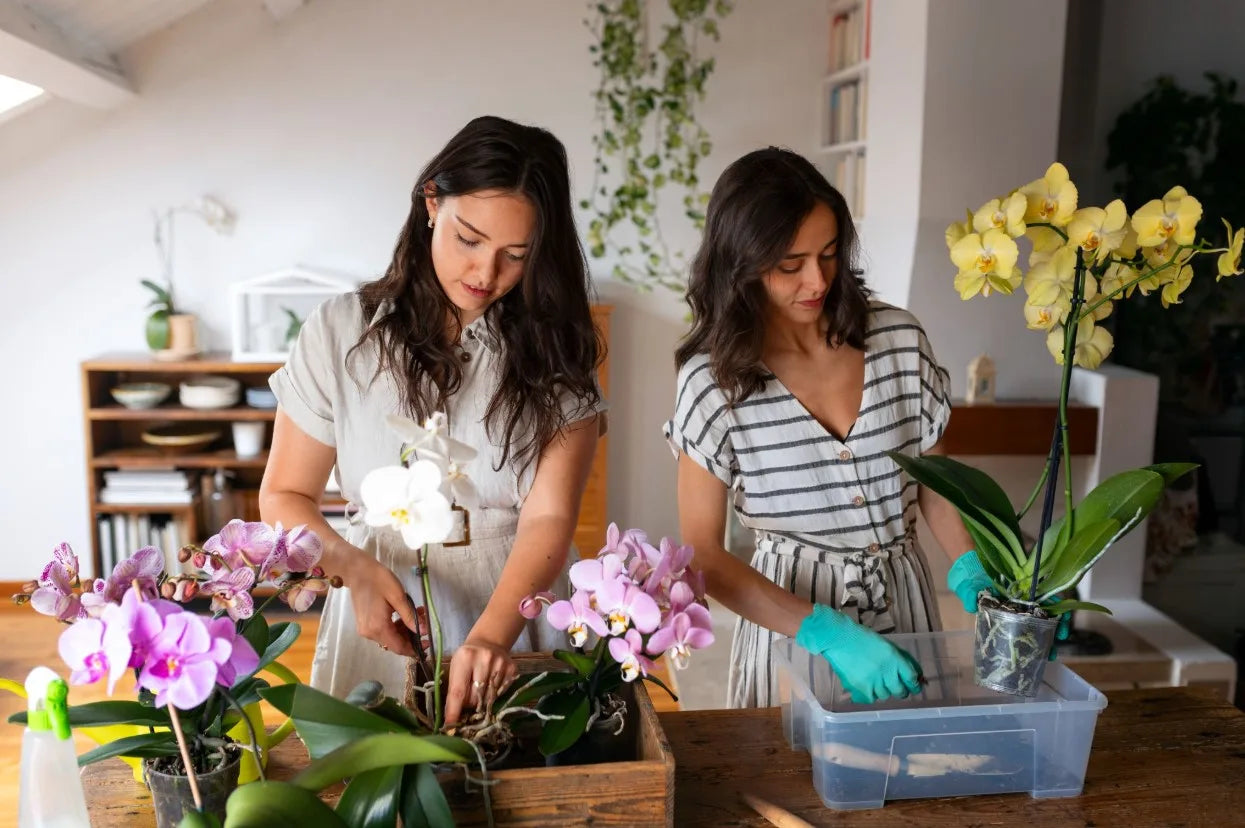
 One of the most overlooked aspects of orchid care is knowing when and how to repot. Most orchids benefit from being repotted every one to two years, not necessarily because they have outgrown their container, but because the growing medium breaks down over time.
As bark and other organic components in your orchid soil decompose, the mix becomes finer, denser, and less airy. These are exactly the conditions that lead to root rot.
Signs it is time to repot your orchid include:
-
Roots that are tightly packed or escaping the pot
-
A growing medium that stays wet for more than a week after watering
-
Visible root decay, mushy roots, or a sour smell from the pot
How to Repot:
-
Repot your orchid after the blooms have fallen, as this is the best time to avoid stressing the plant during flowering.
-
When you repot, gently remove any dead or mushy roots, rinse the remaining roots under lukewarm water, and let them air dry for a few minutes before placing the plant into fresh orchid soil potting mix.
-
Choose a pot with generous drainage holes. A clear plastic pot is even better because it lets you check root health at a glance.
-
For orchid varieties like Phalaenopsis, Cattleya, Dendrobium, Oncidium, Miltonia, and Paphiopedilum, a purpose-built mix with a chunky, airy texture will help support stronger roots, healthier foliage, and more reliable blooms.
Also Read: Why Your Orchid Isn't Blooming And How the Right Soil Mix Can Help
How to Tell If Your Orchid Is in the Wrong Soil Right Now
Not sure if your current orchid soil is the problem? Here are the signs to look for:
-
Yellowing leaves, especially at the base, often signal waterlogged roots from soil that is not draining properly.
-
Mushy or brown roots usually indicate rot, which is almost always caused by soil that holds too much moisture.
-
No blooms for over a year can be a sign of poor root health, and root health starts with the right orchid soil mix.
-
Water pooling on top of the soil instead of draining through is a clear red flag that the mix is too dense.
If you are seeing any of these signs, it is time to repot with the right mix. Switching to a chunky orchid soil mix can help improve airflow, reduce excess moisture, and support healthier root growth.
Ready to give your orchid a fresh start? Rosy Soil’s Orchid Mix is peat-free, biochar-powered, and built for exactly what orchid roots need: open, airy, fast-draining structure and beneficial microbial life.
The Bigger Picture: Soil Matters for Every Houseplant
The orchid soil myth is really a symptom of a bigger problem: most plant parents treat plant soil as an afterthought. We obsess over watering schedules, lighting, and fertilizer, but the soil is where all of that effort either pays off or falls apart.
The right flower potting soil for a peace lily is different from what a cactus needs. The right houseplant soil for a monstera differs from what an orchid wants. Treating all plants as if they need the same dense, standard orchid potting soil, or general potting mix, is the root cause (pun intended) of most indoor plant struggles.
The shift happening in modern soil science, powered by ingredients like biochar, mycorrhizae, worm castings, and compost, is making it easier than ever to give every plant exactly what it needs without synthetic chemicals or environmentally harmful materials like peat.
For a full breakdown of which soil works for which plants, from orchids to herbs, don't miss The Ultimate Plant & Soil Finder on the Rosy Soil blog.
Conclusion
The biggest orchid myth isn't about watering frequency or light levels. It’s the belief that a standard bag of regular potting soil or general plant soil is good enough
for a plant that naturally grows on trees in tropical forests. It is not, and once you understand why, the solution becomes obvious.
Give your orchid a chunky, fast-draining, biologically alive orchid soil mix, and you will see what this plant is truly capable of. Better roots, stronger foliage, and more reliable blooms all begin with the right growing medium.
The right orchid soil potting mix isn't just a nice upgrade. For an epiphyte like an orchid, it's the whole ballgame.
Frequently Asked Questions
Q: Can I use regular potting soil for orchids?
A: No. Regular indoor potting soil is too dense and retains too much moisture for orchids. Their roots need to breathe and dry out quickly between waterings. Always use a purpose-built orchid soil mix with chunky, fast-draining ingredients like bark and pumice.
Q: What is the best orchid soil mix?
A: The best orchid potting soil contains a blend of coarse pine bark, pumice, biochar, worm castings, and mycorrhizae. This combination promotes excellent drainage, root aeration, and long-term biological health in the growing medium.
Q: How often should I change my orchid's soil mix?
A: Most orchids benefit from fresh orchid soil potting mix every one to two years. As the organic components in the mix break down, the medium becomes denser and less airy, which compromises root health over time.
Q: What kind of soil do orchids need?
A: Orchids need a chunky, airy, fast-draining orchid soil mix made with ingredients like pine bark, pumice, biochar, and other materials that allow roots to breathe.
Q: Is orchid soil different from regular potting soil?
A: Yes. Orchid soil is much chunkier and drains faster than regular indoor potting soil. Regular potting soil holds too much moisture and can cause orchid roots to rot.
Q: Can orchids grow without soil?
A: Yes. Many orchids naturally grow without traditional soil. In the wild, they attach to trees or rocks and absorb water and nutrients through exposed roots.