Whether you just brought home your first monstera or you’ve been taking care of a whole jungle on your windowsill, there’s one thing every plant parent eventually faces: repotting day. And when that day comes, the most important decision isn’t the pot size, it’s the soil inside it.
Most people just grab any bag of indoor potting soil off the shelf without thinking twice. We’ve all done it. But here’s the thing: that “regular” soil might not be doing your plant (or the planet) any favors. That’s where peat-free repotting soil changes everything.
What's Wrong With Traditional Potting Soil?
Here’s something most gardening bags don’t tell you: most conventional houseplant potting mix contains peat moss. Peat is harvested from ancient peat bogs, ecosystems that take thousands of years to form and act as massive carbon storage systems.
The problem? When peat is removed, all that stored carbon gets released into the atmosphere. So every time you repot with peat-based soil, you're unknowingly adding to carbon emissions. Kind of ironic, right? A hobby meant to nurture life ends up harming the planet.
The good news, there’s a better way.
What Makes a Great Peat-Free Potting Soil for Indoor Plants?
A high-quality repotting soil for indoor plants doesn’t need peat to perform well.
In fact, many peat-free mixes actually work better because they support your plant’s natural growth instead of suffocating it.
Here's what to look for:
-
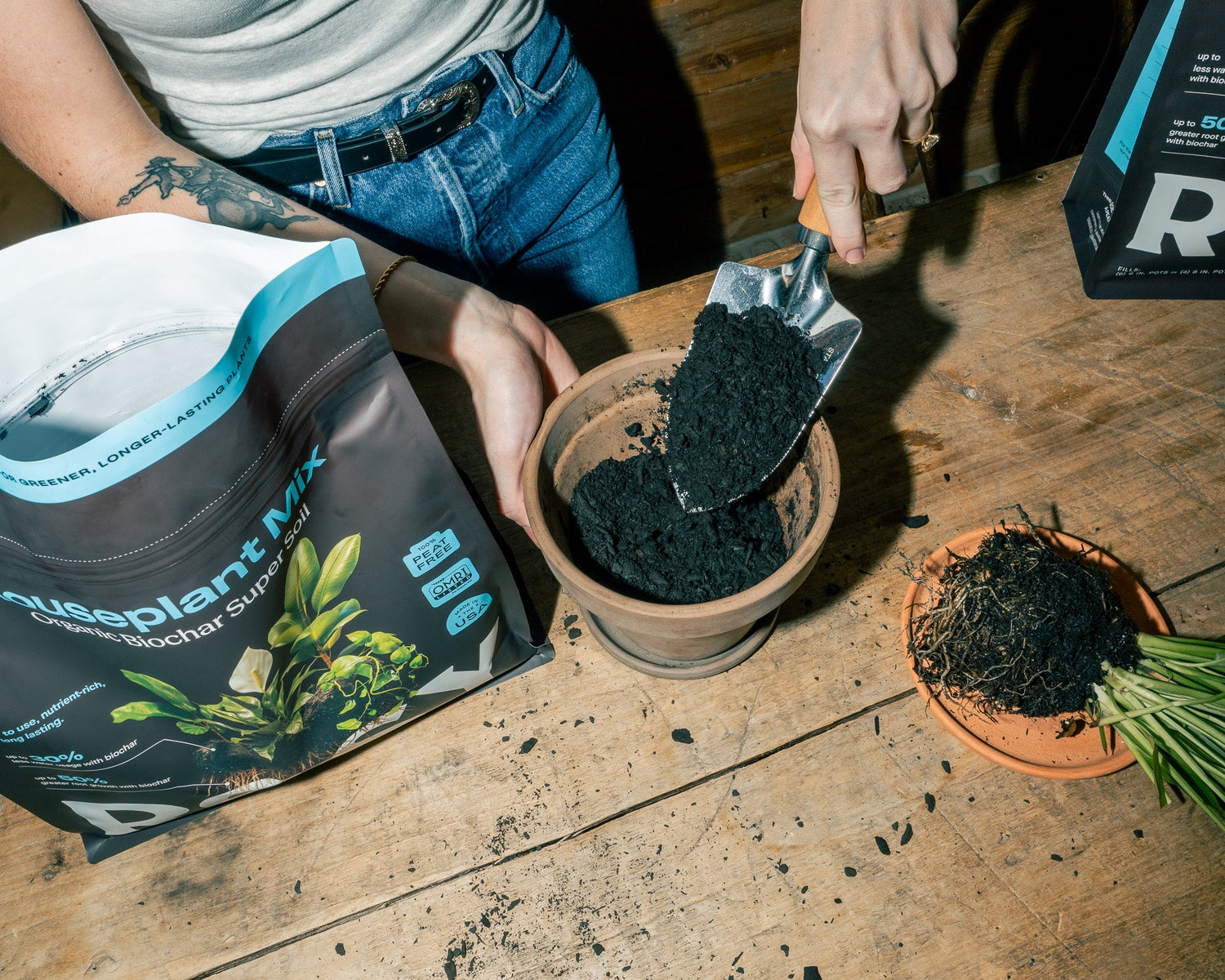
Biochar: Think of this as a powerhouse ingredient. Biochar for plants holds water, stores nutrients, and slowly feeds your plant over time. It also improves soil health and locks carbon into the soil instead of releasing it.
-
Worm Castings: Nature's finest slow-release fertilizer. Worm castings are rich in nutrients and help feed your plants gently over time without the risk of chemical burn.
-
Mycorrhizae: These are beneficial fungi that help roots absorb more water and nutrients, like giving your plant an extended root system.
-
Bark Fines & Sand: These keep the soil airy and well-draining, super important for indoor potting soil where airflow is limited.
-
Compost: Organic compost adds a natural nutrient base while diverting green waste from landfills.
No peat. No synthetic additives. Just clean, living soil. Explore Rosy Soil's full ingredient list and the science behind it!
Choosing the Right Soil for Every Plant
Not all plants want the same thing from their plant soil, and that's perfectly fine. Here's a quick guide for plant parents of all levels:
-
For houseplants (monstera, pothos, philodendron, ferns, fiddle leaf fig, rubber plant):
Most indoor plants thrive in a soil mix that balances moisture retention with proper drainage. A rich houseplant potting mix with compost, bark, perlite, and biochar works well to keep roots healthy without becoming soggy. This type of mix supports steady growth across a wide range of houseplants. -
For aroids (monstera, philodendron, anthurium):
Aroids prefer chunkier, airy soil that allows roots to breathe. A well-structured aroid mix should include bark fines, perlite, and biochar for strong drainage and airflow. Choosing a peat-free mix also supports healthier roots and a more sustainable setup. -
For orchids:
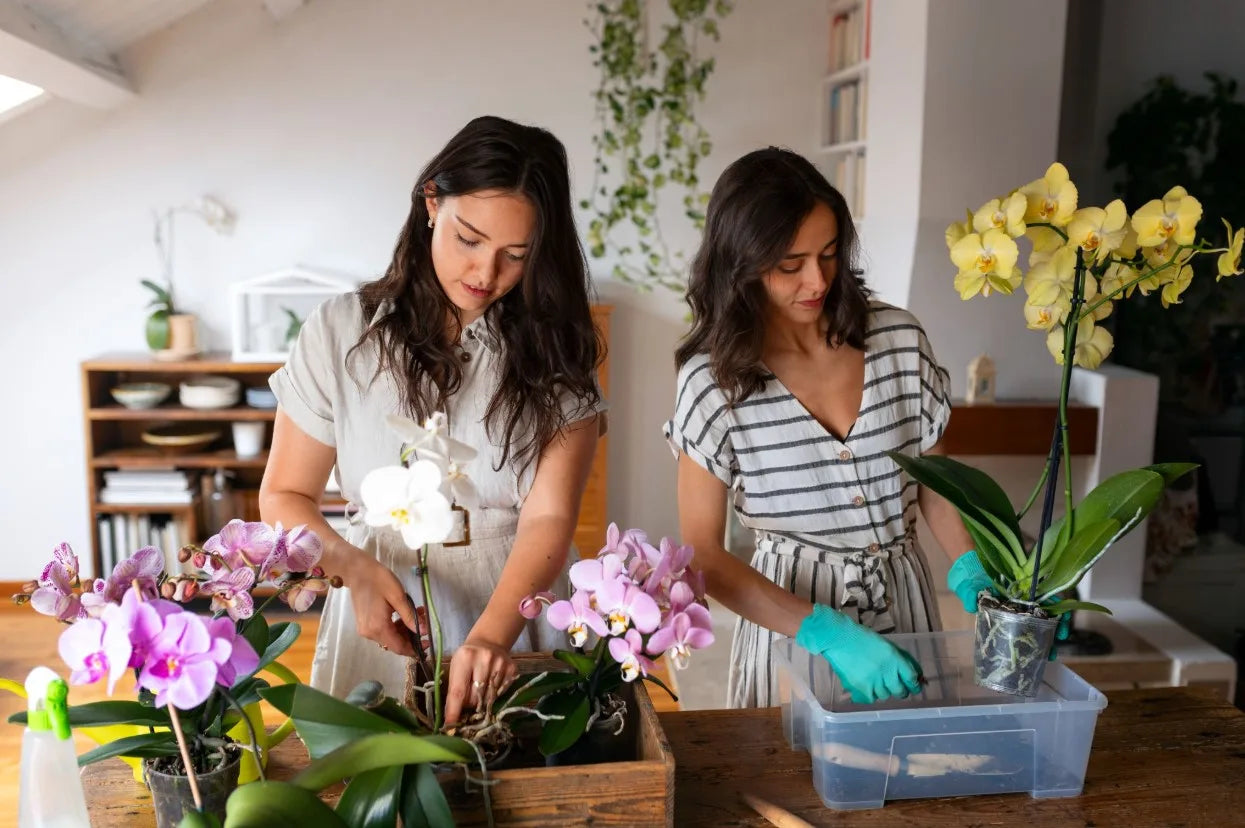
Orchids need a very different approach compared to regular houseplants. A proper orchid potting mix for repotting should be loose, chunky, and fast-draining—never dense or moisture-heavy. Most orchids are epiphytes, so their mix should mimic their natural environment, allowing roots to dry out between waterings and get plenty of air circulation. -
For cacti and succulents: These desert dwellers need fast drainage above all else. A dedicated cactus soil potting mix withcoarse texture prevents root rot, the number one killer of succulents. A peat-free cactus soil potting mix that uses sand, bark, and biochar gives you that gritty, fast-draining structure desert plants crave.
Ready to repot? Shop Rosy Soil's full range of peat-free potting mixes, from houseplant to cactus. Order it now!
When Should You Repot and What Soil Should You Use?
New plant parents often wonder: how do I know when it's time to repot? Here are the most common signs:
-
Roots are poking out of the drainage holes
-
The plant dries out much faster than it used to
-
Growth has slowed or stopped during the growing season
-
The soil stays wet for too long
When you do repot, always use fresh repotting soil. Old, compacted soil loses its structure, its nutrients, and its ability to drain properly. Fresh indoor potting soil for house plants gives your plant a clean slate, and if it's peat-free, it gives the planet one too.
Not sure which mix is right for your plant? Take Rosy Soil's Soil Quiz to get a personalized recommendation.
Conclusion
Every bag of potting soil is a decision. A decision about what you put near your plants, what values your plant care reflects, and what kind of footprint your hobby leaves on the world. Choosing peat-free repotting soil for indoor plants isn't a trade-off or a compromise. It's a genuine upgrade for your plants' health, for your home, and for the planet that makes all of this possible.
Whether you need a rich houseplant potting mix for your tropical collection, a breathable aroid mix for your philodendrons, a specialist orchid potting mix for repotting, or a gritty cactus soil potting mix for your succulents, the right peat-free soil exists for every plant you love.
Rosy Soil was built on one belief: that you should never have to choose between growing beautiful plants and caring about the Earth. With biochar for plants, worm castings, mycorrhizae, and compost at its core, it's repotting soil that gives back more than it takes.
Your plants deserve better soil. So does the planet. Shop Rosy Soil Now — Find Your Perfect Mix today!
Frequently Asked Questions
Q1. What is the best repotting soil for indoor plants?
A: The best potting soil for indoor plants is one that balances moisture retention, drainage, and nutrient availability, without peat. Look for a houseplant potting mix that contains organic ingredients like worm castings, compost, bark fines, and biochar for plants. These ingredients work together to feed your plant, protect its roots, and keep the soil structure open and breathable long after repotting.
Q2. How is biochar different from regular charcoal in plant soil?
A: This is one of the most common questions new plant parents ask. When comparing biochar vs charcoal, the key difference is structure and purpose. Horticultural charcoal is made for filtration and has limited biological benefit. Biochar for plants is engineered with a microscopic porous structure that retains nutrients, hosts beneficial microbes, and sequesters carbon permanently in your plant soil. It actively improves soil health over time; charcoal simply doesn't.
Q3. How often should I repot my houseplants?
A: Most houseplants benefit from fresh repotting soil every 1–2 years, even if they don't need a bigger pot. Over time, indoor potting soil for house plants breaks down, compacts, and loses its nutrient content and drainage capability. Refreshing the soil gives your plant a clean, nutrient-rich environment to grow into, especially important at the start of the spring growing season.