Growing vegetables starts with good soil.
You can choose healthy plants, water them regularly, and place them in a sunny area, but poor soil can still stop your garden from growing well. Hard soil can restrict roots, while soil that holds too much water can leave plants weak and stressed.
So, what is the best soil for a vegetable garden?
The best vegetable garden soil should be loose, rich, and easy for roots to grow through. It should hold enough moisture for plants without staying wet for too long. It should also contain organic material that supports steady growth throughout the season.
In simple terms, good vegetable garden soil should:
- Drain extra water
- Hold enough moisture
- Give roots room to grow
- Contain organic material
- Stay loose instead of becoming hard
- Support vegetables, herbs, and flowers
You do not need perfect soil to grow a productive garden. You need a balanced garden soil that matches your plants, climate, and growing space.
What Is the Best Soil for a Vegetable Garden?
The best soil for vegetables is usually loose, dark, and easy to work with.
It should feel soft enough to crumble in your hands rather than forming a hard block. Water should soak into it without sitting on the surface, but the soil should not dry out immediately after watering.
A good vegetable garden soil often contains a mix of:
- Garden soil
- Compost
- Organic materials
- Ingredients that support drainage
- Materials that help retain moisture
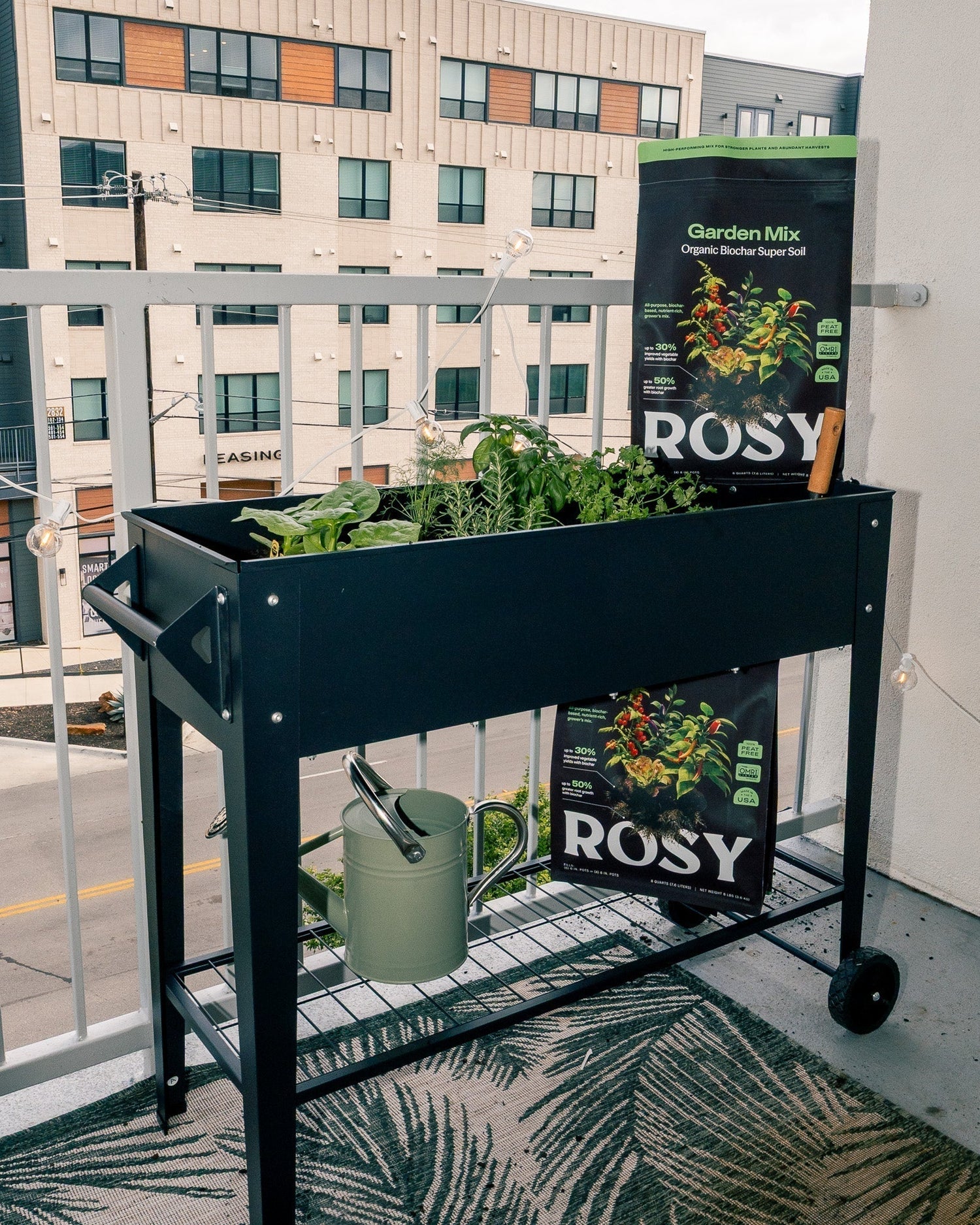
Rosy Soil Garden Mix is made for vegetables, herbs, flowers, tomatoes, peppers, and raised garden beds. Its biochar-powered formula is designed to support airflow, moisture balance, and healthy root growth.
The goal is not to use the heaviest or darkest soil you can find. The goal is to create a growing area where roots can spread, water can move, and plants can develop without unnecessary stress.
Why Good Garden Soil Matters
Garden soil affects almost every part of plant growth.
It gives roots space to grow
Vegetable roots need loose soil.
When soil becomes hard or compacted, roots may stay close to the surface or struggle to spread. This can make plants weaker and cause them to dry out more quickly.
Loose soil gives roots more room to reach water and nutrients.
It helps control moisture
Vegetables need regular water, but they do not like sitting in wet soil.
Good garden soil holds enough moisture for the roots while allowing extra water to drain away. This balance is especially important for tomatoes, peppers, herbs, and leafy vegetables.
It supports stronger plants
Healthy soil creates a better foundation.
When roots can spread and stay properly watered, plants have a better chance of producing healthy leaves, flowers, fruits, and vegetables.
Good soil does not replace sunlight, watering, or plant care, but it makes all of those things easier to manage.
Garden Soil vs. Topsoil
Garden soil and topsoil are not always the same.
Topsoil is often used to fill holes, level outdoor areas, or cover large spaces. Its quality can vary. Some topsoil may be loose and rich, while other topsoil may be heavy, sandy, or low in organic material.
Garden soil is usually prepared for growing plants. It may contain compost, biochar, worm castings, or other ingredients that improve the way the soil holds moisture and supports roots.
For a vegetable garden, garden soil is usually a better choice than plain topsoil.
Topsoil can still be useful when filling a deep raised bed, but it may need to be mixed with compost or better-quality garden soil before planting.
Always check what is inside the bag rather than choosing soil based only on its name.
Garden Soil vs. Potting Soil
Garden soil and potting soil are made for different uses.
Garden soil is designed for:
- Vegetable gardens
- Raised beds
- Flower beds
- Outdoor herbs
- Tomatoes and peppers
- Landscape planting areas
Potting soil is designed for:
- Indoor plants
- Outdoor containers
- Hanging baskets
- Small pots
- Planters
Using the correct type of soil makes watering and plant care much easier.
For a more detailed comparison, read Garden Soil vs. Potting Soil: The Key Differences.
Best Soil for Raised Garden Beds
Raised beds give you more control over the soil, but they also require a good amount of material.
The best soil for raised garden beds should:
- Hold moisture without becoming soggy
- Drain extra water
- Stay loose
- Support vegetable roots
- Contain organic material
- Avoid becoming hard after repeated watering
A balanced raised-bed mix may include:
- Garden soil
- Compost
- Biochar
- Worm castings
- Other organic materials
Avoid filling a raised bed with heavy topsoil alone. It may settle, become hard, and make it difficult for roots to spread.
Also avoid filling the entire bed with lightweight potting soil. It may dry out too quickly and can be more expensive.
Rosy Soil Garden Mix can be used as a base for a new raised bed or blended into an existing bed before the growing season.
How Much Soil Do You Need for a Raised Bed?
To calculate the amount of soil required, multiply:
Length × width × depth
For example, an 8-foot-long, 4-foot-wide raised bed that is 1 foot deep needs:
8 × 4 × 1 = 32 cubic feet of soil
If you only want to add 6 inches of fresh soil, use 0.5 feet as the depth:
8 × 4 × 0.5 = 16 cubic feet
It is a good idea to buy slightly more than the exact amount because fresh soil often settles after watering.
If the bed already contains soil, measure only the empty area instead of calculating the complete bed depth.
How Deep Should Vegetable Garden Soil Be?
The right soil depth depends on what you are growing.
As a simple guide:
- Leafy greens and small herbs: 6 to 8 inches
- Most vegetables: 10 to 12 inches
- Tomatoes and peppers: 12 to 18 inches
- Carrots and root vegetables: enough loose soil for the full root length
If the soil beneath the raised bed is loose and healthy, roots may grow deeper into the ground.
If the bed is placed over concrete, stone, or very hard soil, make sure the bed itself is deep enough for the roots.
Deep-rooted vegetables usually need more space than shallow leafy greens.
How to Prepare Soil for a Vegetable Garden
Preparing the soil properly can save time and reduce problems later in the season.
Step 1: Check the current soil
Before adding anything, look at the condition of the bed.
Ask:
- Is the soil hard?
- Does water sit on the surface?
- Does it dry out too quickly?
- Are weeds taking over?
- Has the soil level dropped?
- Did plants struggle last season?
This helps you understand whether the bed needs a light refresh or more serious improvement.
Step 2: Remove weeds and debris
Clear away:
- Weeds
- Large stones
- Plastic
- Old plant labels
- Dead or diseased plants
- Unwanted roots
Do not simply cover active weeds with new soil. Many weeds can grow through the fresh layer.
Step 3: Loosen hard soil
Use a garden fork or shovel to loosen the upper layer.
You do not need to dig extremely deep. The goal is to break up hard areas so roots and water can move more easily.
Avoid digging when the soil is very wet because it may become even more compacted.
Step 4: Add fresh garden soil
Spread the new soil evenly across the bed.
Do not place all of it in one planting hole or around a single plant. Vegetable roots spread beyond the area where the plant was first placed.
For an existing bed, add enough fresh garden soil to restore the level and improve the upper growing layer.
Step 5: Mix gently
Blend some of the new garden soil with the existing soil.
This creates a smoother growing area and prevents a hard line between two very different soil types.
Step 6: Water and allow settling
Water the bed after adding the soil.
This helps it settle and shows whether there are low areas or places that need more material.
Top up the bed if the soil level drops after watering.
Best Soil for Tomatoes and Peppers
Tomatoes and peppers need soil that holds moisture while allowing extra water to drain.
They also need enough depth for their roots to spread.
For better results:
- Use quality garden soil
- Add compost when needed
- Avoid compacted soil
- Water deeply and regularly
- Make sure the bed drains well
- Prepare the full bed, not only the planting hole
Tomatoes and peppers are productive plants, so they may still need suitable feeding during the growing season.
Good soil creates the foundation, but sunlight, watering, spacing, and nutrition still matter.
Best Soil for Leafy Greens
Leafy vegetables such as lettuce, spinach, kale, and arugula usually have shallow roots.
They grow well in soil that stays slightly moist but not soaked.
Because most of their roots stay near the surface, the upper layer of soil is especially important.
Use loose garden soil and consider adding mulch after the plants become established. Mulch can help reduce water loss during warm weather.
Best Soil for Root Vegetables
Carrots, radishes, and beets need loose soil without large stones or hard clumps.
Hard soil can cause roots to become:
- Short
- Crooked
- Twisted
- Forked
- Poorly shaped
Before planting root vegetables, loosen the growing area and remove stones or debris.
A smoother garden soil allows the edible roots to grow more evenly.
Best Soil for Herbs
Herbs do not all have the same watering needs.
Basil, parsley, cilantro, and mint usually prefer more consistent moisture.
Rosemary, thyme, oregano, and sage often prefer soil that drains more quickly.
Try to group herbs with similar needs together. Use a balanced garden soil as the base, then adjust watering for each group.
Herbs with very different needs may be easier to grow in separate beds or containers.
How to Improve Hard Clay Soil
Clay soil can feel sticky when wet and very hard when dry.
To improve it:
- Add garden soil
- Mix in compost
- Avoid walking on the planting area
- Do not work the soil when it is very wet
- Add mulch
- Consider using a raised bed
Clay soil usually improves gradually. Adding organic material over time is often more helpful than trying to change it all at once.
How to Improve Sandy Soil
Sandy soil drains very quickly.
This can cause plants to dry out faster and may require more frequent watering. Gardeners improving an existing bed can also explore Rosy Soil Biochar Booster as part of a broader soil-refreshing plan.
To improve sandy soil:
- Add compost
- Mix in organic garden soil
- Use mulch
- Water deeply
- Check the soil regularly during hot weather
The goal is to help the soil hold moisture for longer without making it too heavy.
Signs Your Garden Soil Needs Improvement
Your garden soil may need attention if:
- Water sits on the surface
- Water runs away instead of soaking in
- The soil becomes hard
- Plants wilt soon after watering
- Seeds do not grow well
- Roots stay shallow
- Plants grow slowly
- The raised-bed level keeps dropping
- The surface cracks
- The soil forms a hard top layer
Not sure whether your current soil is healthy? Read our guide to the signs of healthy garden soil before replacing or amending the entire bed.
These signs can also come from weather, watering, pests, or plant disease. Check the complete garden before replacing all the soil.
Common Vegetable Garden Soil Mistakes
Avoid these common mistakes:
- Filling a raised bed with heavy topsoil alone
- Using garden soil in containers
- Using only potting soil in a large bed
- Ignoring drainage
- Planting into hard ground
- Adding new soil over weeds
- Digging very wet soil
- Walking on the planting area
- Assuming every vegetable needs the same conditions
- Expecting soil to replace all plant food
The best soil creates a healthy base, but vegetables still need regular care.
Why Biochar Is Used in Garden Soil
Biochar is a lightweight material included in some garden-soil blends.
In simple terms, it may help the soil:
- Hold moisture
- Stay loose
- Support nutrient use
- Create a better area for roots
- Store carbon in the soil
Biochar should be one part of a complete soil mix, not the only ingredient.
Rosy Soil Garden Soil combines biochar with other organic materials to support vegetables, herbs, flowers, tomatoes, peppers, and raised beds. Biochar should be one part of a complete soil mix, not the only ingredient. Learn more about how biochar is used in gardening and why it is included in Rosy Soil’s garden blends.
Conclusion
The best soil for a vegetable garden should be:
- Loose
- Easy to work with
- Able to drain extra water
- Able to hold enough moisture
- Rich in organic material
- Deep enough for the plants
- Suitable for the vegetables being grown
Use garden soil for outdoor beds and potting soil for containers.
Prepare the full garden bed rather than improving only small planting holes. Check the soil each season and add fresh material when it becomes low, hard, or difficult to water.
Still unsure which soil matches your growing setup? Take the Rosy Soil Quiz for a personalized recommendation.
Ready to give your vegetables a healthier foundation? Shop Rosy Soil Garden Mix for raised beds, vegetables, herbs, flowers, tomatoes, and peppers.
Healthy vegetables start with healthy roots, and healthy roots start with the right garden soil.