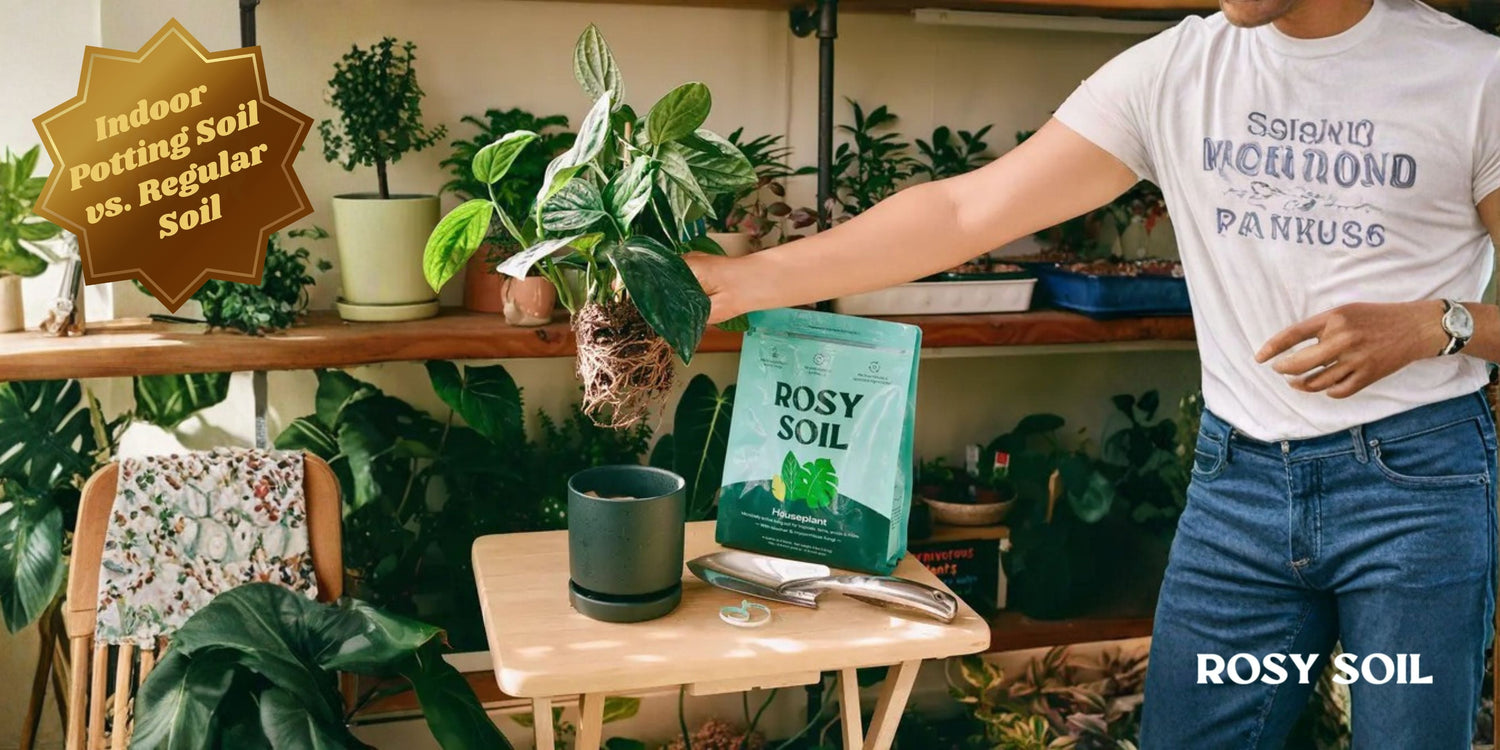
Many new plant parents often wonder if they can use soil from their backyard for their houseplants. While it might seem like a quick solution, choosing the right soil for container gardening can really make a difference in your plant's health and growth. The difference between indoor potting soil and regular garden soil can mean the difference between thriving, lush greenery and struggling, wilted plants.
In this article, we will explore why potting soil for indoor plants is specifically formulated for container success, how it differs from garden soil, and why choosing the right houseplant soil is one of the most important decisions you will make for your indoor garden.
So, let’s get started!
What Is Indoor Potting Soil?
Indoor potting soil is what you use for plants in containers. Don't confuse it with regular dirt. This stuff is engineered to handle the unique problems you get when growing plants in pots.
Here's what's typically in it:
-
Biochar: A type of charcoal that keeps nutrients around and feeds beneficial microbes
-
Worm castings or compost: Provides essential nutrients and supports healthy plant growth
-
Small pine bark chunks: Helps with drainage and keeps the soil from compacting
-
Mycorrhizal fungi: Help roots grow stronger by extending nutrient absorption
Why does it work? Three reasons: it's lightweight, water drains through it quickly, and it's packed with living microbes that support healthy root growth. These microbes help nurture the plant while ensuring the soil remains clean and free of harmful pathogens. You need all three when growing in containers.
What is Regular Garden Soil?
Garden soil is outdoor dirt. Sometimes it has extra amendments thrown in, bark, manure, that kind of thing. You are supposed to mix it into your existing garden beds. It's not designed to be used alone in pots.
What you'll find in it:
-
Topsoil
-
Chunky organic material like bark
-
Manure compost or mushroom compost
-
Higher nutrient levels
-
Living bacteria and organisms
While garden soil works wonderfully for outdoor beds, raised gardens, and landscaping projects, it's completely wrong for container plants, and here's why.
4 Important Differences Between Indoor Potting Soil and Regular Soil
Drainage and Aeration
This one is the most important difference. Indoor potting soil is designed to provide the best drainage while retaining just enough moisture for plant roots. Container plants are especially vulnerable to waterlogging because excess water has nowhere to go except through drainage holes.
In contrast, garden soil is very dense and heavy. When it is used in pots, it compacts quickly and can choke roots. It restricts proper aeration due to its denser nature. This density leads to:
-
Poor oxygenation of the roots
-
Water retention that leads to root rot
-
Difficulty in root penetration and spread
-
Slow drainage that keeps the soil soggy
The best soil for indoor plants includes ingredients like biochar and pine bark, which create air pockets in the soil. This allows roots to "breathe" and water to drain, which are necessary and healthy for container plants.
For example, Rosy Soil's Indoor Potting Mix is specially designed with biochar and pine bark fines to ensure excellent drainage and moisture retention. Unlike regular indoor houseplants, potting mixes that compress over time, using a biochar-based potting mix ensures the structure is maintained for years to come.
2. Weight and Texture
Indoor potting soil is much lighter than garden soil. This lighter texture fulfills multiple purposes:
-
It prevents the soil from getting waterlogged
-
Allows the tender roots of the house plants to pass through easily
-
Reduces stress on containers and shelving
Garden soil's heaviness might work outdoors where gravity and natural drainage systems help, but in a container, that same density becomes a liability. This weight can also stress your containers, causing them to crack or making them too heavy to move for cleaning or repositioning.
3. Sterility and Safety
Here's something many plant parents don't consider: houseplant soil should be sterile, especially for indoor use. Quality potting soil for indoor plants is sterilized during manufacturing to eliminate:
-
Weed seeds that will germinate in your pots
-
Fungus Gnat Infestations and Other Pests
-
Harmful bacteria and pathogens
-
Disease-causing organisms
Garden soil, being unsterilized, contains all sorts of microorganisms. While many of these are beneficial outdoors, they can cause problems indoors:
-
Pest infestations: Fungus gnats are particularly attracted to the organic matter in garden soil
-
Diseases: Pathogens that might be harmless outdoors can devastate container plants
-
Unwanted growth: Weed seeds will happily germinate in your houseplant pots
This is why you should never bring garden soil indoors for your container plants. If you're dealing with specialized plants like aroids (Monsteras, Philodendrons), consider using a targeted formula like Rosy Soil's Aroid Soil, which provides the chunky, airy structure these plants need while remaining completely sterile and pest-free.
4. Nutrient Content and pH Balance
The best indoor potting soil is formulated with carefully balanced nutrients appropriate for container growing, supporting the healthy development of houseplants, herbs, veggies, and other crops. It’s designed to encourage fruiting and flowering, providing your plants with the ideal environment to thrive. Garden soil, in contrast, often contains higher concentrations of nutrients meant to supplement existing ground soil, not to serve as the sole growing medium.
Indoor plant potting mix commonly contains:
-
Controlled-release fertilizers or organic nutrients
-
Worm castings for slow-released nutrition
-
Mycorrhizal fungi that help roots in nutrient absorption
-
Balanced pH levels (usually between 5.5-7.0)
Garden soil's nutrient profile can be unpredictable and often too rich for container plants, potentially causing:
-
Nutrient burn from over-fertilization
-
Salt buildup in containers
-
pH imbalances that lock out essential nutrients
For a deeper dive into these differences, check out our article on Indoor vs Outdoor Potting Soil.
Why Garden Soil Might Not Be the Best Choice for Your Houseplants

In this section, let’s discuss what happens when you make this common mistake:
-
Compaction and Suffocation: Within weeks, garden soil in a container will compact into a brick-like mass. This means your plant's roots literally can't breathe. Suffocation will lead to yellowing leaves and eventually death.
-
Root Rot: Poor drainage means water sits in the container, creating anaerobic conditions perfect for root rot. Once root rot sets in, it's often fatal for houseplants.
-
Pest Problems: Those fungus gnats you see flying around your plants? They probably came from organic matter in garden soil. Their larvae feed on plant roots and organic debris, multiplying quickly in the warm, moist conditions of indoor containers.
-
Inconsistent Results: Garden soil varies widely by place of origin. One batch can work wonders, while another can spell disaster.
Can You Ever Use Garden Soil Indoors?
Garden soil can sometimes work for container plants if you're willing to amend it to create a suitable growing medium. However, this requires extra effort to ensure proper drainage and aeration.
To convert garden soil into usable potting soil for indoor plants, you would need to:
-
Sterilize it (by baking in the sun or oven) to kill pathogens and pests
-
Add amendments like perlite or pumice, biochar, or coarse sand (at least 30-50% by volume)
-
Mix in compost for nutrients
-
Test and adjust pH levels
Honestly? This is far more work than simply buying quality indoor potting soil. Plus, your homemade mix still won't match the consistency and performance of professionally formulated houseplant soil.
Choosing the Best Soil for Your Indoor Plants
Not all indoor plant potting mix products are created equal. When shopping for the best soil for indoor plants, look for:
-
Lightweight, well-draining formula: Should contain materials like pumice or biochar
-
Peat-free alternatives: Biochar-based options are more sustainable
-
Living soil components: Mycorrhizal fungi and beneficial microbes
-
Appropriate nutrients: Balanced nutrition without excessive fertilizers
-
Quality ingredients: Avoid cheap mixes with unknown or low-quality components
We at Rosy Soil's Indoor Potting Mix check all these boxes with its biochar-powered formula. It's designed for a wide range of houseplants, from Pothos and Philodendrons to ferns and flowering plants, providing the perfect balance of drainage, aeration, and nutrition.
For specialized needs, consider:
-
Orchid Mix - Super chunky and airy for epiphytic orchids
-
Aroid Soil - Perfectly formulated for Monstera, Philodendrons, and other aroids
-
Seedling Soil - Fine-textured for starting seeds and propagation
Conclusion
The decision between indoor potting soil vs regular garden soil is not just a minor detail; it’s the quality and care you can provide your houseplants. Well, regular garden soil serves its purpose outdoors, but your pot plants need the proper drainage, aeration, and nutrient balance that only quality potting soil for indoor plants can provide. By choosing the right houseplant soil from the start, you are setting yourself up for growing plants, minor pest problems, and a more rewarding indoor gardening experience.
So, don’t let your amazing houseplants deal with the wrong growing medium. Give them the best soil they deserve with Rosy Soil’s biochar-powered formulas. Our indoor plant potting soils provide you with the perfect solution for nurturing your houseplants while still saving the planet.
Shop our complete collection of earth-positive potting mixes and know the real difference. Your amazing plants will thank you later!