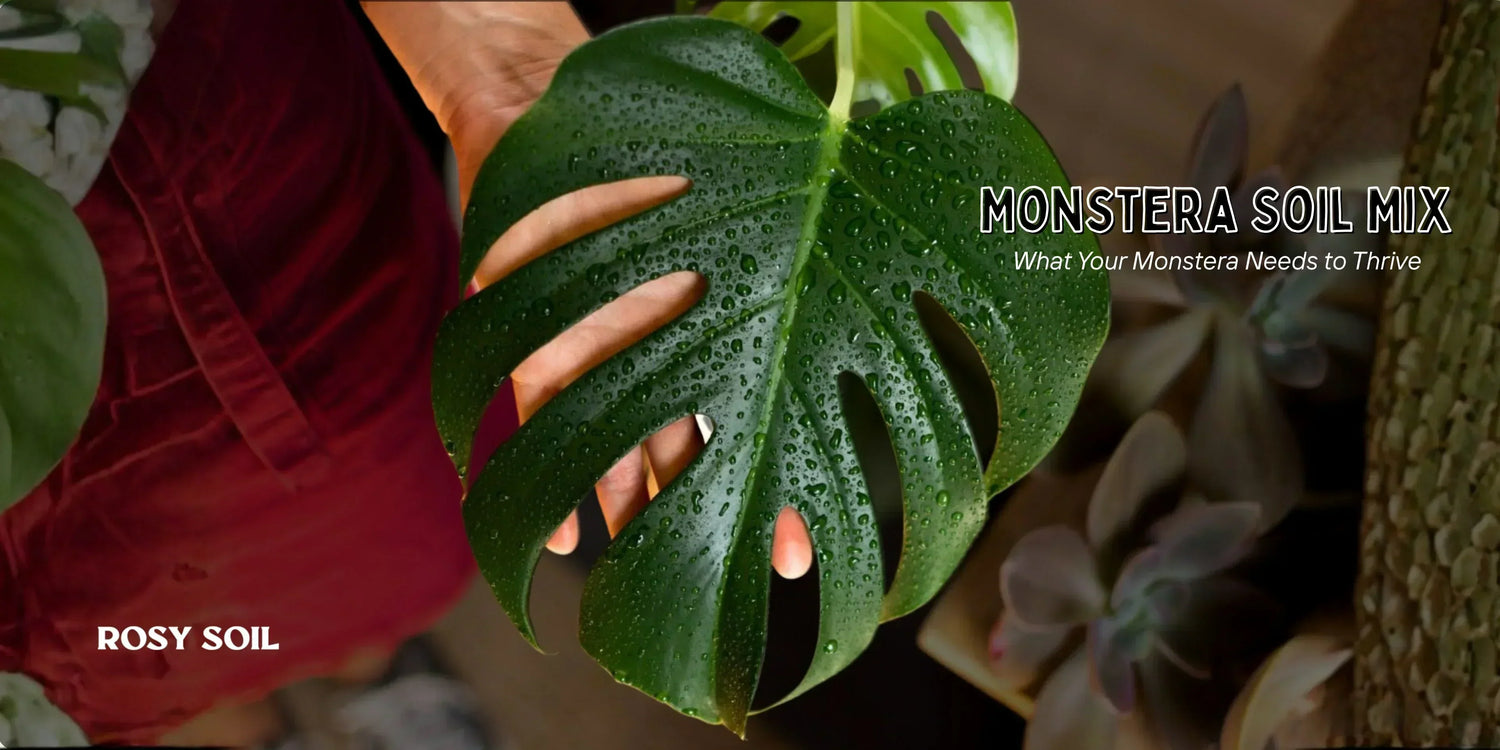
You brought home a monstera. It's big, bold, and full of potential, and those dramatic split leaves practically scream tropical paradise. But a few weeks in, the new growth stalls. The leaves look a little pale. The stems feel wobbly. And you are left wondering: what did I do wrong?
Nine times out of ten, the answer is the soil.
Monstera are tropical plants native to the rainforests of Central and South America, where they grow in rich, loose, well-aerated jungle floors, not dense, compacted potting mix. Getting the monstera soil mix right is the single most impactful thing you can do for a thriving plant. The right mix means better drainage, stronger roots, faster growth, and those iconic fenestrated leaves everyone loves.
This guide covers everything you need to know: what's in the ideal monstera potting mix, how to know when to repot, and how to feed your plant to keep it growing strong all season long.
Let’s dive into it!
Monstera Soil at a Glance
Before we dive deep, here is everything your monstera needs from its soil in one place:
|
Factor |
What Your Monstera Needs |
|
Soil pH |
5.5 – 7.0 (slightly acidic to neutral) |
|
Drainage |
Well-draining; never soggy or compacted |
|
Aeration |
Chunky texture with bark and pumice |
|
Organic Matter |
Worm castings, compost for slow-release nutrients |
|
Key Ingredient |
Biochar for moisture retention and microbial health |
|
Repot Frequency |
Every 1–2 years or when the roots circle the pot |
|
Best Pot Type |
Terracotta or nursery pot with a drainage hole |
Why Monstera Soil is Different From Regular Potting Mix
Walk down the gardening aisle of any hardware store, and you will find shelves of "all-purpose" potting soil. It's cheap, accessible, and, for most tropical houseplants, not great.
Standard potting mix is formulated to retain moisture, which sounds helpful but is actually a problem for Monstera. These plants are prone to root rot when their roots sit in soggy soil for too long. In their natural environment, rainwater drains rapidly through loose, bark-rich jungle soil. They are built for airy, well-draining conditions, not a peat-heavy mix that stays wet for days.
The ideal monstera soil mix is:
-
Well-draining — water should flow through freely, not pool at the bottom
-
Chunky and airy — bark fines and pumice create the air pockets roots need
-
Nutrient-rich — organic matter feeds the plant slowly over time
-
Slightly acidic to neutral — a pH of 5.5 to 7.0 keeps nutrients bioavailable
The Best Ingredients in a Monstera Potting Mix
Not all potting mixes are created equal. When you are testing a monstera soil potting mix, whether it's store-bought or homemade, here are the key ingredients to look for:
Biochar
Biochar is charcoal produced through a process called pyrolysis, in which organic materials are heated to high temperatures in the absence of oxygen. This process results in biochar specifically designed to improve soil. Rosy Soil's Aroid Mix is based on a biochar-rich formula, which is what distinguishes it from other potting mixes.
Pumice
Pumice is an excellent alternative to perlite for drainage. It is less energy-intensive to process and retains moisture while still allowing the mix to drain freely, which is ideal for monstera plants.
Pine Bark Fines
Bark fines are a byproduct of the lumber industry that add structure and aeration to the soil. They break up density, create air pockets for roots, and help water drain through quickly rather than pooling. This is the "chunky" quality that experienced plant parents look for in an aroid or monstera mix.
Mycorrhizae
Mycorrhizae are beneficial fungi that form a symbiotic relationship with plant roots, extending their reach and helping them absorb more water and nutrients than they could alone. Think of them as a supercharger for your monstera's root system. High-quality potting mixes include mycorrhizal inoculants to give new plantings a head start.
Compost
A good compost base adds long-term organic nutrition while improving soil texture and water retention just enough to prevent the mix from drying out too fast. Look for mixes made from green waste or food waste compost, not peat moss, which is a non-renewable resource.
Pro Tip: Avoid potting mixes with peat moss as the primary ingredient. Peat is slow to break down, hard to re-wet once dry, and environmentally costly. Rosy Soil uses zero peat, and your monstera will thank you.
How to Know When to Repot Your Monstera
Even the best monstera soil breaks down over time. However, with a quality mix like ours at Rosy Soil, which doesn't compact thanks to the pine bark, you will only need to repot when your monstera has outgrown its pot and needs more space for further growth.
Signs it's time to repot:
-
Roots are circling the inside of the pot
-
Roots are pushing out through the drainage holes
-
Water rushes straight through without being absorbed; the soil is too compacted
-
New leaves have stopped appearing despite good light and regular watering
-
Lower leaves are yellowing for no obvious reason
How to repot without stressing the plant:
-
Time it right: spring or early summer, when your monstera is heading into its active growing season
-
Don't oversize the pot: go up one or two inches in diameter, not more. A pot that's too big holds excess water around the roots
-
Use fresh soil every time: don't reuse old potting mix; it's already depleted and possibly harboring pathogens
-
Water thoroughly after repotting: then let the top inch of soil dry before watering again
Feeding Your Monstera: What You Need to Know About Monstera Plant Food
Good soil lays the foundation, but monstera plant food is what drives those fast-growth spurts and big, fenestrated leaves. Monsteras are heavy feeders from spring through early fall. Skipping fertilizer during this window usually means smaller leaves and slower growth.
When to fertilize:
-
Every 4–6 weeks during spring and summer
-
Once a month in early fall, then stop for winter
What to look for in a monstera plant food:
-
Nitrogen (N): Drives leafy, vigorous growth
-
Phosphorus (P): Encourages strong root development
-
Potassium (K): Builds resilience and disease resistance
-
Micronutrients: Calcium, magnesium, and iron keep leaves deep green and healthy
Always dilute liquid fertilizer to half strength. Monsteras are sensitive to fertilizer burn, especially in smaller pots. When in doubt, less is more, particularly if you're already using a potting mix that includes worm castings and compost, which provide a baseline of organic nutrition.
Our Plant Food is designed as a top dress, not a liquid fertilizer, ensuring a slow and steady release of nutrients that encourage healthy roots and robust growth for your monstera.
Common Monstera Problems Caused by the Wrong Soil
Before you blame the light or your watering schedule, check the soil. Many of the most common monstera complaints trace back to the mix:
-
Yellow leaves: usually overwatering or poor drainage. If the soil feels wet days after watering, it's time for a new mix with better aeration. See our post on why houseplant leaves turn yellow and what to do.
-
Brown leaf edges: can signal fertilizer burn (too much, too concentrated) or a soil that's dried out and become hydrophobic. Try bottom-watering to rehydrate compacted soil evenly.
-
Stunted growth: if your monstera isn't producing new leaves despite good conditions, old, nutrient-depleted soil is often the culprit. A fresh monstera potting mix and a dose of plant food can break the stall.
-
Mushy stems or roots: root rot, almost always from soil that stays wet too long. Remove affected roots, let the plant dry slightly, and repot into a well-draining mix immediately.
Root rot, almost always from soil that stays wet for too long. Remove the affected roots, let the plant dry slightly, and repot it into a new pot with fresh soil. Also, disinfect the affected roots with diluted hydrogen peroxide before repotting. Ensure the new soil, like Rosy Soil's Aroid Potting Mix, is chunky and well-aerated to prevent future root rot.
Why Rosy Soil Works Well for Monsteras
Rosy Soil's Aroid Potting Mix is perfectly designed for aroids like monstera. Our mix includes a biochar foundation, worm castings, mycorrhizae, and bark fines, ensuring excellent aeration and drainage for healthy root development. It’s ideal for helping your monstera thrive.
It's also pet-friendly and certified organic, something a lot of plant parents care about when they're mixing soil indoors.
For monsteras specifically, the biochar and bark fines combination creates exactly the kind of loose, airy structure these plants thrive in. And the worm castings mean you won't need to fertilize as aggressively right after repotting.
Pair it with Rosy Soil's Plant Food once your monstera has settled in, and you have got a complete feeding system that supports growth from the roots up.
Frequently Asked Questions
What is the best soil for a monstera?
A chunky, well-draining mix with good organic matter. Look for biochar, bark fines, worm castings, and perlite. Avoid peat-heavy or dense all-purpose mixes that stay wet.
Can I use regular potting soil for monstera?
You can, but it's usually not ideal. Most standard mixes are too dense and moisture-retentive for monsteras. At a minimum, mix in perlite or bark to open up the texture.
How often should I repot my monstera?
Every 1–2 years, or when you see roots escaping the drainage holes. Spring is the best window.
Why are my monstera's leaves turning yellow?
Most often: overwatering or soil that drains poorly. Check the moisture level before watering and consider switching to a chunkier mix.
Is monstera soil the same as aroid mix?
Essentially yes. Monsterras are aroids, so any well-made aroid potting mix, chunky, bark-forward, well-draining, works well. The terms are often used interchangeably.