Spring is here. Your plants are waking up. They should be pushing out new leaves, growing faster, and looking their best.
But instead, yellow leaves. Slow growth. Soggy roots. A plant that just looks stuck.
Here's the truth most plant parents miss: the problem usually isn't your watering. It isn't the light. It's your houseplant soil.
The wrong soil for houseplants can silently choke roots, trap excess moisture, and starve your plants of the oxygen they desperately need, especially in spring, when growth demand is at its highest.
In this guide, we will break down exactly why your indoor plant soil might be failing your plants, what to look for, and how to fix it before the growing season passes you by.
What Actually Happens to Soil Over Time
Most people never think about their potting mix after they use it. But the soil doesn't stay the same.
Here's what happens inside your pot over 12 to 18 months:
-
The soil compacts, it becomes dense and hard, leaving no room for roots to breathe
-
Moisture gets trapped longer than it should, especially indoors, where there's no wind or sun to dry it out
-
Nutrients get washed out with every watering
-
Old peat-based mixes turn hydrophobic, meaning water runs off instead of soaking in
-
Fungus gnats and other pests move in and start feeding on decaying organic matter
And you know the result? Your plant sits in a suffocating, wet, nutrient-poor brick of old dirt, right when it needs the most support. This is why spring is the most important season to check your potting mix for indoor plants and refresh it if needed.
5 Signs Your Houseplant Soil Is the Problem
Not sure if your soil is the culprit? Look for these warning signs:
1. Water pools on the surface before draining
This means the soil has compacted or turned hydrophobic. Water isn't reaching the roots at all.
2. Soil stays wet for days after watering
Good soil for houseplants should dry out between waterings. If it stays soggy, drainage is broken.
3. Your plant looks dull even in good light
Nutrient depletion in old soil is often the cause of washed-out, pale, or slow-growing leaves.
4. You spot fungus gnats flying around
Gnats breed in wet, decaying organic matter, a classic sign that your indoor plant soil is past its prime.
5. Roots are circling or sitting in mush
When you check the bottom of your pot, healthy roots should be white and firm. Brown, mushy roots mean the soil has been holding too much moisture for too long.
If you are seeing two or more of these signs, it's time to repot into a fresh, well-draining mix.
What Makes a Good Houseplant Soil? (What to Look For)
The best soil for houseplants isn’t just any bag of dark potting mix you grab off the shelf. Here's what actually matters:
-
Drainage first. Indoor plants live in containers with no natural drainage. Your soil needs to allow water to move through freely while still retaining some moisture. Ingredients like biochar, pine bark fines, and pumice help with this.
-
Peat-free formula. Peat moss is a common base ingredient in many traditional potting mixes. It compacts fast, becomes water-repellent when dry, and is harmful to the environment. The best soil for houseplants will be peat-free.
-
Living ingredients. Mycorrhizal fungi, worm castings, and beneficial microbes feed your plant naturally over time. These are what make organic potting soil for indoor plants so effective; the nutrition is slow, steady, and gentle on roots.
-
Lightweight and airy. Heavy soil can reduce airflow around roots and increase the risk of root rot. A good potting mix for indoor plants should feel light and fluffy, not dense.
-
Transparency. If the bag just says "premium blend" without listing ingredients, put it back. Good soil brands list everything.
Rosy Soil's Indoor Potting Mix checks every one of these boxes: peat-free, biochar-based, and packed with mycorrhizal fungi and worm castings. Built specifically for container growing indoors.
The Right Soil for Every Popular Houseplant
Different plants have different needs. Here's a quick guide to help you match your plant to the right mix this spring:
Monstera Soil Mix
Monstera are tropical plants with thick, fleshy roots that need airflow just as much as moisture. The ideal monstera soil mix is chunky, airy, and fast-draining. Think pine bark, pumice, and biochar, not a dense, peat-heavy mix. If water sits around the Monstera roots for too long, root rot sets in fast.
Try: Rosy Soil Aroid Mix, designed specifically for monsteras, philodendrons, and other aroids that need that chunky, breathable structure.
Pothos Soil Mix
Pothos are forgiving plants, but even they suffer in waterlogged soil. The best pothos soil mix drains freely, holds light moisture, and stays loose over time. A biochar-based indoor mix works perfectly. Avoid anything that says "moisture control", pothos need wet-dry cycles, not constant dampness.
Snake Plant Soil Potting Mix
Snake plants are drought-tolerant and store water in their leaves. This means they are especially vulnerable to overwatering and vulnerable to being in the wrong soil. The right snake plant soil potting mix should drain fast, almost like a cactus mix, with very little moisture retention. Sandy, gritty, and well-aerated is the goal.
Order Rosy Soil's Cactus & Succulent Soil, an ideal fit for snake plants that want fast drainage and dry conditions between waterings. Visit us today!
Best Soil for Growing Aloe Vera
Aloe vera is a succulent, which means it hates sitting in wet soil. The best soil for growing aloe vera drains almost instantly; excess water should never pool at the roots. A mix with coarse sand, pumice, or biochar works well. The goal is moisture that's available for a short window, then gone.
The succulent soil potting mix from Rosy Soil is sandy, gritty, and fast-draining, built exactly for plants like aloe that want dry feet between waterings.
Succulent Soil Potting Mix
Succulents, as a group, all share one preference: they want to drink, then dry out completely. The succulent soil potting mix you choose should never compact, should drain within seconds of watering, and should have minimal organic matter that holds moisture. Many standard indoor mixes are too water-retentive for succulents; always go for a mix labeled specifically for cacti and succulents.
Why Organic Potting Soil for Indoor Plants Is Worth It
You have probably noticed some potting mixes labeled "organic" and wondered if the extra cost is worth it.
Here's the honest answer: for houseplants, yes, but only if it's genuinely organic, not just marketing language.
True organic potting soil for indoor plants uses natural ingredients like worm castings, compost, and mycorrhizal fungi to feed plants slowly over time. There are no synthetic salts that burn roots. No chemical fertilizers that flush out after 6 weeks, leaving your plant with nothing.
The biggest benefit in spring? Organic nutrition keeps up with your plant's growth pace. As your monstera, pothos, or aloe pushes out new growth in the warmer months, it's pulling more nutrients from the soil. Organic inputs release gradually and stay in sync with demand.
Cheap synthetic mixes can't keep up. They spike, then crash.
Ready to switch? Our soil is 100% peat-free and built on organic ingredients - shop the full range here to find the right mix for your plants this spring.
How to Repot This Spring (Step by Step)
Now that you know what soil to use, here's how to actually refresh your plants this spring:
Step 1 -Check if repotting is needed.
Slide the plant out of its pot. If roots are circling the bottom or poking out of drainage holes, it's time. If the soil smells sour or looks dense and compacted, it's time.
Step 2 -Choose the right new pot.
Go only one size up from the current pot. Too much extra space = too much soil holding moisture your plant can't use.
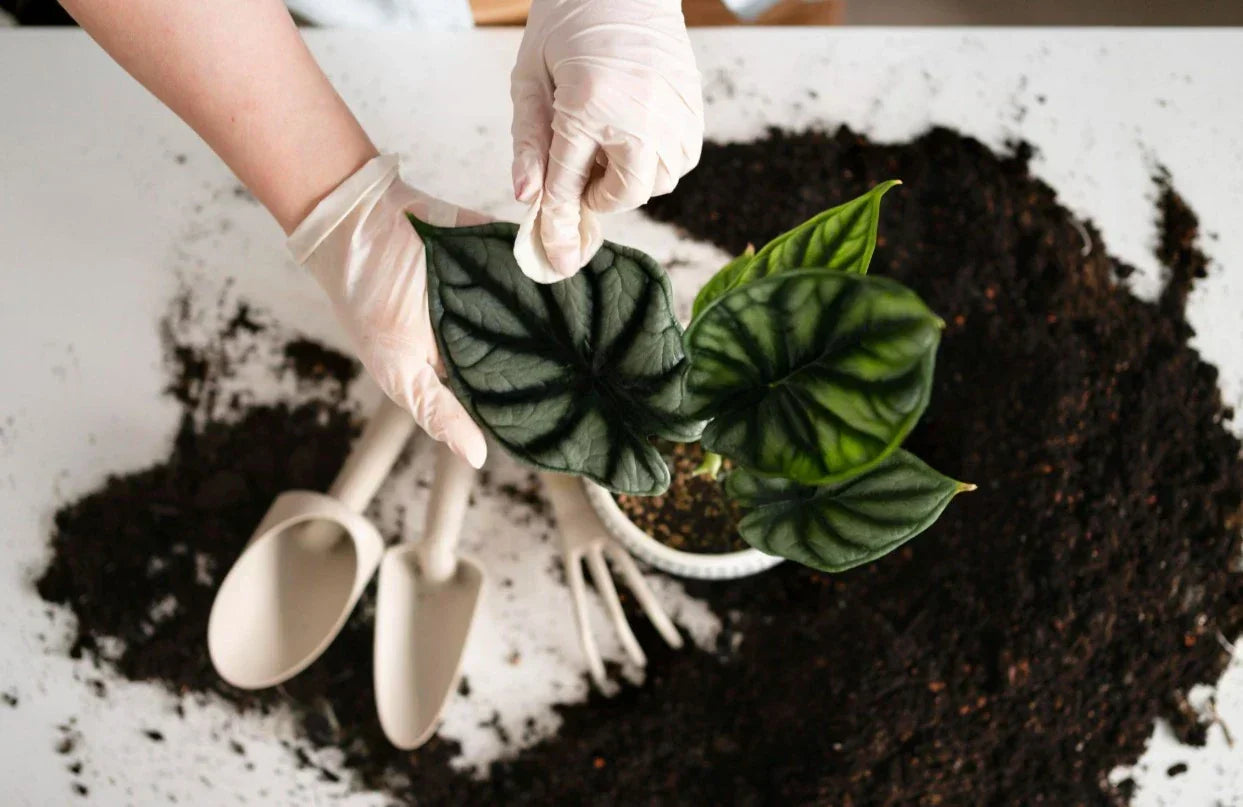
Step 3 -Remove old soil carefully.
Gently shake and brush the old houseplant soil off the roots. If you spot brown, mushy roots, trim them with clean scissors before repotting.
Step 4 -Fill with the right mix.
Choose the soil that matches your plant's needs. Fill the bottom of the new pot, set your plant, and fill around the sides.
Step 5 -Water lightly and wait.
Give a light watering to settle the new soil, then let it dry out before the next watering. Roots need time to adjust.
Step 6 -Skip fertilizer for 4 to 6 weeks.
Fresh soil, especially an organic mix, already has nutrients in it. Adding fertilizer on top can overwhelm newly disturbed roots.
Related Reading: Not All Repotting Soil Is Equal - Here's What the Best Ones Have in Common
One More Thing: Soil and Seasonal Timing
Spring is genuinely the best time to repot and refresh soil, and here's why it matters.
Your plants are entering their active growth phase. Root systems are working harder. New leaves are forming. Photosynthesis is ramping up. Doing a soil refresh now means your plants step into their busiest season with fresh nutrients, proper drainage, and room to grow.
Waiting until summer, when growth is already at full speed, means your plant spends its peak season in soil that's running out of steam.
The window is now. A simple soil swap this spring can be the difference between a plant that survives the year and one that actually thrives.
Conclusion
The right houseplant soil isn't a luxury; it's the foundation everything else depends on. Light, water, and fertilizer can't compensate for a soil that's compacted, waterlogged, or biologically dead.
This spring, take 10 minutes to check what's happening under the surface. Slide your plants out, look at the roots, feel the soil. If it's dense, soggy, or pulling away from the pot walls, it's time.
Your plants will tell you thank you in new leaves.
Not sure which soil to start with? Take the Rosy Soil quiz and find the perfect match for every plant in your home - monstera, pothos, aloe, snake plant, succulents, and more. Shop Rosy Soil today and find the right mix for your plants!