


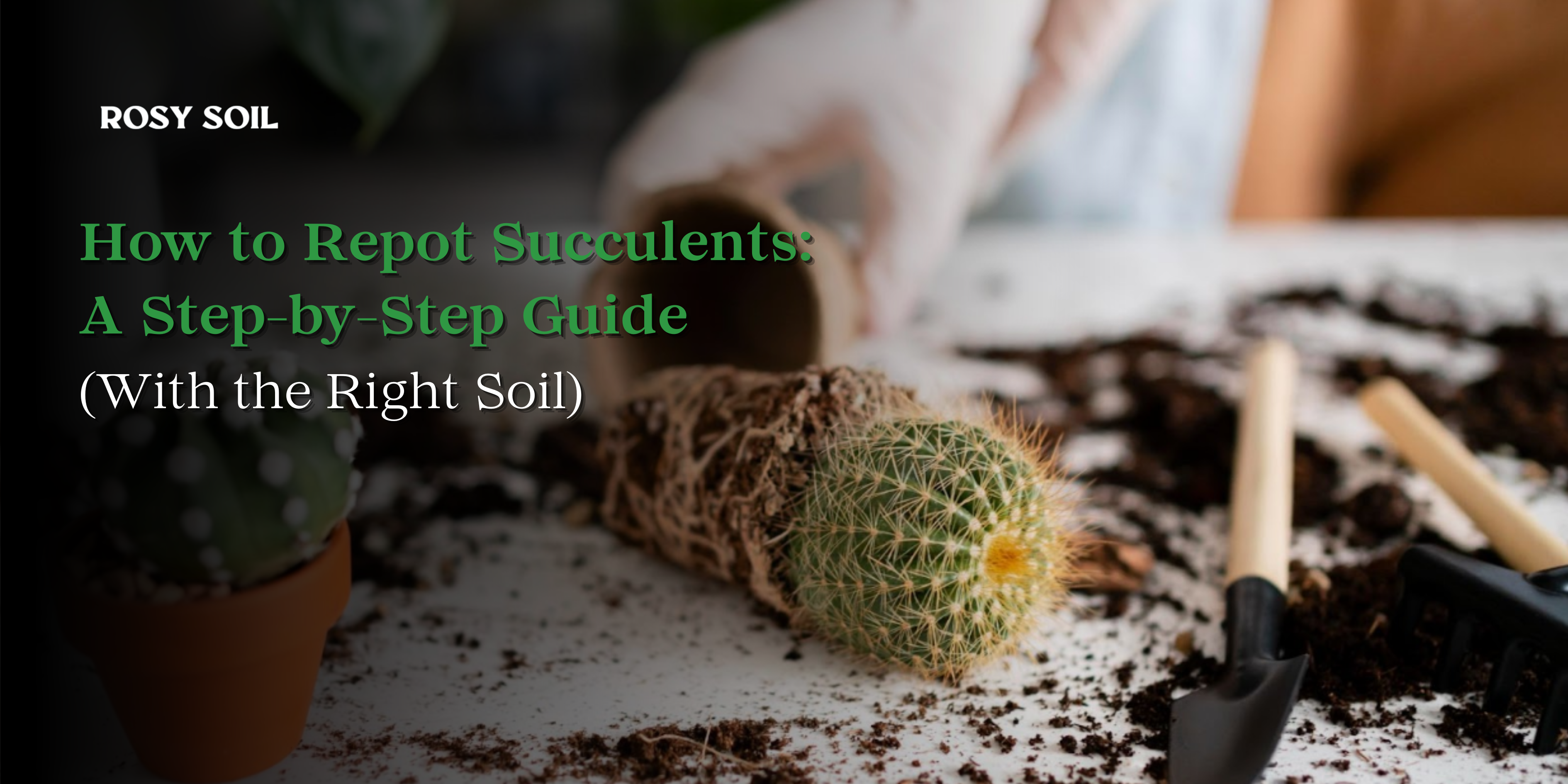
Repotting is one of the simplest ways to improve a succulent's long-term health. Over time, roots outgrow their containers, soil breaks down, and drainage, which is critical for cacti & succulent plants, becomes increasingly poor. A fresh pot with the right succulent soil can make a significant difference, especially for plants that have been sitting in the same mix for more than two years.
This guide covers everything needed to repot succulents properly: when to do it, what materials to use, and why choosing the correct succulent potting mix is just as important as the repotting technique itself.
Signs That a Succulent Needs Repotting
Succulents do not need to be repotted on a fixed schedule, but there are clear indicators that a plant has outgrown its current container or that the soil is no longer performing well:
-
Roots are visible through the drainage hole or are circling tightly inside the pot
-
Water drains immediately without being absorbed, suggesting the soil has compacted or broken down
-
The plant has stopped growing or appears pale despite adequate sunlight and regular watering
-
A white mineral crust has built up on the soil surface
-
The pot tips over easily due to top-heavy growth
As a general rule, most succulents benefit from fresh potting soil for succulents every one to two years, regardless of visible root crowding.
Best Time to Repot
Spring is the right window. Early summer works too. Cacti & succulent plants are in active growth during these months, which means they're much better equipped to bounce back from having their roots disturbed.
Repotting in November or December? The plant is essentially dormant. It heals slowly, it adjusts slowly, and you're asking it to recover during the period when it has the least energy to do so. It won't necessarily kill the plant, but you are making things harder than they need to be. Waiting for spring would be the best choice for you.
What Succulents Need to Grow
-
Sun
Succulents need proper sunlight to grow, so make sure they are placed in an area that gets a minimum of 6 hours of direct sunlight every day.
-
Soil
Succulents need soil that is well-draining and doesn't stay soggy for long periods. For better drainage, you can use a cactus mix or regular potting soil with added perlite or pumice.
-
Fertilizer
Fertilizing your succulent once every few months during the growing season will help it stay healthy. A balanced liquid fertilizer is a good choice; make sure to dilute it at half-strength before applying.
-
Water
Succulents need to be watered thoroughly but infrequently. Water the plant until it is moist throughout, and then allow the topsoil to dry out completely before watering again.
What You Need for Repotting?
Before you get started repotting, collect the following things:
-
A new pot, one size up, so 1 to 2 inches wider than the current one. With drainage holes. Non-negotiable
-
Fresh cactus and succulent potting soil, not regular potting mix, which is a different thing entirely
-
A small trowel or even just a large spoon
-
Clean scissors or pruning shears in case any roots need trimming
-
Gloves if there are spines involved
Do not water the plant in the days leading up to repotting. Dry soil separates more cleanly from the roots and makes the process easier.
Step-by-Step Guide: How to Repot a Succulent
Repotting succulents is a simple task. With a few simple steps and careful preparation, you can ensure that they thrive in their new environment.
Step 1: Remove the Plant From Its Current Pot
Tilt the pot sideways and tap the base a few times. In most cases, the plant slides right out if the soil is dry. If it's stuck, which does happen, run a butter knife around the inner edge of the pot to free up the root ball. Avoid pulling the plant by its stem or leaves. Instead, handle it gently and work gradually to ensure the root ball is removed intact without causing damage.
Step 2: Inspect and Clean the Roots
Brush or shake off the old soil and take a close look. Healthy roots are firm and pale, white, or light tan. Anything that looks dark brown or black, or feels mushy when you touch it, is rotted and needs to go. Use clean scissors and cut back to where the tissue looks healthy. If you end up trimming quite a bit, go to step 3 before proceeding. If the roots looked fine and you didn't cut anything, you can skip ahead.
Step 3: Allow Cut Roots to Callous (If Applicable)
This step gets skipped all the time, and it's the reason a lot of repotting attempts lead to rot anyway. When you trim a root, the cut end is an open wound. Put that directly into soil, especially moist soil, and you are giving rot a way in. Set the plant somewhere dry and shaded for 24 to 48 hours. The cut ends will be calloused over. Then it's safe to plant.
Step 4: Select the Right Pot Size
Choose a pot that is 1 to 2 inches wider than the root ball. This usually means going just slightly larger than the current container, not dramatically bigger. A large pot holds a large volume of soil, which holds a large volume of moisture that a small succulent simply cannot use.
Terracotta is worth using if you have it; it's porous, which means water evaporates from the pot walls as well as the surface. That speeds up drying time noticeably. But glazed ceramic or plastic works too, as long as there's drainage.
Step 5: Choose the Right Soil
Standard potting mix is engineered to hold moisture. That's what most plants want. Succulents are the exception. They need soil that drains fast, dries out between waterings, and stays loose and airy rather than compacting into a solid block over time.
What that means in practice: the right succulent soil should contain ingredients like coarse sand, pumice, or grit, not just peat moss and coir. Those fine-textured organic materials retain moisture beautifully, which is exactly the problem.
Rosy Soil's Cactus & Succulent Mix is built around this. It's a peat-free, organic cactus and succulent potting soil with a noticeably sandy, gritty texture, the kind that drains immediately when you water it rather than holding a puddle on the surface. It also contains biochar, which improves aeration, supports beneficial microorganisms, and holds onto nutrients near the root zone without trapping water. Our blog explains why peat-free mixes tend to outperform peat-based ones for long-term succulent growth.
Step 6: Fill the New Pot and Position the Plant
Add a base layer of fresh soil. Set the plant in the centre and fill in the gaps around the roots, pressing gently as you go to close up air pockets, or lightly tapping the sides of the pot to help the succulent soil settle naturally around the roots.
Two things to watch: the stem base should sit at or just above the soil surface, not buried below it. And leave a small gap at the top between the soil and the pot rim. Makes watering cleaner and less likely to send soil spilling over the sides.
Step 7: Wait Before Watering
After repotting, do not water the plant for three to five days. The roots need time to recover from being disturbed, and any small abrasions from the repotting process need to dry out before moisture gets introduced. Water too soon and you're creating the conditions for rot all over again.
After that window, water deeply, really soak it, then leave it alone until the soil has dried out completely. That full dry-out cycle is what succulents are built for. It mimics the desert rainfall patterns they evolved alongside.
Related Article: The Perfect Soil for Your Cacti and Succulents: A Review by Gardening In Small Spaces
Indoor Succulents: Additional Considerations
The same seven steps apply. But indoor growing adds a few layers of complexity that are worth flagging.
The main one: evaporation is slower indoors. That's not a problem if you're using the right potting soil for succulents, one that drains fast and dries out relatively quickly. But it becomes a problem if the mix you're using holds any significant moisture. What takes two or three days to dry out on a sunny balcony can take eight to ten days in a north-facing room.
Use the grittiest, fastest-draining succulent soil for indoor plants you can find. Keep the plant near a window that gets real light. And when in doubt, underwater rather than overwater, succulents are far more forgiving of drought than they are of sitting wet.
Repotting Cacti: Key Differences
Cactus and succulent potting soil works well for both plant types, since they share similar drainage and moisture requirements. However, cacti are generally even less tolerant of overwatering than succulents.
When repotting cacti, the same steps apply, but extra care should be taken to protect hands from spines. Thick gloves, a folded newspaper, or foam pipe insulation wrapped around the cactus can all help manage the plant safely during repotting.
For large or heavily spined cacti, adding a small amount of extra perlite or coarse sand to the soil mix can further improve drainage and reduce moisture retention.
Common Repotting Mistakes to Avoid
-
Using regular potting mix. It doesn't drain fast enough. Period.
-
Watering right after repotting. The roots need a few days to settle before water is introduced.
-
Choosing a pot that's too big. More soil volume = more moisture the plant can't use = root rot.
-
Repotting during winter. Dormant plants heal slowly. Wait for spring.
-
No drainage hole. There's no fixing this. Water has to have somewhere to go.
-
Planting the stem too deeply. The stem base should be at or above the soil line, not below it.
Conclusion
Repotting succulents is a straightforward process when the right materials are used, and each step is followed carefully. The most important factor is selecting a quality succulent potting mix that drains well, dries out properly between waterings, and supports healthy root development over time.
Rosy Soil's cactus and succulent potting soil is designed to meet all of these requirements: organic, peat-free, and enriched with biochar for long-term soil health. It is a straightforward upgrade for anyone looking to give their plants a better foundation.
For more information or to explore the full range of soil for succulents and other plant types, visit us today!