Most plant parents wait for the dramatic moment, roots crawling out of drainage holes, a plant visibly tilting, or a pot that looks almost comically small for the green giant sitting in it. That's when they finally decide to repot indoor plants. But here's what the gardening world doesn't say loudly enough: by the time your plant looks like it needs a new home, the soil gave up on it a long time ago.
Repotting isn't a size decision. It's a soil decision.
Understanding this one shift in thinking can completely change how your indoor plants grow, how often they get sick, and how much effort you spend keeping them alive.
Why Soil Breaks Down Faster Than You Think
When you first bring home a new plant or pot it up fresh, the indoor potting soil is doing a lot of quiet, invisible work. It's holding moisture without drowning roots, allowing air pockets to form, releasing nutrients slowly, and supporting healthy microbial activity underground.
But soil doesn't stay that way forever. Over months and certainly over a year or two, several things happen:
Compaction sets in. The organic matter in your potting soil for indoor plants gradually breaks down, and the structure collapses. What was once light and airy becomes dense and hard. Water starts to sit on top instead of absorbing in. Roots push against each other with nowhere to breathe.
Salt buildup becomes a problem. Every time you water and fertilize, mineral salts accumulate in the soil for indoor plants. Over time, these salts become toxic to roots, burning them at the tips and making it harder for the plant to take up nutrients, no matter how often you feed it.
Biological exhaustion occurs silently. Fresh potting mix carries beneficial microorganisms and organic nutrients. After a year or more of continuous use, those nutrients are depleted, and the microbial ecosystem weakens. Your plant is essentially sitting in tired, nutritionally bankrupt dirt.
The pot size hasn't changed. The plant might look okay from the outside. But underground, the environment your plant depends on every single day has quietly deteriorated.
5 Signs That Soil — Not Space — Is the Problem
Here's how you can tell your plant is struggling with soil quality rather than a lack of room:
-
Water rushes straight through. When you water, and it immediately drains out the bottom without the soil absorbing much, compaction has destroyed the soil's ability to hold moisture. This is a clear signal that your indoor plant soil has structurally failed.
-
The soil pulls away from the pot edges. As organic matter breaks down and compaction increases, the soil shrinks and separates from the sides of the container. Water then channels down that gap instead of soaking through the root zone.
-
Yellowing leaves despite regular feeding. If your fertilizing routine hasn't changed but leaves are still yellowing, the issue isn't nutrition; it's that the degraded soil is blocking nutrient uptake. Salt buildup is often the hidden culprit here.
-
Musty or sour smell from the pot. Healthy soil has a clean, earthy smell. If your pot smells off, the soil's microbial balance has likely tipped toward anaerobic bacteria, a sign the mix is waterlogged, exhausted, or both.
-
Slow or stunted growth during the growing season. If your plant barely moves from spring into summer when it should be actively pushing out new leaves, stale soil is frequently the reason.
None of these symptoms requires the roots to be escaping the pot. They are all about soil health, and they can appear even in a pot with plenty of room to grow.
Upgrade your plant care routine with high-quality indoor potting soil designed to support long-term root health and consistent growth.
So When Should You Actually Repot?
A question to ask alongside "has my plant outgrown its pot?" is: "How old is this soil, and what condition is it in?"
As a general guideline:
Most indoor plants benefit from being repotted, or at a minimum, having their soil refreshed, every 12 to 18 months, regardless of whether roots are circling the bottom or poking through the drainage hole.
Fast-growing plants like pothos, monsteras, and peace lilies may need fresh repotting soil for indoor plants even sooner, closer to the 12-month mark.
Slow growers like snake plants, ZZ plants, and cacti can often go 18 to 24 months, but their soil still needs attention within that window.
If you inherited a plant or bought one that's been sitting in the same mix for an unknown amount of time, repot it. Don't wait for a dramatic sign. Assume the soil has seen better days and give the plant a fresh start.
Sizing Up: When the Pot Does Need to Change
To be fair, root crowding is a real issue, and it does matter. When roots have completely displaced the soil, and there's no moisture-retaining medium left, the plant can't get water or nutrients, regardless of how good the soil once was.
Signs the pot size genuinely needs to change alongside the soil:
-
Roots are tightly coiled around the entire bottom of the pot
-
Roots are growing out of the drainage hole in large numbers, not just one or two exploratory strands
-
The plant is so top-heavy that it tips over easily
-
The root ball, when removed from the pot, holds its shape entirely without any soil support
In these cases, go up one pot size, typically 1-2 inches larger in diameter. Going too large at once is its own problem: excess soil holds moisture the roots can't access, yet, increasing the risk of rot.
But even here, the most important thing you are doing when you repot isn't giving the roots more room. It's replacing exhausted indoor plant soil with a fresh, nutrient-rich, well-structured mix. The new pot is secondary to the new soil.
Choosing the Right Indoor Potting Soil for Indoor Plants
Not all potting mixes are created equal, and the wrong indoor potting soil can undo every good intention you have.
What makes a quality potting soil for indoor plants:
-
Drainage and aeration: Look for mixes that include pumice or bark fines. These materials create air pockets and prevent compaction, keeping roots breathing and healthy long after you've potted up.
-
Organic matter: Ingredients like coco coir, compost, or worm castings feed the soil ecosystem and improve moisture retention without waterlogging. Good soil for indoor plants holds moisture and releases it slowly rather than staying soggy.
-
pH balance: Most indoor plants prefer a slightly acidic to neutral pH, around 6.0 to 7.0. A quality mix maintains this naturally without you needing to adjust it.
-
No added slow-release fertilizers from cheap brands: These often lead to salt buildup quickly, the very problem you're trying to solve when you repot. Choose a mix where you can control feeding separately.
How to Repot Without Stressing Your Plant
The process matters as much as the soil you choose. Follow these steps to give your plant the best possible transition:
-
Water the plant one to two days before repotting. Moist roots are flexible and less likely to break. Dry roots are brittle and stressed.
-
Choose the right moment. Spring through early summer is ideal, as the plant is entering its active growth phase and will recover quickly. Avoid repotting in the deep dormancy of winter if you can help it.
-
Remove the plant gently. Tip the pot, support the base of the plant, and coax it out without yanking. If it's stuck, run a thin knife or spatula along the inner edge of the pot.
-
Inspect and loosen the roots. Gently tease apart compacted roots and shake off old soil. Trim any roots that are dead (brown, mushy, or hollow) with clean scissors.
-
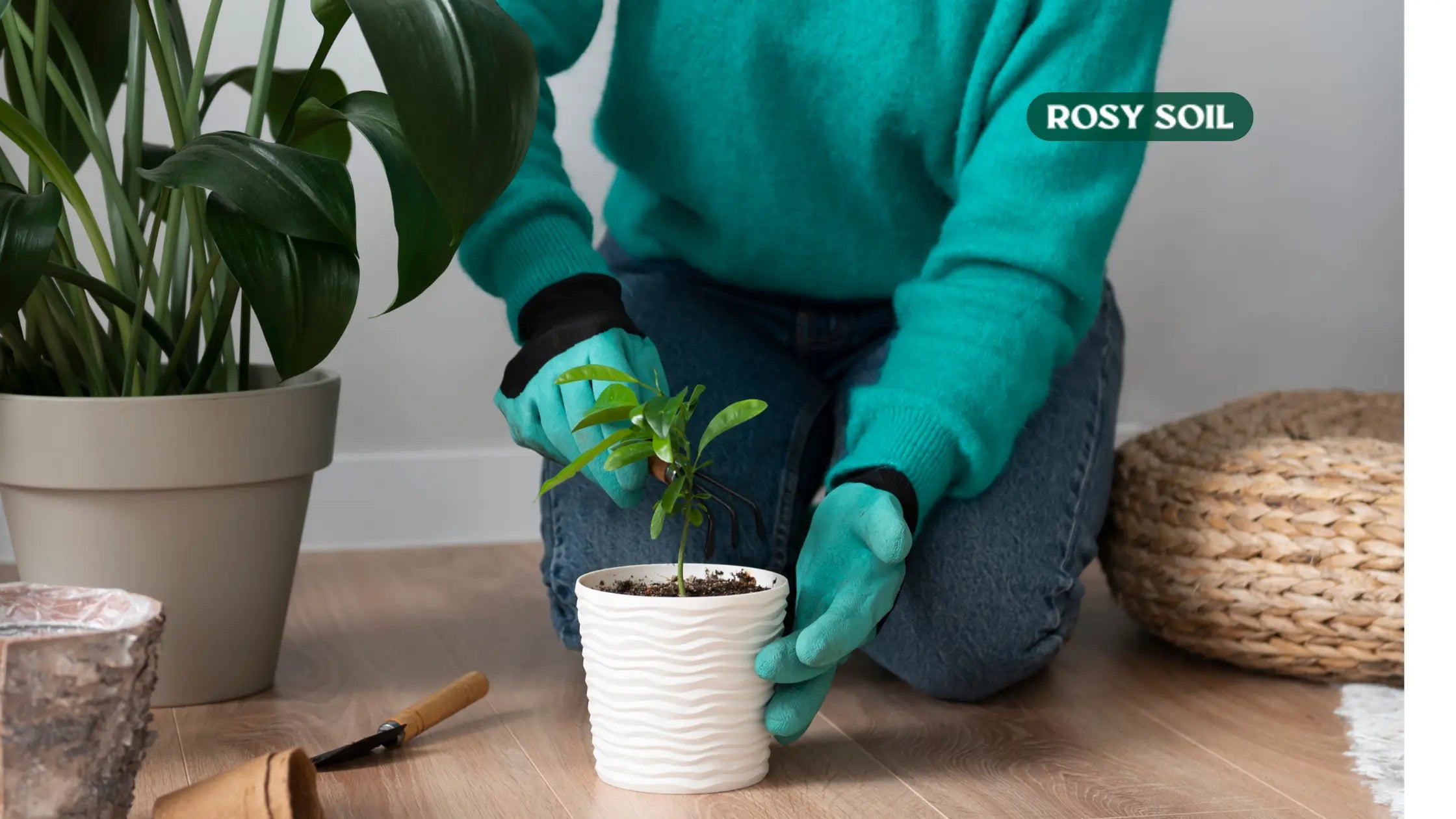
Add fresh soil at the bottom. Pour a layer of fresh repotting soil for indoor plants into the new pot before placing the plant. This ensures roots have immediate contact with new nutrients.
-
Fill in around the sides and tap the sides of the pot. Don't pack too hard; you want the soil to settle but not compact immediately. Leave about an inch of space from the soil surface to the rim for watering.
-
Water thoroughly after repotting. This helps the new soil settle around the roots and gives the plant its first drink in its new home. Let it drain fully.
-
Place in indirect light for a week. Even if your plant normally tolerates bright light, give it a gentle recovery period. Repotting is a stress event, and the plant needs a moment to adjust.
Conclusion
The next time you look at your indoor plant and wonder if it's time for a change, stop looking at the pot. Look at the soil. Ask how long it's been sitting in the same mix. Feel it between your fingers. Is it compacted and grainy, or light and crumbly? Smell it. Look at how the water behaves when you pour it in.
Your plant's roots live in the soil 24 hours a day. The quality of that soil determines everything: how well the plant breathes, feeds, drinks, and grows. When you repot indoor plants with this understanding, you're not just giving them more room. You're giving them a genuinely better life.
And that's exactly what good soil is for.
Explore our premium collection of potting soil for indoor plants and give your plants the fresh foundation they need to thrive.
Frequently Asked Questions
Q: How often should you repot indoor plants?
A: Most indoor plants should be repotted every 12 to 18 months to refresh the indoor plant soil and maintain proper structure, nutrients, and drainage.
Q: What is the best potting soil for indoor plants?
A: The best potting soil for indoor plants includes a balance of drainage materials like bark or pumice, organic matter like compost and worm castings, and proper aeration to support healthy root development.
Q: Can I reuse old indoor potting soil?
A: Reusing old indoor potting soil is not recommended unless it is properly refreshed, as it may contain salt buildup, depleted nutrients, and poor structure that can affect plant health.
Q: How do I know if my indoor plant soil needs to be replaced?
A: Signs include compacted soil for indoor plants, water draining too quickly, foul odor, or slow plant growth, indicating the soil has broken down and needs replacement
Q: Does repotting soil for indoor plants improve plant growth?
A: Yes, using fresh repotting soil for indoor plants improves nutrient availability, aeration, and moisture retention, leading to healthier and more consistent plant growth.
About the Author:
Chad Massura is the founder and CEO of Rosy Soil. A lifelong gardener who grew up in the garden with his grandma in Chicago, Chad became obsessed with biochar and carbon capture while working in the food and impact space. When he learned that most potting soils are loaded with peat moss an ingredient that’s terrible for the planet — he started blending biochar-based alternatives in his kitchen and testing them on every willing friend and family member he could find. Rosy Soil launched on Earth Day 2022. Chad is a self-confessed soil nerd, a serial plant experimenter, and a firm believer that good soil is the secret most plant parents are missing.