


You did everything right. You watched the tutorial, carefully lifted your orchid out of its old pot, and placed it into fresh soil. And then, a week later, the leaves started drooping. The roots turned mushy. The blooms fell off.
Sound familiar? You are not alone. Thousands of plant parents make the same mistake every year, and it rarely comes down to technique. It comes down to the soil.
Most orchid potting soils sold in big-box stores are too dense, too moisture-retentive, and completely wrong for how orchids actually live in nature. Using the wrong orchid soil is like asking a fish to live in sand. The plant struggles, the roots suffocate, and no amount of care can fix a fundamentally broken foundation.
This guide walks you through the science of orchid roots, what a proper orchid soil mix actually looks like, how to repot without causing damage, and why the ingredients in your potting mix matter more than anything else.
Why Orchids Need a Completely Different Kind of Soil
Note: This guide is written primarily for Phalaenopsis orchids, the most common household variety. Dendrobium, Cattleya, and other species share similar needs but may require slight adjustments in mix coarseness or watering frequency.
Orchids Are Not Ground Plants
Here is the first thing most people get wrong about orchids: they are epiphytes. In the wild, they do not grow in the ground at all. They attach themselves to the bark of trees, dangle their roots in open air, and absorb moisture and nutrients from rain, humidity, and decaying organic matter drifting by.
Their roots are designed to breathe. They are coated with a spongy layer called velamen, which absorbs water quickly and releases it just as quickly. These roots need cycles of wet and dry. They need air moving around them. Dense, compact, soggy soil is the exact opposite of everything they evolved for.
What Happens When You Use Regular Potting Soil
Standard houseplant potting soil holds too much moisture for too long. When orchid roots sit in that kind of environment, the velamen stays saturated, oxygen cannot reach the root cells, and root rot sets in. It often looks like nothing is wrong on the surface until the damage is already severe.
Beyond rot, compacted soil also creates a physical barrier. As it settles and breaks down, it squeezes the roots rather than supporting them. Over time, the plant cannot anchor properly and cannot absorb what it needs.
The fix is not to water less. The fix is to start with an orchid soil mix that drains fast, stays airy, and never compacts.
What Makes a Good Orchid Soil Mix

Aeration and Drainage: The Two Non-Negotiables
If an orchid mix does not drain fast and stay open and airy, it does not matter what else is in it. These two properties are the foundation of every good orchid potting mix. Water should flow through quickly after each watering, and air should circulate around the roots between waterings.
This is why traditional potting soil simply does not work for orchids. It is engineered to retain moisture for plants that need consistent ground-level hydration. Orchids need the opposite.
Key Ingredients to Look For in an Orchid Potting Soil
A high-quality orchid potting soil is typically a blend of chunky, porous materials that mimic the loose, bark-covered environment of a tree canopy. Here is what to look for:
-
Orchid bark: Coarse pine or fir bark forms the backbone of most orchid mixes. It creates air pockets, drains quickly, and breaks down slowly over time. It is a byproduct of the mulch industry, making it a sustainable choice.
-
Pumice: A naturally occurring volcanic rock that is lightweight and extremely porous. It improves both drainage and aeration without adding weight to the mix.
-
Biochar: A horticultural charcoal created by heating organic material in a low-oxygen environment. Think of it as a sponge for nutrients and beneficial microbes. It improves soil structure, retains water at a root-accessible level, and stores carbon stably for hundreds of years.
-
Mycorrhizae: Beneficial fungi that form a symbiotic relationship with plant roots, extending the root system's effective reach and helping orchids absorb more water and nutrients than they could on their own.
-
Worm castings: Organic matter produced by worms that delivers a slow, gentle supply of essential nutrients without burning roots.
Ingredients to Avoid
Not everything marketed as orchid soil is actually good for orchids. Watch out for:
-
Peat moss: Often used as a filler in cheaper mixes because it is inexpensive. But peat compacts over time, repels water when dry, and is harvested from fragile wetland ecosystems that take thousands of years to form. It is bad for the planet and not ideal for orchids.
-
Heavy clay components: These hold too much moisture and block air circulation.
-
Synthetic additives and slow-release fertilizers: These can build up salt levels in the soil and damage sensitive orchid roots over time.
If you grow other tropical plants alongside your orchids, the same principles of drainage and aeration apply, so read our Bird of Paradise Soil Mix guide for a full breakdown.
How to Repot Orchids Without Damaging Roots

When Should You Repot?
Orchids do not need repotting on a strict schedule, but there are clear signals to watch for:
-
Roots are visibly growing out of drainage holes or over the pot rim
-
The orchid bark or potting mix looks fine or muddy rather than chunky
-
You can see dead or rotting roots that need to be removed
-
The plant has been in the same pot for two or more years
Spring is generally the best time to repot, as orchids enter an active growth phase. Repotting right after flowering is also a popular window. Wait until all flowers have fallen off, then trim the old flower stem; a new one will grow before the plant flowers again. Avoid repotting while the plant is still in bloom.
Step-by-Step Repotting Guide
Step 1: Remove the plant from its current pot gently. Tip the pot sideways and let gravity do the work. Avoid yanking.
Step 2: Shake away old potting mix from the roots. Do this over a bin or newspaper. Do not tug at roots clinging to old bark.
Step 3: Inspect and trim dead roots. Healthy roots are firm and pale green or silvery. Dead roots are hollow, brown, or mushy. Use clean, sterilized scissors to remove them, cutting just above where healthy tissue ends.
Step 4: Let the roots air-dry for 30 minutes. This helps any cut surfaces callus slightly before going back into a moist environment.
Step 5: Choose the right pot. Clear plastic pots are popular because they let you monitor root color and moisture levels. The pot should be just slightly larger than the root ball. Too much extra space holds excess moisture around the roots.
Step 6: Add fresh orchid potting mix for repotting. Work the mix gently around the roots, filling gaps without compressing. The goal is support, not compaction.
Step 7: Water lightly and place in indirect light. Avoid direct sun for the first week while the plant settles.
Common Repotting Mistakes to Avoid
-
Using a pot that is too large: extra soil stays wet for too long, and invites rot
-
Skipping root inspection: leaving dead roots in the mix creates rot that spreads
-
Packing the mix too tightly: this compresses roots and blocks airflow
-
Watering immediately after repotting: a short dry period helps the plant recover
-
Reusing old, broken-down mix: it defeats the entire purpose of repotting
-
Repotting while in bloom: this stresses the plant and causes bud drop. Wait until all flowers have fallen off, unless the plant is suffering from root rot
Why Your Orchid Bark Potting Mix Matters Long-Term
Soil Compaction and Root Suffocation
Bark and other chunky ingredients in orchid mixes naturally break down over time. As they decompose, the mix becomes finer and denser. This is one of the main reasons orchids need repotting every one to two years, not just because they have outgrown their pot.
When the mix compacts, the air pockets' roots disappear. The mix holds more water. Oxygen levels around the roots drop. This is slow, quiet damage, often not visible until the roots are already struggling.
Starting with a high-quality orchid bark potting mix that degrades slowly is the best way to extend the time between repotting cycles and keep your plant healthier for longer.
If your current orchid potting soil feels dense or breaks down quickly, switching to a chunky, peat-free mix can improve airflow, reduce overwatering risk, and support stronger root systems over time.
The Role of Living Soil in Orchid Health
Not all orchid mixes are inert. Some are formulated with living biology built in, specifically beneficial fungi and microbes that actively support root health.
Mycorrhizal fungi colonize orchid roots and extend microscopic threads called hyphae out into the surrounding mix. These threads access water and nutrients from areas that roots alone cannot reach. In exchange, the plant shares sugars with the fungi. It is a partnership that benefits both sides.
Beneficial bacteria in the mix also help break down organic matter, suppress harmful pathogens, and create a more balanced soil environment. A living mix is not just a growing medium. It is an active support system.
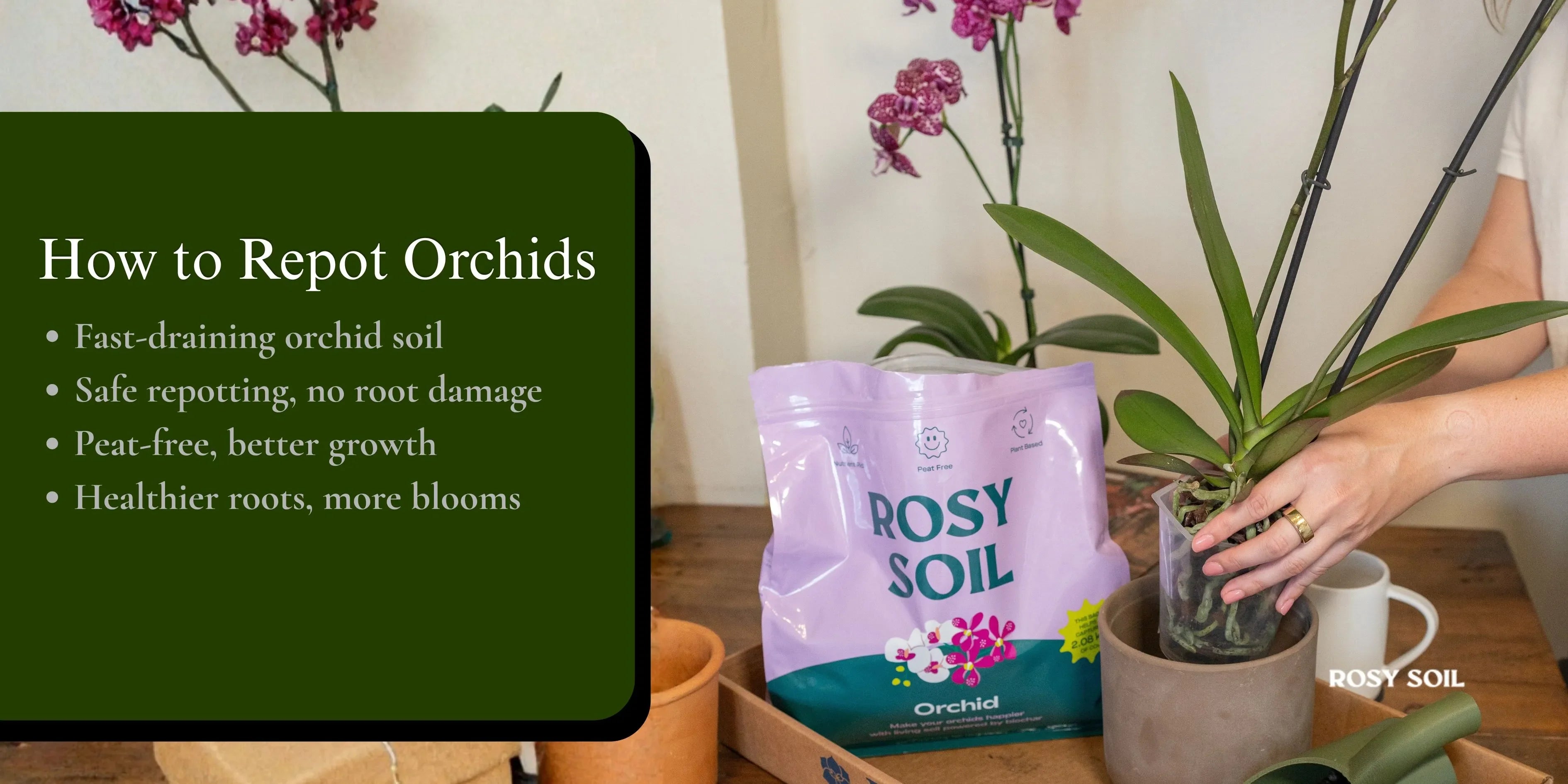
This is the philosophy behind Rosy Soil's Orchid Mix. Rather than a static blend of inert ingredients, it is formulated with mycorrhizae and beneficial microbes built right in, so your orchid roots have living support from the moment they go into the pot.
Peat-Free: Why It Matters for Your Plant and the Planet
Peat moss has been a staple of potting mixes for decades, largely because it is cheap and widely available. But it comes with real costs, both environmental and practical.
Peat is harvested from ancient bogs that take thousands of years to form. These wetlands are critical carbon sinks, storing carbon dioxide that would otherwise enter the atmosphere. Mining them releases the stored carbon and destroys irreplaceable habitat.
From a plant-care perspective, peat is also problematic. It breaks down quickly, compacts easily, and becomes hydrophobic when completely dry. Water runs off the surface rather than soaking in.
Rosy Soil uses biochar instead of peat. Biochar is carbon-negative, meaning it removes carbon from the atmosphere and locks it into stable form in the soil for centuries. It improves drainage, supports beneficial microbes, and does not degrade into mush. It is genuinely better for your orchids and for the planet.
Choosing the Right Orchid Potting Mix for Repotting
With so many options available, use this checklist as your guide:
-
Chunky, coarse texture with visible bark pieces and porous particles
-
Fast-draining, never dense or muddy out of the bag
-
Peat-free formulation
-
No synthetic additives or slow-release chemical fertilizers
-
Enriched with mycorrhizae or other beneficial biology
-
Made from sustainable or regenerative ingredients
A high-quality orchid potting mix should check every one of these boxes. It is typically a custom blend of orchid bark, biochar, pumice, mycorrhizae, worm castings, and sand. Each ingredient plays a specific role: bark for structure and airflow, pumice for drainage, biochar for nutrient retention and microbial life, mycorrhizae for root support, worm castings for gentle organic nutrition, and sand for additional drainage.
A well-balanced mix is also peat-free and designed to maintain its structure over time without compacting. This ensures consistent airflow around the roots and reduces the risk of overwatering issues that commonly affect orchids.
Because these mixes are designed to resist breakdown better than traditional options, they can help extend the time between repotting cycles while maintaining a healthy root environment.
Conclusion
Repotting an orchid is not complicated. But it does require the right foundation. All the techniques in the world cannot compensate for a mix that suffocates roots, holds too much water, or breaks down within months.
Start with an orchid soil that mirrors the natural environment these plants evolved in: chunky, airy, fast-draining, and alive with beneficial biology. Skip the peat. Look for orchid bark, pumice, biochar, and mycorrhizae. Choose ingredients that are good for your plant and good for the planet.
When the soil is right, orchids do not just survive a repotting. They thrive because of it.
Ready to give your orchid the environment it naturally thrives in?
Explore Rosy Soil's Orchid Mix and experience a breathable, living, peat-free solution designed for healthier roots and longer-lasting blooms
Shop it directly at rosysoil.com.
FAQs
1. How often should I repot my orchid?
A: Most orchids benefit from repotting every one to two years. The key signal is not time but the condition of the mix. When your orchid potting soil looks broken down, dense, or muddy rather than chunky, it is time to refresh it.
2. Can I use regular potting soil for orchids?
A: No. Regular potting soil retains too much moisture and does not provide the airflow orchid roots need. It leads to root rot in most cases. Always use a mix specifically formulated as orchid soil, with chunky, fast-draining ingredients.
3. What is the difference between orchid bark and orchid potting mix?
A: Orchid bark refers specifically to coarse pieces of pine or fir bark used as a growing medium. An orchid mix or orchid soil mix combines bark with other ingredients like pumice, biochar, or mycorrhizae to create a more complete growing environment.
4. Should I water my orchid right after repotting?
A: It is better to wait 24 to 48 hours before the first watering after repotting. This gives any trimmed root ends time to dry slightly, reducing the risk of rot entering through cut tissue.
5. Why is peat moss bad for orchids?
A: Peat compacts easily, breaks down quickly, and becomes water-repellent when dry. It also comes from ecologically sensitive bogs. For orchids, which need an airy, fast-draining medium, peat is a poor fit both practically and environmentally.